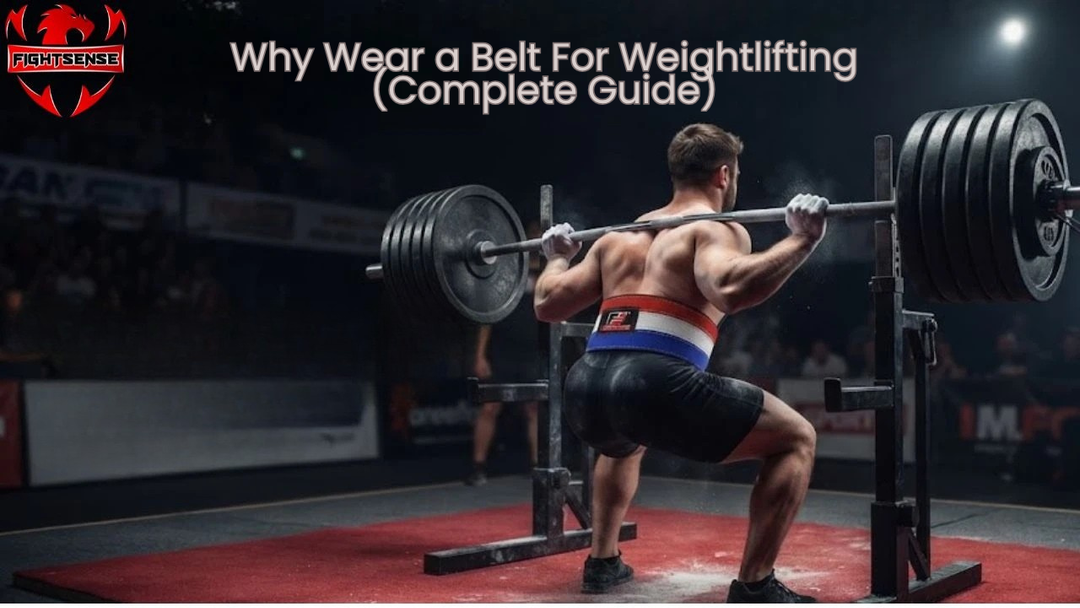
Why Wear a Belt For Weightlifting (Complete Guide)
Lifting heavier isn't just about raw muscle; it is about how effectively you can harness your body's internal pressure. If you have ever wondered why wear a belt for weightlifting, the answer comes down to spine safety and enhanced force production. When you step up to a heavy barbell for a squat or deadlift, your core is your primary defense against injury. A weightlifting belt gives your abdominal muscles something tangible to push against, creating a rigid cylinder of support around your spine.
Why Wear a Belt For Weightlifting: What You Need to Know
At its core, a weightlifting belt is a specialized piece of supportive gym equipment designed to wrap snugly around your midsection, stabilizing your lower back and abdominal wall during high-intensity resistance training. Whether you are looking for traditional weightlifting belts to secure your lumbar region or heavy-duty lever belts for maximum power output, choosing the right gear is essential.
Brands like FightSense specialize in crafting reliable fitness accessories, including durable weightlifting belts and secure lever belts tailored to support athletes through their most demanding compound movements.
How a Weightlifting Belt Actually Works
The Science of Intra-Abdominal Pressure Explained
To understand the effectiveness of these accessories, you must understand the physics of the human core. The spine doesn’t have a rigid bony support structure in front of it, so it relies significantly on the pressured cavity of your torso to keep it upright under severe loads.
When you push your belly against a tight belt, you are creating a hydraulic effect inside your abdominal cavity. This pressure presses up against the diaphragm, down against the pelvic floor, and the belt pushes in. Together they create a stiff cylinder that can reduce shear force on the spine by as much as forty percent. And this scientific advantage is why elite powerlifters and strongmen never do a maximal squat or deadlift without one.
Top Benefits of Wearing a Lifting Belt
A lifting item in your gym bag transforms the way you deal with big iron. The main advantages are: A common misconception that novices have is that a gym belt does all the work for you. In fact, a lifting belt is a biofeedback device that enhances your body’s natural mechanics, not replaces them.
By taking a deep breath into your diaphragm and bracing firmly, the Valsalva maneuver pushes your internal organs outside. A strong leather or nylon belt from fitness companies like FightSense will offer your abs a firm wall to contract against. This mechanical interplay makes your core muscles work harder, but it also stabilizes the entire body.
- Better Spinal Positioning: Prevents your lower back from rounding under high loads.
- Increased Force Output: Research shows that with a FightSense weightlifting belt, a suitable brace can increase the transfer of power via your legs and hips.
- Improved Neuromuscular Coordination: Trains your nervous system to activate core muscles more effectively
- Less Fatigue: Reduces burning out the lower back on big volume workout days.
Weightlifting Belt Comparison Guide
| Feature / Metric | Traditional Prong Belt | Lever Belt | Nubuck Belt |
| Closure | Metal prongs and holes | Quick-lock steel lever | Secure dual-prong or lever |
| Stability | High rigid support | Maximum trunk compression | Superior core feedback |
| Adjustment | Slow (manual effort) | Instant (one-motion lock) | Smooth and reliable |
| Best For | General powerlifting | Maximal PR sets & heavy lifts | Heavy squats and deadlifts |
| Material | Standard leather | High-grade leather & steel | Premium soft nubuck finish |
When and How to Wear Your Belt Properly
Knowing when to use gym gear to your advantage is a must. When to strap in can make or ruin your workout session.
Step-by-Step Application Guide
- Pick the Right Size: Measure around your belly button (not your pant size) to select a belt that fits snugly.
- Position Correctly: Wrap the gym belt over your lower back and across your abdomen evenly. It shouldn't ride up over your ribs or pinch your hips.
- Adjust the Tension: Put your belt on such that when your stomach is relaxed, you can comfortably fit one or two fingers under it.
- Take a Deep Breath: Breathe deeply into your stomach, pushing outward against the belt just as you start to rise.
- Release Between Repetitions: Exhale at the top of the action, reset your breath, and brace again.
Choosing the Right Material: Leather vs. Nylon
Not all gym belts are created equal and, for that matter, the proper material choice is mostly dictated by your training discipline.
The kind of thick, vegetable-tanned leather used by FightSense is the ultimate gold standard for powerlifting, hard squats, and low-bar deadlifts when maximum trunk rigidity is non-negotiable, because it offers uncompromising rigidity. There are also reinforced nylon belts with heavy-duty Velcro straps. This is a hybrid combination of stiff support and flexibility. Ideal for the functional fitness athlete, CrossFitter, or bodybuilder who moves at a fast pace from Olympic Weightlifting to Gymnastics to Metabolic Conditioning.
Pros & Cons
Pros
- Offers instant psychological and physical confidence under large burdens.
- Limits the risk of spinal flexion and hyper-extension on peak attempts
- Allows advanced lifters to break past plateaus with reliable gear like a FightSense lever belt.
Cons
- Using it all the time can interfere with the development of the deep core stabilizing muscles.
- Uncomfortable if worn too tight or at the wrong place over the hip bones.
- Not needed for light isolation exercises such as bicep curls or lateral raises.
Expert Tips
- Save it for the heavier sets: Don't wear your belt during warm-ups or lighter sets below 75-80% of your one-rep max (1RM). Get your natural core to accomplish the foundational job initially.
- Leather for powerlifting - A thick, consistent leather belt from FightSense provides optimum stiffness for big squats and deadlifts.
- Lever belts: A lever belt’s quick-lock system makes it easy to tighten to your desired tension between heavy sets.
Common Mistakes:
- Never suck in your stomach when you tighten the belt. Sucking in your stomach: You have to push against it to produce pressure.
- As a cure-all: A belt will not repair bad form, weak glutes, or a mobility constraint that is not corrected.
- Wearing it for the whole workout: A tight belt worn for 45 minutes at a time inhibits proper breathing and might create needless lightheadedness.
FAQs:
What's the difference between a powerlifting belt and a weightlifting belt?
A powerlifting belt is normally the same width throughout (about 4 inches ) with a single or lever prong for optimal rigidity. In many cases, the front of a weightlifting belt is tapered so you may get deep catches in snatches and clean & jerks.
How tight should my belt be when lifting?
It should be tight enough to have to push your stomach out against it to make a seal, but not so tight that you can’t breathe fully or that it causes painful bruising.
Can a belt stop a hernia?
A belt increases intra-abdominal pressure, but it is not a medical device designed to stop hernias. Your strongest defenses are good breathing technique and proper loading control.
Is a prong belt better than a lever belt?
They are not intrinsically "better," yet they appeal to diverse tastes. Lever belts are the fastest to put on and take off, while prong belts are the easiest to adjust whether you are gaining or losing weight.
Is a belt necessary for deadlifts?
Yes, many lifters find a belt very useful for deadlifts while pulling heavy weight off the floor to preserve the lumbar spine.
Can I wear a belt over a hoodie?
Others use it for comfort, but normally you want the belt on directly against your skin or a thin T-shirt so it won’t slip during the lift.
Conclusion:
Knowing how to brace yourself internally makes a world of difference in how you approach heavy training. A lifting accessory will never replace good form, but understanding why wear a belt for weightlifting allows you to train heavier, smarter, and with more confidence. Save your belt for your heaviest lifts, concentrate on forcing your breath out, and watch your compound lifts rise.
Note:
This content is for informational purposes only and is not a substitute for professional fitness advice. Always use proper technique and choose equipment based on your training needs.