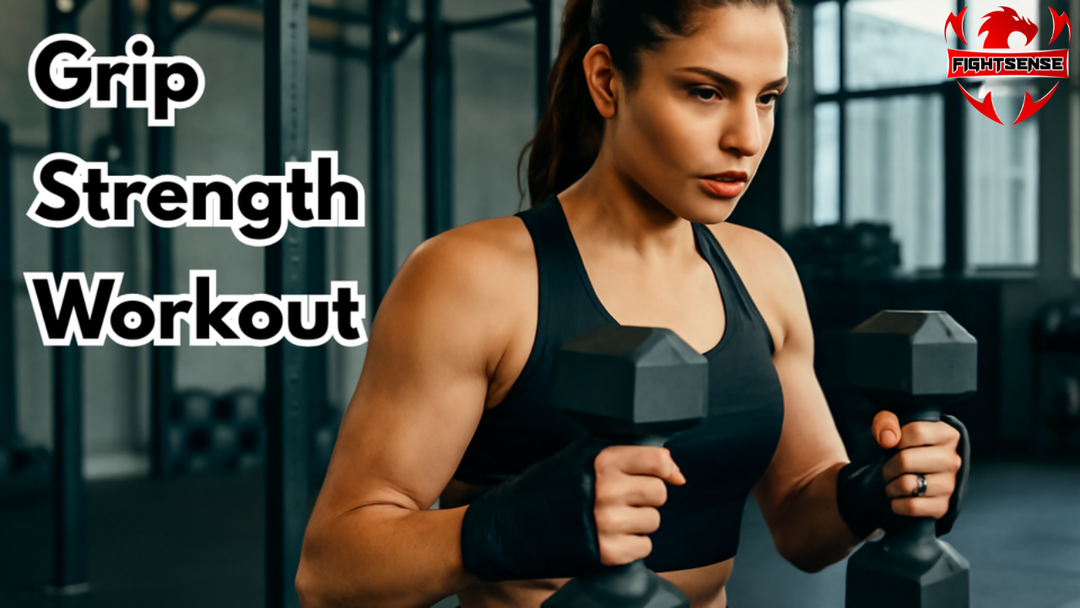
Grip Strength Workout for Strong Hands
Grip Strength Workout is essential for building strong hands, improving lifting ability, and boosting overall performance. This guide shows simple and effective exercises to increase forearm strength, hand endurance, and grip power for both daily life and training.
Weak grip can limit your performance in gym exercises, sports, and even daily tasks like carrying or holding objects. With the right training, you can quickly improve control and stability in your hands.
Keynotes:
What is a Grip Strength Workout and What Does It Do?
A grip strength workout is a planned way to teach your hands, fingers, and forearms to be stronger, last longer, and have better control. It has certain workouts that help you hold, squeeze, and carry things better, whether you're lifting weights, playing sports, or doing everyday duties.
This kind of workout isn't just for the gym. It is a type of functional training that helps you do things in real life better, such as carrying groceries, opening tight jars, holding tools, or keeping a strong grip while working out.
A good grip strength workout can help you get better at:
- Endurance in the hands for prolonged holding strength
- Forearm strength to help you lift better
- Finger control for better grip and accuracy
- Stability in the wrist to avoid weakness and damage
Overall, it builds real power that helps with both sports and everyday work.
Benefits of Strong Grip Strength in Daily Life:
Strong grip improves more than just gym performance.
Real-life benefits:
- Easier lifting and carrying
- Better sports performance
- Reduced wrist pain and fatigue
- Improved confidence in physical tasks
It also helps prevent injuries by strengthening tendons and ligaments around the wrist and elbow joints.
Why is Grip Strength Important for Strong Hands?
Many novice workout regimens don't pay enough attention to grip strength, although it's one of the most fundamental parts of being fit.
A strong grip helps you:
- Safely lift greater weights
- Get better at sports like cricket, tennis, wrestling, and climbing.
- Lower the risk of getting hurt in the wrists and elbows
- Make your upper body stronger overall
Having a strong grip helps with everyday chores like carrying groceries, holding tools, or working for long hours without becoming tired.
Grip Strength: A Hidden Indicator of Physical Health
A strong grasp is also an indication of good health and powerful muscles. Because it shows how well your neural system and muscles operate together, many trainers think of it as a "hidden indicator" of fitness.
Some training systems, like Fightsense, also stress grip development as part of functional strength training because it helps with real-life movement patterns instead of merely working out separate muscles in the gym.
What Muscles Are Used in Grip Strength?
Your forearm muscles are mostly what control your grip strength, but your fingers, wrists, and even your upper arm all have to work together.
The main muscles that are used are:
- Flexor muscles: Help you squeeze things and close your hand.
- Extensor muscles: Help keep your hand steady and open it.
- Brachioradialis: A major muscle in the forearm that helps with lifting and holding
- Tendons in the fingers: control little motions of the grasp
- Stabilizers for the wrist: Keep your grasp stable when you lift something heavy.
All of these muscles operate together in a coordinated way. When you lift anything heavy, your body instantly activates several muscle groups to keep control.
This is why grip training works so well: it makes you stronger, more coordinated, and more able to go longer.
How do farmer’s carries improve grip strength?
Farmers' carry is when you hold big weights in both hands and walk for a long time or distance.
Pros:
- Increases grip strength in the real world
- Makes the traps and forearms stronger
- Makes the core more stable
This is one of the best full-body grip workouts since it makes your hands stay tense all the time.
Are dead hangs effective for grip training?
Yes, dead hangs are one of the easiest and most effective ways to work on your grasp. You hang from a bar for as long as you can.
- Advantages:
- Makes your fingers stronger
- Builds up your stamina
- Makes shoulders and forearms stronger
Even people who are just starting out can start with little amounts of time and work their way up.
How do wrist curls help build grip?
Wrist curls target the forearm muscles directly.
- Increase wrist stability
- Strengthen flexor muscles
- Improve lifting ability
They are usually performed with dumbbells or a barbell in a controlled motion.
How Can Beginners Start Grip Strength Workouts?
If you're just starting out, you should focus on form, control, and consistency instead of heavy resistance.
Easy routine for beginners:
- Hand gripper: three sets of 10 to 15 repetitions
- Dead hang: three 15- to 30-second sets
- Wrist curls: 2 to 3 sets of 12 reps
- Light farmers carry: 20 to 30 meters for 2 rounds
For the best results, train two to three times a week.
How Long Does It Take to Grip Strength?
Grip strength improves fairly quickly compared to other muscle groups because it responds well to consistent use.
Expected timeline:
- 1–2 weeks: Improved endurance
- 2–4 weeks: Noticeable strength increase
- 6–8 weeks: Significant grip development
Progress depends on consistency, sleep, nutrition, and training intensity.
To track progress:
- Increase hang time
- Use heavier resistance in grippers
- Carry heavier weights in farmer’s walks
Can You Improve Grip Strength at Home Without Equipment?
Yes, you can get a firm grip without going to the gym. A lot of good exercises employ things you already have around the house.
Exercises for grip at home:
- Carrying large sacks or buckets of water
- Exercises for wringing out towels
- Holding books or things that are heavy
- Dead hangs on the door frame (if it's safe)
If you do these simple things all the time, they work remarkably well.
Structured fitness programs like Fightsense training show that you can build genuine strength by employing fundamental, daily movements instead of only gym equipment.
What Are Common Mistakes in Grip Training?
- Too much grip training without enough time to recuperate
- Overworking your forearms might make you tired and slow down your progress.
- Using bad form or relying on momentum instead of control
- Not getting harder or more resistant over time
- Not taking days off to relax and recover
Last Thoughts:
Grip strength workout training is a basic yet very efficient approach to make your hands and forearms stronger in the real world. If you practice regularly, use the right form, and slowly increase the difficulty, you may greatly enhance your grip for both everyday jobs and gym workouts.
To get the best results over time, focus on balanced training, give your body time to heal, and stay away from common blunders. Having a strong grip not only makes you stronger physically, but it also makes you more fit overall.
Disclaimer:
Before starting any new exercise regimen, especially if you have injuries or pre-existing medical issues, see a doctor. Start with appropriate weights and use proper technique always to prevent harm.
FAQS:
1. Why does grip strength stop getting better after a while?
Plateaus develop when you do the same number of reps and resistance for too long. Muscles adapt rapidly, so if you don't change the load, time under strain, or type of exercise, improvement slows down.
2. What happens to other lifts when your grip gets tired?
while your forearms are tired, they might stop you from pulling, which can make you fail lifts early even while your bigger muscles still have energy. This makes training less effective overall.
3. Can stress or lack of sleep make your grip weaker?
Yes. If you don't get enough sleep or are under a lot of stress, your neuromuscular efficiency goes down. This means that even if you are training appropriately, your hands may feel weaker.
4. Why does one hand feel weaker than the other?
This happens a lot because of an imbalance in natural dominance. Daily activities favor one side, therefore focused unilateral exercise can help make strength discrepancies less noticeable.
5. Do different types of grips build different strength?
Yes. Different muscle patterns are activated by crushing, pinching, and supportive grips. Only working on one type can slow down the growth of total hand strength.