Fingerless Gloves for Fitness & Style Best Guide 2026
Fingerless gloves are a practical choice for people who want extra hand comfort during workouts without losing the freedom to move their fingers. Unlike full-coverage gloves, their open design leaves the fingertips exposed while covering the areas of the hand that experience the most contact with bars, handles, and other equipment.
For weight training, pull-ups, kettlebell exercises, and general gym sessions, a well-fitting pair can make handling equipment more comfortable. They can also add a simple athletic touch to casual outfits, making them useful beyond the gym.
Key Takeaways
- Open-finger designs allow natural finger movement while covering the palm.
- A secure fit can make gripping workout equipment more comfortable.
- Reinforced palm areas are useful for exercises involving repeated hand contact.
- Breathable materials can help manage heat and moisture during longer sessions.
- The right size matters more than appearance when choosing training gloves.
- Their practical design also works well with casual and fitness-inspired clothing.
What Are Fingerless Gloves Used For?
The main purpose of this style is to provide coverage where your hands experience the most friction while leaving the fingers free.
During exercises such as dumbbell curls, rows, pull-ups, and kettlebell movements, your palms repeatedly come into contact with equipment.
They are not designed to replace proper lifting technique or make you stronger on their own. Instead, they may help make training sessions feel easier on the hands.
How Can They Improve Workout Comfort?
Reduce Palm Friction
Repeated rubbing against textured bars and handles can leave your palms feeling sore. Gloves provide an extra layer between the skin and the equipment. Fingerless gloves do this without covering your fingertips, so you keep a natural feel for the bar.
This can be particularly useful during high-repetition workouts where your hands are exposed to the same movement pattern many times.
Support a More Secure Hold
Moisture and sweaty palms can make some gym equipment harder to handle. Gloves with a textured or reinforced palm can give a more consistent feel when gripping bars or handles.
The result is not extra strength, but a more comfortable grip that lets you focus on the exercise rather than adjusting your hands.
Keep Your Fingers Free
The open-finger construction is one of the biggest advantages of this design. Your fingertips remain uncovered, allowing you to maintain natural finger movement and feel while handling equipment.
That makes this style appealing to people who find full-finger workout gloves too restrictive.
Which Exercises Are They Good For?
Their usefulness depends on the activity and personal preference. They can work well for exercises where the hands repeatedly hold equipment, including:
- Dumbbell exercises
- Barbell training
- Kettlebell movements
- Pull-ups and assisted pull-ups
- Cable exercises
- General strength workouts
- Functional fitness sessions
For extremely heavy lifts, some people may prefer additional equipment such as premium weightlifting wrist straps or supportive wrist wraps for heavy sessions — see our wrist straps for gloves guide for a full comparison. Fingerless gloves are a solid default for most barbell and dumbbell work.
What Should You Look For When Buying a Pair?
Not every pair will feel the same. Before choosing one, pay attention to the following features.
Proper Fit
A training glove should sit securely without squeezing your hand. If it is too loose, the material can move during exercise. If it is too tight, it may become uncomfortable during longer sessions.
Check the manufacturer’s sizing guide and measure your hand when possible.
Reinforced Palm
The palm receives repeated contact with gym equipment, so durable construction in this area can be valuable.
Breathable Construction
Ventilation matters when you’re exercising for extended periods. Lightweight and breathable materials can help reduce the buildup of heat and moisture.
Adjustable Closure
A secure wrist closure helps keep the glove in place while you move. Velcro-style closures are common because they allow users to adjust the fit quickly.
Easy Maintenance
Workout gear collects sweat over time. A glove that is easy to clean and dry is more practical for regular use.
Fingerless vs. Full-Finger Workout Gloves
The two designs serve similar purposes but feel different during use. Combat athletes who prefer open fingers often train with specialized options like FightSense MMA training gloves.
Fingerless gloves leave the fingertips exposed, giving you more direct finger movement and a less covered feel — see our style and function guide for open-finger gloves. They are often preferred by people who want to maintain a natural feel while still protecting the palm.
Full-finger gloves provide more coverage across the hand and fingers (see how full-finger workout gloves compare for comfort and grip). They may be preferable for activities where greater hand protection is a priority.
Neither design is automatically better. The best choice depends on your workout, comfort preferences, and the exercises you perform most often.
Can They Be Used Outside the Gym?
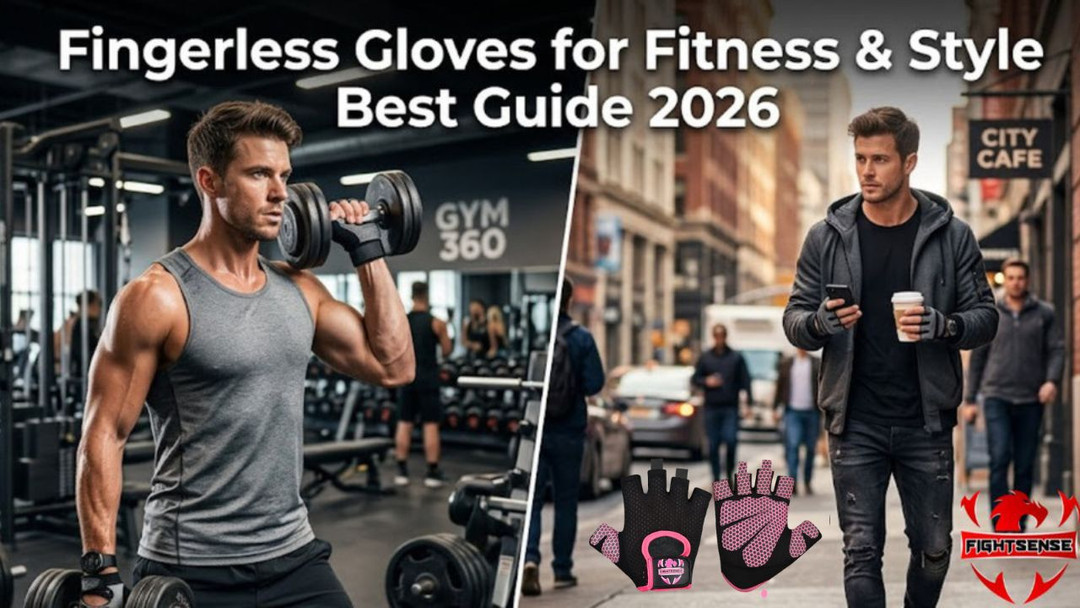
Yes. Their open-finger design — one of several classic glove styles — has also become popular as part of casual athletic and streetwear outfits.
They can be paired with hoodies, joggers, cargo trousers, or other sporty clothing for a practical fitness-inspired appearance.
That versatility makes them appealing to people who want workout accessories that don’t have to stay in the gym bag.
Are Fingerless Gloves Worth It in 2026?
For many gym-goers, they can be a worthwhile accessory if hand comfort is an issue during training.
Fingerless gloves are especially useful if you regularly deal with palm friction, sweaty hands, or discomfort during longer sessions.
The important thing is to choose equipment based on your actual training needs rather than assuming that more gear automatically means better results. For bicep-focused training, see how to use an arm blaster for maximum bicep growth.
Common Mistakes to Avoid
Choosing Appearance Over Fit
A stylish design won’t help if the glove shifts while you’re exercising. Fit should come first.
Buying the Wrong Size
Loose material can bunch up in the palm, while an overly tight fit can become uncomfortable. Always check sizing information before purchasing.
Ignoring Ventilation
Heavy or poorly ventilated materials can make your hands feel hot during longer workouts.
Expecting Fingerless Gloves to Fix Poor Grip Technique
Fingerless gloves can improve comfort, but they cannot replace proper hand positioning, controlled movement, or good lifting technique.
Using the Same Gear for Every Exercise
Different workouts place different demands on your hands and joints. Gloves may be useful for some movements, while straps, wraps, or elbow wraps for lifting support may be more appropriate for others.
Why FightSense Training Gloves Are a Smart Choice for Regular Gym-Goers
FightSense focuses on practical fitness gear designed for people who want comfort and dependable performance during regular workouts.
When selecting training gloves, look for features such as a secure fit, durable palm construction, breathable materials, and a design that allows natural movement.
You can explore the FightSense gym gloves collection to find options suited to your training routine.
Choose workout gear that fits your hands properly and supports the way you actually train. A well-designed pair should feel like a natural extension of your hands rather than something you notice during every set.
Ready for a steadier grip and happier palms? Get your FightSense training gloves today.
Get Now!Plus, orders above $100 ship free at FightSense.
Conclusion
This style offers a simple way to add palm coverage and comfort to strength training while keeping the fingers free.
The best pair should fit securely, feel comfortable, provide adequate palm protection, and match the type of training you do most.
Ultimately, gloves are an optional training accessory. Their value comes down to whether they solve a real problem for you, such as friction, sweaty hands, or general hand discomfort.
FAQs
Do workout gloves help with calluses?
They can reduce direct rubbing between the palms and gym equipment, which may help limit the amount of friction that leads to soreness or callus formation.
How should training gloves fit?
They should feel secure without squeezing your fingers or restricting movement. There should not be extra material bunching in the palm.
Are open-finger gloves suitable for weightlifting?
Yes. They can work well for many resistance exercises, including dumbbells, barbells, cable machines, and bodyweight movements.
Can beginners use this type of gym gear?
Absolutely. Beginners can use them when they want additional palm comfort or protection while becoming familiar with different exercises.
What material is best for training gloves?
There isn’t one universal best material. Breathable fabric can improve comfort, while synthetic leather or reinforced panels can add durability in high-contact areas.
Are fingerless designs better than full-finger options?
Not necessarily. Open-finger models offer more fingertip freedom, while full-finger versions provide broader coverage. The better choice depends on your activities and comfort.
Can these gloves be worn for pull-ups?
They can be used for pull-ups if they provide a secure palm fit and enough grip for the bar. However, some people prefer training pull-ups without gloves for a more direct feel.
Can training gloves be worn for everyday style?
Yes. Their athletic appearance works naturally with casual outfits, especially activewear, hoodies, and joggers.