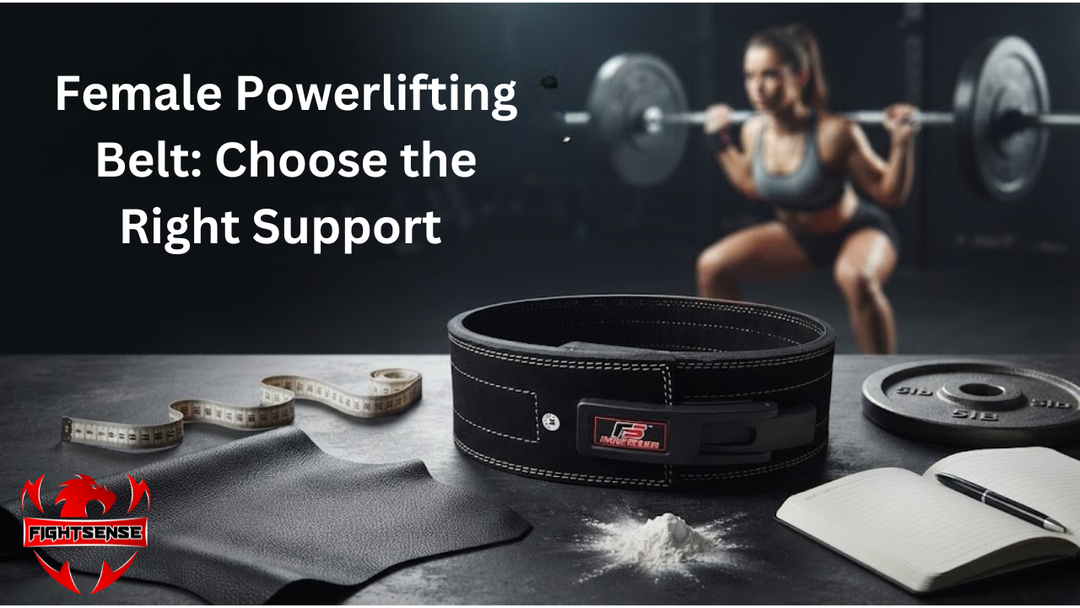
Female Powerlifting Belt: Choose the Right Support
Choosing the right Female Powerlifting Belt can completely transform how you approach heavy compound lifts. When you start pushing past your personal records on squats, deadlifts, and overhead presses, your core needs reliable support to maintain intra-abdominal pressure. Without it, you risk compromising your form or stalling your progress.
Finding a lifting belt that caters specifically to female anatomy can feel overwhelming. With various materials, widths, and closure systems on the market, how do you know which one is right for your body and goals? This comprehensive guide covers everything from measuring your waist accurately to avoiding common sizing mistakes, ensuring you find a reliable piece of gear for your strength journey.
What Is a Female Powerlifting Belt?
A Female Powerlifting Belt is a type of gym equipment that supports women to safely lift higher weights during compound lifts such as squats, deadlifts, and overhead presses. A powerlifting belt, a real one, not a fashion belt, is the same width all the way around your torso so that your abdominal muscles have a solid surface to brace against.
When you take a big breath and push your core out into the belt, it creates considerable intra-abdominal pressure. This internal pressure forms a supportive cylinder of air around your spine, greatly decreasing lower back discomfort and providing you with the stability and confidence to push past your personal records.
Why Female Lifters Need a Specialized Powerlifting Belt
It’s a prevalent misperception in the fitness community that weightlifting belts are only for elite powerlifters or huge bodybuilders. In fact, all types of lifters use belts, from the novice who is just trying to get some basic strength to the experienced competition lifter, to improve structural integrity.
A powerlifting belt does not make you miraculously stronger overnight. Instead, it serves as a physical barrier for your core muscles to press against. When you inhale deeply and brace your core into the belt it forms a tight cylinder of air around your spine. Lower back stress is greatly reduced during large loads by intra-abdominal pressure.
Key Factors to Consider When Buying a Belt
Materials: Leather vs. Nylon
- Leather Belts: Made from real leather or split leather, these give maximum rigidity and durability. They’re perfect for heavy weightlifting and maximal effort days. Premium products such as FightSense offer sturdy leather choices that give you a strong, unyielding surface to brace against, but they do require a short break-in time.
- Nylon Belts: They have heavy-duty Velcro and a strong locking strap for greater flexibility and movement. These are great for functional training, CrossFit, Olympic lifting, and accessory-heavy workout days where you want to go fast through the exercises.
Width and Thickness Options
- 4-inch width: the standard dimension for powerlifting competition. This gives the most surface area for core bracing; however, shorter lifters may prefer a tapered shape or a 3-inch width to avoid squeezing their torso.
- 10mm vs 13mm Thickness: A 10mm thickness provides plenty of rigidity for 99% of lifters, as well as being easier to close and modify. 13mm is usually designated for advanced, heavy-demanding powerlifting competition.
Closure Systems
- Prong Buckles (Single or Double): Classic, dependable, and easy to change between exercises.
- Lever belt buckles: Deliver an ultra-secure snap-closing at lightning speed. But if your waist size changes through an exercise cycle, you will need a screwdriver to modify them.
Step-by-Step Guide: How to Measure Your Waist
One of the biggest mistakes novices make is to buy a lifting belt based on their normal clothes or pants size. Lifting belts are worn higher up on your torso, over your belly button and lower back, which is usually wider than your natural waistline.
- Get a flexible measuring tape. It should be cloth or vinyl, not metal.
- Find Your Belt Position: Stand naturally and measure around your torso at the level where you plan to wear the belt, typically just above your belly button or slightly below, depending on your comfort.
- Inhale and Flex: Do not pull your stomach in. Take a normal breath and lightly brace your core like you are going to lift a hefty barbell.
- Measure it: Tighten the tape but do not squeeze your soft tissue. Take the exact dimension in inches.
- Contrast with Brand charts: Please be sure to check the sizing matrix of the individual manufacturer with your noted number before you purchase.
Female Powerlifting Belt Sizing Chart
|
Waist Measurement |
Recommended Size |
Fit Advice & Characteristics |
|
22 – 28 inches |
Small |
Best for petite frames; ensures minimal belt tail overlap. |
|
28 – 34 inches |
Medium |
Most popular size for average female lifters; great versatility. |
|
34 – 42 inches |
Large |
Designed for wider midsections; check clearance around hips and ribs. |
|
42+ inches |
Extra Large / Custom |
Extended sizing options offering robust structural integrity. |
Pro Tip: Always choose a size where your measurement falls right near the middle of the range. This gives you room to adjust up or down if your body composition changes.
How to Properly Fit and Wear Your Belt
The purpose of a gym belt is to apply pressure all around, not to compress your waist into submission like a corset.
- Set It Right: Position the belt's center across your lower back, pulling the ends forward over your abs. Make sure it rests above your hip bones and below your ribs.
- Security: Close Make it tight so it fits tight. When you’re relaxed in your core, you should be able to slide one flat finger beneath your belt.
- Test the Bracing: Breathe deep into your gut, push your stomach out against the inside of the belt, and see whether you feel stable. If you feel dizzy, have pinching pain, or cannot stretch your stomach, relax it by one notch.
Pros and Cons of Using a Lifting Belt
|
Pros |
Cons |
|
Increases intra-abdominal pressure and spinal stability |
Can become a crutch if relied on for 100% of working sets |
|
Boosts lifting confidence on heavy squats and deadlifts |
Stiff leather models require a tedious break-in period |
|
Helps protect against form breakdown under fatigue |
Poorly sized belts can cause bruising on ribs or hips |
|
Enhances overall mind-muscle connection with the core |
Adds an extra piece of gear to carry in your gym bag |
Expert Tips for Breaking In Your New Leather Belt
- Roll and Flex: Loosen the fibers without splitting the leather by gently rolling it back and forth in different directions.
- Wear In Lighter Warm-ups: Don’t save your 1-rep max effort to wear your new gear. Use moderate-intensity warm-up sets to allow the leather to conform to your individual lumbar curve.
- Condition the Leather: Apply a small amount of leather conditioner to it so the material stays supple and doesn't get dry and crack as time goes on.
Common Mistakes to Avoid
- Jeans Size vs Getting a Lifting Belt: Pant size is not your lifting belt size. Always Measure Your Waist by Hand.
- Crushing Your Internal Organs: A belt that is too tight limits diaphragmatic breathing and makes it harder to brace properly.
- A belt supports a strong core: It can not repair rounded lower backs or unsteady knee tracking. Using a Belt to Mask Bad Form: First, build your foundational technique.
- Neglecting Material Purpose: Purchasing a strong, 13mm powerlifting leather belt if you mainly do functional workout circuits may limit your mobility. Match your training method to the tool.
FAQs:
Do powerlifting belts weaken your core?
No. Scientific research shows that using a belt actually enhances muscular activation in the abdominal wall. This is because your muscles have a substantial item to push against, which boosts neural drive.
Are lifting belts good for beginners?
Yes. Once a beginner has mastered basic movements like the squat and deadlift, they can safely utilize a belt. It helps to speed up kinesthetic awareness of adequate bracing.
Should a women's lifting belt be narrower than a men's lifting belt?
Not required, although many ladies with shorter torsos like tapered belts or 3 inch widths so as not to dig into the ribs or hip crests during deep squats.
How tight should the belt be for a heavy set?
It should be snug enough that you have to push your stomach against it to get pressure, but loose enough that you can still take a full breath of air.
Should you choose nylon belts over leather for deadlifting?
Leather belts often give better stiff support for maximal deadlifts. But some lifters prefer nylon because it bends more forgivingly while setting up in the bottom of a traditional or sumo stance.
How do I take care of and clean my lifting belt?
After your strenuous practices, wipe away sweat with a damp microfiber cloth. Do not immerse leather in water, but rather use a specific leather cleaner.
Why am I injured on my lower back after wearing my belt?
Bruising generally means the belt is either too low across your pelvic bones, too high into your rib cage, or just tightened down way too tight.
Why are FightSense belts popular among female lifters?
Brands like FightSense also emphasize ergonomic shapes, sturdy stitching, and trustworthy hardware that can handle the daily grind, making them a popular choice for strength athletes wanting durable equipment.
Conclusion:
One of the best additions you can make to your training toolbox is investing in a premium Female Powerlifting Belt. Get the right measurements around your waist, select the perfect fabric for your training method, and keep your focus on a tight fit that is not too tight, and you’ll be able to lift with total confidence. Add some new gear, consistent programming, and perfect technique, and watch your strength stats climb safely.
Disclaimer:
This guide is for informational purposes only and is not a substitute for professional training or medical advice. Use lifting equipment responsibly and focus on proper technique.