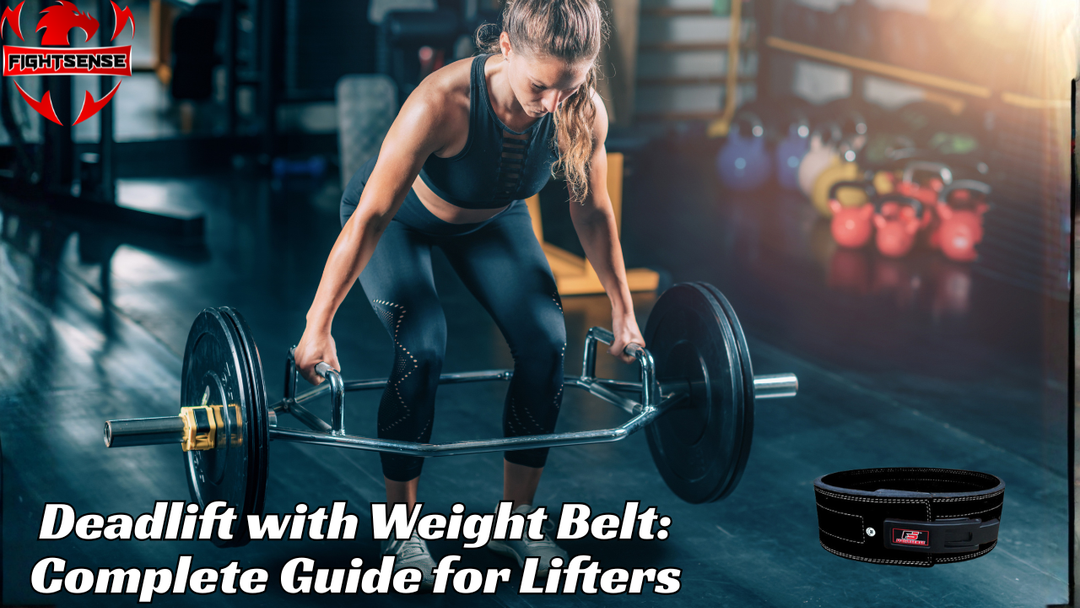
Deadlift with Weight Belt: Complete Guide for Lifters
A Deadlift with Weight Belt is one of the most effective ways many experienced lifters improve stability and control during heavy strength training. Deadlifting already works your legs, glutes, back, and core, but adding a proper lifting belt can help create stronger bracing and better body positioning.
As lifters become stronger and increase the weight on the bar, they often ask whether a deadlift with weight belt actually improves performance or if it is just another piece of gym equipment.
The truth is that a weight belt is a training tool, not a shortcut. When used correctly, a belt can help lifters handle heavier loads, improve confidence, and maintain better form.
Key Takeaways:
- A deadlift with weight belt can improve stability by helping lifters create stronger core pressure during heavy lifts.
- A weight belt is a support tool, not a shortcut — proper form, technique, and strength development always come first.
- Using a lifting belt at the right time matters — it works best for heavier sets when your stability becomes a challenge.
- Correct belt usage improves performance by helping you brace better, maintain control, and lift with more confidence.
- The right equipment supports better training — a quality belt like a lever belt can enhance your workouts when combined with smart training habits.
What Is a Weightlifting Belt and Why Do You Use One?
A weightlifting belt is a supportive piece of training equipment designed to help lifters maintain stability during heavy strength workouts such as deadlifts and squats. You normally wear it around your waist and it helps to increase the strain on your core as you brace your body before you lift.
A lifting belt’s main goal isn’t to raise the weight for you, it’s to help support you throughout tough sets. When used properly it helps lifters improve their body control, maintain better posture, and gives them more confidence when managing greater loads.
Why Do Lifters Use a Weight Belt for Deadlifts?
Most novices think a weight belt is just for back protection but the main aim of it is to assist you generate stronger core pressure.
When deadlifting with weight belt, the belt provides your abdominal muscles with something to press against when bracing your core. This produces a more robust and stable core.
- A decent lifting belt will help you:
- Build your core strength
- Improve your posture
- Handle heavy lifts
- Build confidence in difficult sets
The belt helps your strength but it doesn’t replace good technique.
Is a Weight Belt Necessary for Heavy Deadlifts?
Not every lifter and not every workout needs a belt.
For beginners, mastering good deadlift technique should come first. However, as you go heavier, a weight belt might be helpful in terms of stability during big sets.
Many advanced lifters warm-up without a belt, only donning it when they get into their heavier working weights.
This helps improve natural strength while still getting support when you need it.
When Is the Right Time to Add a Deadlift Belt?
There is no magic number for when someone requires a belt.
When should a lifter consider using a belt:
- The technique is already coherent
- Heavyweights test durability
- It gets hard to brace the core
A weight belt is better for deadlift training when it enhances good form, not replaces it.
How Can a Weight Belt Improve Your Deadlift?
The efficiency of the weight belt training deadlift can be improved with the belt if utilized properly.
Stronger Core Stability
Your core holds your body together while you move. A belt helps you create additional pressure, which allows you to have more control when pulling heavier weights.
Increased Heavy Lift Capability
A belt will not give you strength overnight, but it will help you make better use of the strength you have.
More confidence when heavily loaded
A great lifting belt can make lifters feel a lot more ready to take on a hard set.
How to Wear a Weight Belt the Right Way?
Proper use of a belt is critical to gaining advantages from a deadlift with weight belt practice.
Here’s how to do it:
- Wrap the belt around your waist.
- Snug it up comfortably.
- Breathe deep
- Tighten your core against the belt
- Keep the pressure on as you lift
A belt should help you move, not restrict your breathing.
Common Weight Belt Mistakes Made By Lifters
- Using a belt too early – Beginners should focus on learning how to deadlift correctly and building natural core strength.
- Wearing the belt too tight. A belt should support you without restricting your breathing or impeding appropriate bracing.
- 54. Use a belt for every set – Use the belt for your heavier working sets rather than using it on every exercise.
- Wrong size or kind of belt – A belt which does not fit properly might restrict mobility and diminish lifting efficiency.
- Neglecting core training – A weight belt helps support your core, but it’s no replacement for core-strengthening workouts.
Why Choose Quality Equipment for Strength Training?
The right equipment can improve your training experience by providing better comfort, stability, and support during heavy lifts. A quality lifting belt helps lifters maintain focus and confidence while performing challenging exercises like deadlifts.
Fightsense is a fitness brand that provides strength training equipment and weightlifting accessories, including lever belts designed for lifters who want reliable support. However, equipment works best when combined with proper technique and consistent training.
How Does Belt Usage Affect Your Deadlift Training?
Using a belt and training without one both have different advantages. The right choice depends on your experience level, lifting goals, and workout intensity.
|
Training Approach |
Key Advantage |
|
Deadlifting With a Belt |
|
|
Deadlifting Without a Belt |
Builds natural bracing and core control |
|
Beginner Training |
Focuses on learning technique and movement |
|
Heavy Strength Training |
A balanced approach works best. Train without a belt to develop your foundation, and use one when heavier weights require additional support.
What Happens When You Add a Belt to Your Training?
A lot of lifters buy into the idea that a weight belt can give them rapid gains on their deadlift. The truth is, a weight belt is all about stability.
I trained with a lifter who had a hard time with larger pulls because he lost tension at the peak of the exercise.
He improved his setup and added a belt in heavier sets and his lifts became much more consistent.
The belt didn’t make him strong. It helped him employ the strength he already had built.
How a Weight Belt Made My Training Better
I know a gym member who was trying to get stronger in the deadlift. He had a good base, but every time he gained weight he found it difficult to maintain stability in the hardest phase of the lift. There was power there, but the body position was not always consistent.
He concentrated on correct bracing and added a lifting belt to his hard exercises and saw a great improvement. The belt gave him stronger core pressure, a more steady feeling and more confidence to hit harder sets. His development proved that a deadlift with weight belt isn’t about relying on equipment, it’s about using the correct assistance to increase your training.
FAQs:
1. Does a belt boost deadlift strength immediately?
No. It makes you more stable and lets you use your existing strength more efficiently.
2. Can a beginner wear a deadlift belt?
Belt dependence should not precede basic technique for beginners.
3. Will a lifting belt protect me from injury?
Belts can assist with stability but it’s still important to use appropriate form and sensible training.
4. Do belts substitute core work?
Nope. That belt supports your core, but it doesn’t develop core strength for you.
5. What is the reason for powerlifters to utilize weight belts?
Belts are used to enhance bracing, control, and performance during maximum-effort lifts.
Conclusion:
Used properly, deadlift with weight belt can be a beneficial adjunct to strength training. The belt should be considered as a tool to assist you in progressing, not something you can’t train without.
Improve your lifting by refining your technique, strengthening your base, and using your equipment smartly.
Disclaimer:
This article is for informational purposes only and does not replace professional fitness advice. Always use proper technique and choose equipment according to your training level.