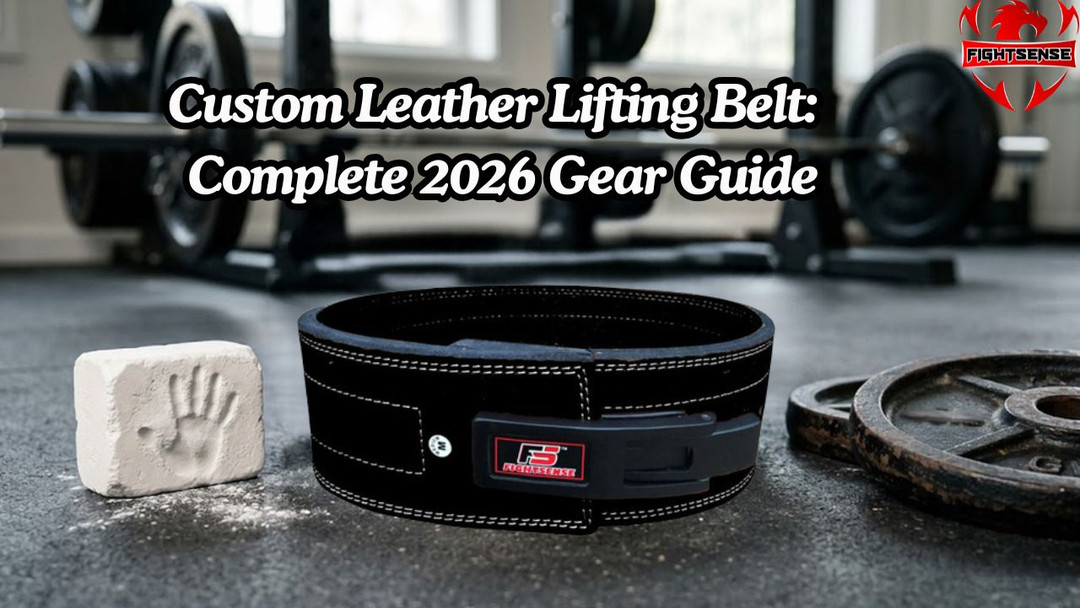
Custom Leather Lifting Belt: Complete 2026 Gear Guide
When heavy weights are on the bar, proper core stability makes the difference between hitting a new personal record and suffering a debilitating spine injury. Investing in a custom leather lifting belt gives athletes tailored support, supreme durability, and a unique look that mass-produced nylon belts simply cannot match.
In this comprehensive guide, we examine everything you need to know about custom leather weightlifting belts—from thickness and closure mechanics to personalized artwork, sizing, and proper bracing techniques.
What Is a Custom Leather Lifting Belt?
A custom leather lifting belt is a specialized strength-training accessory tailored specifically to an athlete’s waist dimensions, support preferences, and visual style. Unlike mass-produced nylon or synthetic options, these belts are handcrafted using thick, heavy-duty sole leather designed to resist stretching under maximum loads. By choosing your exact thickness (10mm or 13mm), preferred width, hardware closure type (lever vs. prong), and customized artwork, you get a personalized piece of powerlifting equipment built to maximize core stability and last a lifetime.
Why Choose a Custom Weightlifting Belt?
A weightlifting belt acts as a rigid wall for your abdominal muscles to push against. This action increases intra-abdominal pressure (IAP), stabilizing the lumbar spine during heavy compound exercises like squats, deadlifts, and overhead presses.
While high-quality standard belts—such as a Fightsense lever belt—provide reliable everyday support right out of the box, opting for a custom-built leather belt offers tailored functional and aesthetic advantages:
-
Unmatched Spine Support: Premium full-grain or top-grain sole leather offers maximum rigidity without degrading or stretching under heavy loads.
-
Anatomical Fit: Custom dimensions ensure the leather sits comfortably across your torso without pinching your hips or digging into your ribs.
-
Personalized Aesthetics: Add custom embroidery, laser engraving, custom dye finishes, or suede linings to reflect your personal brand or powerlifting team.
-
Lifetime Durability: High-grade vegetable-tanned leather combined with heavy-duty steel hardware lasts decades when properly maintained.
Lever Belts vs. Single/Double Prong Belts
Choosing the right closure mechanism impacts both performance convenience and adjustment flexibility.
|
Closure Type |
Speed |
Adjustment |
Best For |
|
Lever |
Fast |
Screwdriver required |
|
|
Single Prong |
Moderate |
Fast & On-the-fly |
General Training & Daily Use |
|
Double Prong |
Slow |
Fast & On-the-fly |
Choosing the Right Specifications: Thickness & Width
Belt Thickness: 10mm vs. 13mm
- 10mm Belts: Extremely versatile and quicker to break in. Ideal for beginners, intermediate powerlifters, Olympic weightlifters, and bodybuilders who want strong support without excessive stiffness.
- 13mm Belts: The maximum thickness allowed by most powerlifting federations (USAPL/IPF). Provides maximum rigidity for elite lifters moving heavy loads, though it requires a longer break-in period.
Belt Width: 4-Inch vs. 3-Inch
- 4-Inch Standard: The most popular option for powerlifters. Provides uniform back and abdominal coverage.
- 3-Inch / Tapered: Ideal for shorter lifters, athletes with shorter torsos, or deadlifters who experience hip pinching when pulling from the floor.
How to Design & Customize Your Belt: Step-by-Step
Step 1: Measure Your True Waist Size
Never use your pant size. Wrap a flexible measuring tape around your belly button (mid-torso) while pulling your abdomen slightly tight. This represents your true waist measurement for a lifting belt.
Step 2: Select the Leather & Lining Finish
- Outer Leather: Choose vegetable-tanned sole leather for rigidity. Select oiled leather or finished grain for water and sweat resistance.
- Inner Lining: Suede linings add friction to prevent belt slipping during heavy sets, while finished leather allows easier positioning.
Step 3: Choose Hardware & Stitching
Opt for heavy-duty nickel or stainless steel prongs/levers. Select reinforced double or triple stitching using bonded nylon thread to prevent seam separation over time.
Step 4: Add Personalization Elements
Customize your belt with:
- Embossed or embroidered last names/nicknames.
- Custom color dyes (e.g., matte black, crimson, vintage brown).
- Laser-engraved logos or motivational quotes on the lumbar pad or tail.
Pros and Cons of Custom Leather Belts
Pros
- Maximum intra-abdominal pressure generation for heavy lifts.
- Tailored dimensions engineered specifically for your body type.
- Premium aesthetic quality and long-term durability.
- Federation-compliant options (IPF, USPA, USAPL).
Cons
- Higher initial investment compared to mass-produced nylon options.
- Leather requires a brief break-in period for optimal comfort.
- Custom manufacturing lead times usually range from 2 to 6 weeks.
Expert Tips for Maximum Belt Longevity
- Break It In Naturally: Roll the leather tightly back and forth in both directions to soften the fibers before your first workout. Avoid submerging the leather in water or applying harsh chemicals.
- Condition the Leather Twice a Year: Apply a high-quality leather conditioner or mink oil to maintain flexibility and keep the hide from drying out or cracking.
- Air Dry After Workouts: Sweat causes moisture build-up. Always hang your belt in an open, well-ventilated area after training—never seal it inside a damp gym bag.
Common Sizing & Customization Mistakes
- Mistake 1: Ordering Based on Pant Size. Jeans sit lower on the waist and run smaller than mid-torso measurements. Always measure at the navel level.
- Mistake 2: Picking 13mm for General Fitness. 13mm belts can be uncomfortable and overly stiff for athletes who do dynamic movements, Olympic lifts, or general bodybuilding.
- Mistake 3: Forgetting Federation Rules. If you compete in powerlifting, ensure your chosen leather thickness, width, and lever design meet your federation’s specific rulebook.
FAQs:
What makes a custom leather lifting belt better than a standard nylon belt?
Leather belts offer rigid structural stability that allows athletes to generate substantially higher intra-abdominal pressure during maximal squats and deadlifts. Nylon belts compress under heavy weight, reducing maximum bracing potential.
How long does a genuine leather weightlifting belt last?
Full-grain sole leather construction combined with heavy-duty hardware yields a functional lifespan of 10 to 20 years with proper storage and basic leather conditioning.
Is a lever belt superior to a single-prong belt?
Lever mechanisms provide instant tightening and quick release between heavy training sets. Single-prong buckles allow easier micro-adjustments when torso measurements change or when wearing extra clothing layers.
What is the correct method to measure waist size for a custom belt?
Wrap a flexible measuring tape directly around the navel level while keeping the abdomen relaxed. Pant size measurements sit lower on the hips and result in incorrect sizing.
Are custom leather belts approved for official powerlifting competitions?
Federations such as the IPF and USPA allow custom belts provided dimensions do not exceed 10cm in width and 13mm in thickness, with approved buckle designs.
How can a stiff new leather belt be broken in quickly?
Rolling the belt inward and outward repeatedly loosens tight leather fibers safely. Soaking leather in water or applying heat weakens the material integrity and voids warranties.
Can custom artwork and logos be added to a strength belt?
Manufacturers utilize precision laser engraving, custom embroidery, and specialized leather dyes to apply names, team logos, and custom lettering across the back panel or tail.
Conclusion
A custom leather lifting belt represents an essential investment in long-term performance, spinal protection, and individual style. Selecting the correct thickness, width, closure type, and custom finish creates a reliable piece of gear tailored precisely to personal training demands.
Disclaimer:
This blog serves only for informative needs. Before lifting using a custom leather lifting belt, always see a trainer or medical practitioner.