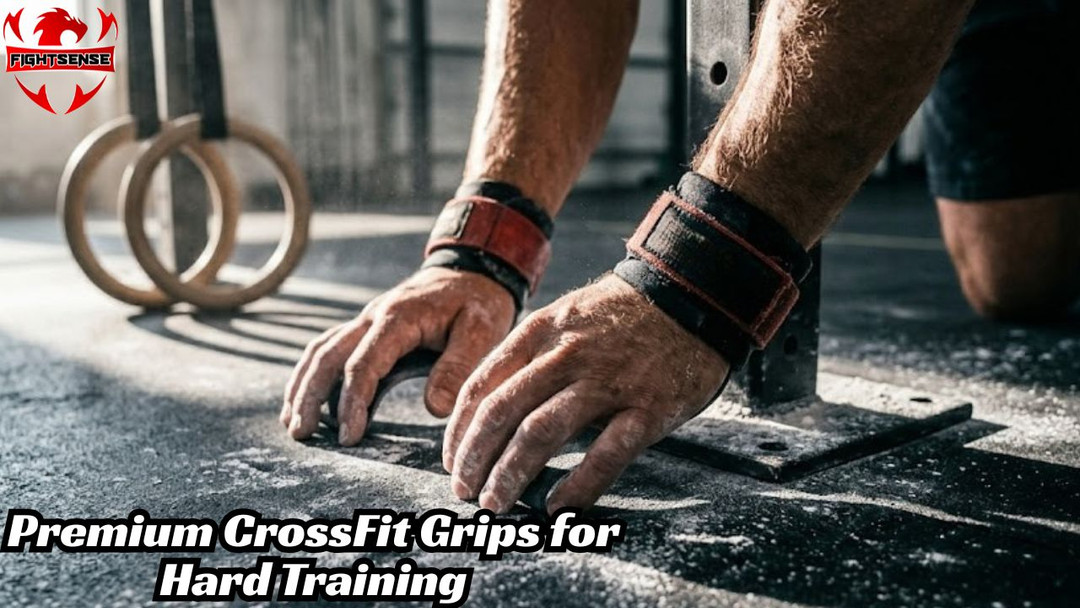
Premium CrossFit Grips for Hard Training
Keynotes:
- Prevents hand tears and painful blisters
- Enhances grip strength and bar control
- Reduces fatigue during high-rep workouts
- Improves stability in pull-ups and WODs
- Allows longer, more efficient training sessions
What Are CrossFit Grips and Why Are They Used?
Hand grips are protective gear that you wear on your hands while you work out. They normally cover the palm and attach around the wrist. This helps you keep a good grip on rings and bars.
People often use them for:
- Pull-ups
- Toes to bar
- Muscle-ups on a bar
- Training with kettlebells and barbells
The fundamental goal is simple: make the grip more stable and reduce friction.
Many athletes choose Fightsense grips because they are made for high-intensity training and can be used over and over again.
What Are the Benefits of Using Hand grips?
Gym grips have a number of safety and performance benefits:
Stronger grip
You can hold the bar for longer without it slipping.
Less damage to hands
Less likely to have blisters, rips, and ripped skin.
Better Endurance
More reps and longer sets are possible when your grip doesn't get tired.
More Focus on Training
You don't have to worry about your hands hurting when you work out.
Better Performance
More grip means more control when doing advanced maneuvers.
How Do Gym grips Work?
Gym grips keep your flesh from touching the apparatus. When you put them on the bar and wrap them around your wrist, they make the surface rougher and spread the pressure more evenly.
Some of the most important functions are:
- Keeping palms from rubbing against each other
- Making it easier to hold on to pull-up bars
- Keeping the wrist stable while moving heavy things
Why Do You Need Workout grips for Training?
One of the worst things about CrossFit is that it may shred your hands. Bar work with a lot of reps causes friction, which can hurt and cause blisters and shredded skin.
Gym grips are helpful because they:
- Less direct contact between the bar and skin
- Stop calluses from becoming tears
- Get better at controlling the bar while you're tired.
Without grips, your training can end because your hands hurt, not because your muscles are tired.
Which Types of CrossFit Grips Are Best?
There are a number of different kinds of grips:
Grips made of leather
- Strong
- Good for a lot of training
- Lasts a long time
Fake Grips
- Not heavy
- Adaptable
- An easier time getting used to it
Grips without fingers
- Feels more natural
- Faster changes
How to Choose the Right Workout grips?
There are a few important things to think about when choosing Workout grips. Make sure they fit your hands well so you don't slip as you work out. Look for materials that are strong and long-lasting that can handle a lot of training. To avoid putting too much strain on your wrists when you move big things, you need good wrist support.
Also, choose grips based on how you workout, like if you do gymnastics or lift weights. If you want something that will last a long time, Fightsense grips are a good choice.
How to Use Grip straps Properly?
It's crucial to use grips correctly for safety and performance.
Steps:
- If there are grip holes, slide your fingers through them.
- Make sure the strap is tightly wrapped around your wrist.
- Put the grip material on the bar.
- Make changes until it feels safe and comfortable.
- Check that the grip is snug but not too tight.
Are Training grips Safe for Beginners?
Yes, Workout grips are safe for people who are just starting out. But novices shouldn't just use grips.
They are useful for:
- Lessening the pain in the hands at first
- Getting the hang of bar control
- Gaining confidence in your exercises
You should also work on your natural grip strength over time, along with how you use your grip.
Do Grip straps Improve Grip Strength or Reduce It?
Workout grips can help you do better in general during your workouts, but they don't directly build raw grip strength on their own. Instead, they assist you stay strong during high-rep actions like pull-ups and toes-to-bar by minimizing tiredness, protecting your hands, and helping you keep a better grip.
But if you depend too much on grips, your grip strength may not grow as naturally over time. That's why you should only use them when you really need to, like during hard WODs or long sessions. You should also exercise without grips from time to time to build true strength.
How to Clean Grip straps:
For hygiene, durability, and performance, it's crucial to keep your CrossFit grips clean. Let your grips air dry after each workout to stop sweat from building up and making them smell nasty.
Don't wash them in a machine because it can harm the material and make them last less time. Instead, use a moist towel to wipe them down or mild soap if you need to. To keep their shape and quality, be sure to store them in a dry, well-ventilated area.
Final Thought:
CrossFit grips are more than just a fashion statement; they are a useful tool that can protect your hands, help you gain control, and let you keep going through tough sessions without stopping. Using grips correctly can make a big difference in how well you perform and how consistently you do it, whether you're a beginner or an experienced athlete.
The most important thing is to find a balance: utilize grips to help with your training, but don't depend on them fully. For long-term benefits, focus on good form, build up your natural grip strength, and use grips that are strong and well-made, like Fightsense Workout grips. You'll work out harder, safer, and more effectively if you do it the proper way.
Disclaimer:
This content is for general informational purposes only. Results with Workout grips may vary depending on usage and training style
FAQS:
1. Do you need chalk for Training grips?
Some grips work better with chalk, while others are made to work without it. It depends on the material and what you like.
2. What size should Workout grips be?
They should fit tightly around your wrist and not make it hard to move or hurt.
3. Is it okay to utilize CrossFit grips while you train?
Yes, Workout grips are often used in training to help with grip, keep hands from getting tired, and keep them from tearing.
4. Is it better to have finger holes or not?
Finger holes add extra safety, and grips without fingers let you switch between exercises more quickly.
5. When is it time to get new Training grips?
When the material wears out, the grip weakens, or the wrist support starts to break down, you should get new ones.