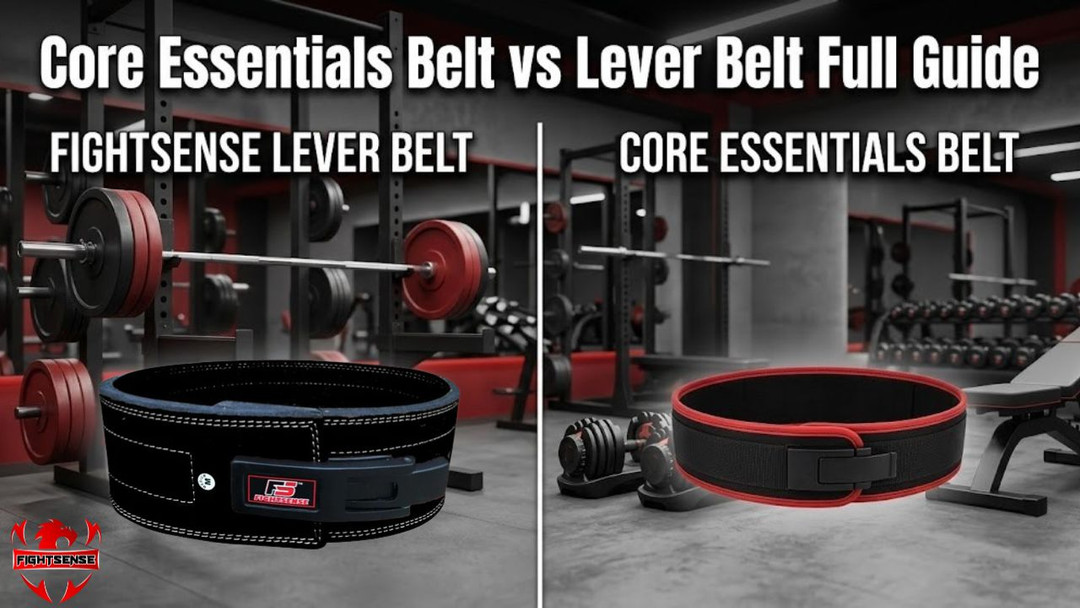
Core Essentials Belt vs Lever Belt Full Guide
Core Essentials Belt is a key choice for anyone in strength training, bodybuilding, or powerlifting who wants better core stability, lower back support, and improved lifting performance. It helps reduce injury risk during heavy compound movements like squats and deadlifts.
Another popular option in the fitness world is the Fightsense premium lever belt, designed for advanced strength training and heavy lifting, offering maximum support and stability.
In this guide, we compare both belts based on performance, comfort, durability, and overall training suitability.
Key Highlights:
- Core Essentials Belt delivers comfort-focused support for everyday strength training.
- Premium lever belts are engineered for maximum stability under heavy loads.
- Flexible belts improve movement freedom and workout comfort.
- Lever systems enhance core bracing and lifting confidence.
- The right belt depends on your lifting style, experience, and goals.
- A quality belt supports performance—but proper technique drives results.
Belt of Core Essentials: Overview
Beginner and intermediate lifters frequently utilize the Core Essentials Belt, which is ideal for general gym training. Its main goal is to offer a modest level of core support, comfort, and flexibility.
Important attributes:
- Structure that is flexible and lightweight to allow for natural movement
- provides stability for the lower back and core.
- Adequate for regular exercise sessions
- Quick and simple adjusting system
Benefits:
- Designed for moderate lifting and general fitness.
- Long workouts are comfortable.
- User-friendly and simple for beginners
- A cost-effective and useful choice
- Adequate for general strength exercise
- permits natural movement when working out
Boundaries
- Extreme heavy lifting is not recommended.
- Limited assistance for loads at the powerlifting level
- lacks a sophisticated locking mechanism
Overview of a Premium Lever Belt:
A high-end lever-style lifting belt, intended for powerlifters and experienced lifters, is the second choice. It emphasizes performance under high loads, stability, and maximum core compression.
Crucial Elements:
- robust lever locking mechanism for a snug fit
- For durability, use thick, reinforced construction.
- For core stability, high compression support
- Made for maximum lifts, deadlifts, and squats
- Constructed for competitive and advanced training
Benefits:
- Maximum assistance with heavy lifting
- Very secure and stable fit
- High durability for prolonged, vigorous use
- improves strength performance
- Perfect for progressive overload training
Restrictions:
- Uncomfortable for novices
- requires correct setup and modification.
Core Essentials Belt vs Premium Lever Belt – Comparison Table
|
Feature |
Core Essentials Belt |
Premium Lever Belt |
|
Purpose |
General fitness |
Heavy lifting |
|
Comfort |
Flexible & soft |
Firm & rigid |
|
Support |
Moderate |
Maximum |
|
Locking |
Buckle system |
Lever system |
|
Best For |
Beginners |
Advanced lifters |
|
Exercises |
Light/moderate lifts |
Squats & deadlifts |
|
Durability |
Regular use |
Heavy-duty |
Core Pressure & Bracing Mechanism:
A lifting belt works by increasing intra-abdominal pressure (IAP), which stabilizes the spine during heavy lifts.
- Core support belt:
Supports natural breathing and moderate bracing, helping beginners learn proper technique and core engagement. - Premium Lever Belt:
Creates a tight, locked fit that allows maximum bracing and spinal stability during heavy lifts.
Training Progression Impact:
- Core support belt:
Best for early-stage lifters focusing on technique, endurance, and controlled strength development. - Premium Lever Belt:
Ideal for advanced lifters aiming for progressive overload and personal record (PR) attempts.
Injury Prevention & Safety:
- Core support belt helps reduce strain during moderate lifting and supports posture control.
- Premium Lever Belt provides maximum spinal protection under heavy loads, reducing injury risk during maximal lifts.
Real Gym Usage Insight
Both belt types are widely used in real gym environments. Lifters’ experience shows that comfort and training level play a key role in selecting the right belt.
Training Science Perspective
From a training science perspective, belts are designed to improve core bracing and spinal stability. Beginners benefit from flexible belts, while advanced athletes require rigid lever systems for maximum performance.
Coaching & Community Standards
Strength coaches and powerlifting communities generally recommend matching belt type with training stage. Lever belts are commonly used in competitive lifting environments.
Safety & Proper Usage
A lifting belt should always be chosen based on safety, proper fit, and training needs. It should support training—not replace correct technique.
Final Verdict:
Both belts are effective but serve different purposes.
- If you want comfort, flexibility, and general gym use, the Core Essentials Belt is the right choice.
- If you want maximum strength, stability, and heavy lifting performance, the fightsense premium lever belt is the better investment.
In conclusion:
A lifting belt is a performance tool, not merely a piece of gym gear. Your training level, lifting intensity, and long-term fitness objectives will determine which option is best for you.
For novices who value comfort, flexibility, and proper form development, the Core Essentials Belt is perfect. The Fightsense premium lever belt, on the other hand, is made for experienced lifters who want the highest level of strength, stability, and support when performing large lifts.
In the end, advanced lifters should prioritize performance, stiffness, and heavy-lifting support for better outcomes, while beginners should concentrate on comfort and technique.