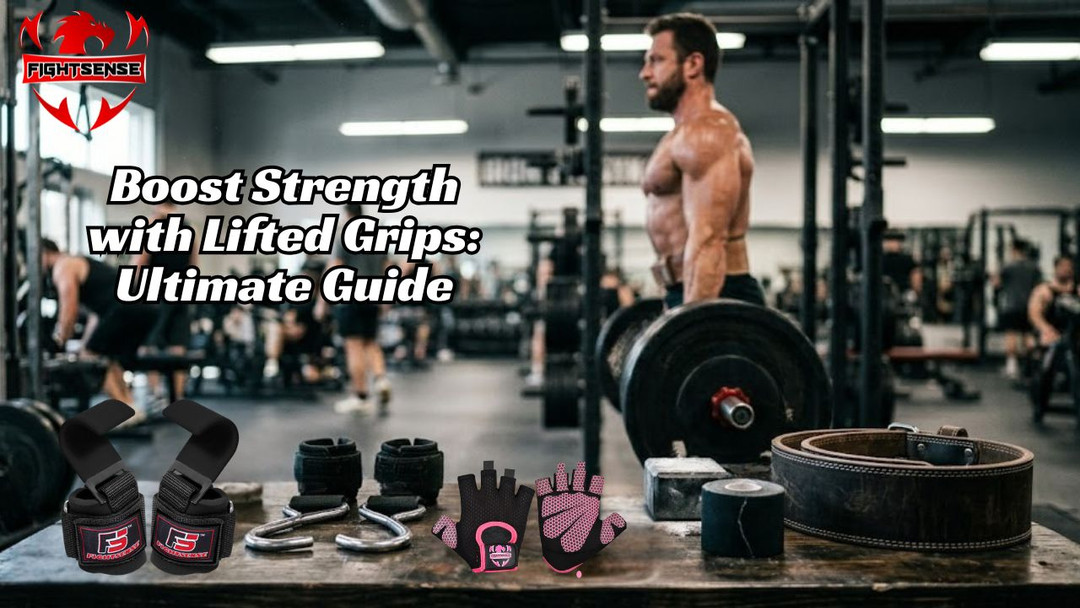
Boost Strength with Lifted Grips: Ultimate Guide
If you’ve been lifting for a while, you already know one thing: your grip can make or break your performance.
You might have strong legs, a powerful back, and solid overall endurance—but the moment your hands give up, the lift is over. That’s exactly where Lifted Grips come into play.
In this ultimate guide, we’re going to break down everything you need to know about Lifting straps—what they are, why they matter, how they boost strength, and how you can use them to level up your training like a pro.
So get comfortable, and let’s talk about something every serious lifter eventually realizes:
Strong grip = stronger lifts.
Keynotes:
- Lifted Grips remove grip as a limiting factor, allowing your main muscles to work at full intensity during heavy training.
- They help you push heavier weights, increase reps, and unlock consistent progressive overload for faster strength gains.
- By improving stability and control, they enhance mind-muscle connection and overall training quality.
- Smart, selective use is essential—overuse can reduce natural grip development over time.
- When paired with proper training knowledge and technique, Lifting straps become a powerful tool for breaking plateaus and maximizing performance.
What Are Lifted Grips?
Let's keep it simple.
Lifted Grips are weightlifting accessories designed to support and strengthen your grip strength during weight training. They allow you to lift heavier weights longer, and not have your hands give out on you before your target muscles do.
Think of them as a support between your hands and the bar.
Lifting straps won’t let you down when you’re doing deadlifts, pull-ups, rows or shrugs. They aid in transferring the load more efficiently so your target muscles perform the real work.
They are widely used in:
- Deadlifts
- chin ups
- Row Barbell
- Lat Pulldown
- Shrugs.
- Dumbbell training, heavy
In simple terms If you are being held back by grip strength Lifted Grips unlocks your true strength potential.
Why Grip Strength is More Important Than You Think?
Most novices focus on chest, arms, abs or legs – but forget about grip strength.
That’s a bad move.
Your grip is the only link between you and the weight.
If you lose your grip:
- Your deadlift is too low
- Your back workout is shorter
- Your pulling power is gone to waste.
- Progressive overload is hard
Even worse, your target muscles never get completely fatigued because your hands give out before they do.
The truth:
Grip is commonly the weakest link in forceful pulling movements.
If you improve it, it will quickly boost your total lifting performance.
How to Actually Increase Strength with Gripped Lifting?
Lifting straps don't magically make you stronger, they let you train at your true ability.
Lessen Hand Fatigue
Your forearms tire rapidly with big lifts, especially with pulling activities like deadlifts and rows, and Training straps lessen this load so you can do longer, more effective repetitions without your grip failing before the set does.
Increase Muscle Focus
With a firm grasp, you’re no longer worried about the weight falling, so you can concentrate totally on the targeted muscles for greater mind-muscle connection and a more precise execution.
Permit Heavier Loads
Training straps let you use weights that your natural grasp may struggle with, so you can break through old boundaries and overload your muscles more effectively for strength growth.
Increase Volume of Training
Because your grip isn’t limiting anymore, you can do more reps and more sets, which directly translates into increased muscle stimulation and growth long term.
Types of Training straps:
Different training styles need different grip tools.
Lifting Straps
Wrap around the wrist and bar to reduce grip pressure.
Best for: Deadlifts, heavy rows, pulling exercises.
Figure-8 Straps
Stronger and more secure version of straps.
Best for: Powerlifting and max heavy lifts.
Lifting Hooks
Metal hooks that support the bar.
Best for: Shrugs, lat pulldowns, cable work.
Grip Gloves
Gloves with added palm support and texture.
Best for: Beginners and general gym training.
Each type helps reduce grip limitation in its own way.
The Importance of the Right Training Guidance in Strength Training:
When it comes to fitness, the correct knowledge is just as vital as the right equipment.
That’s why platforms like Fightsense aim to provide educational, performance-oriented sports content that helps players develop their talents with practical, easy-to-follow instructions and expert insights.
The aim is simple: to deliver practical, reliable and easily understood knowledge that lifters can directly use to their training without confusion.
Why is this important? Most mistakes in training are not due to lack of effort, but lack of adequate comprehension. "And techniques like Training straps only work when utilized properly within a well-structured training method.
When to Use Training straps:
They are powerful but not for every set.
Use them when . . .
- Near max heavy weight lifts
- Getting back to heavy workouts
- Target muscles fail before grip
- Strength or hypertrophy training
Steer clear of them when:
- Direct training of grip strength .
- Performing warm-up sets
- Form practice with light weights
Smart use. Better long term results.
How to Use Lifted Grips Properly?
For Straps:
- Wrap around wrist
- Loop around bar
- Roll bar into palm
- Tighten and lift
For Hooks:
- Attach hooks to wrists
- Place hooks under bar
- Let hooks support weight
- Maintain control
Simple mechanics—but very effective when done right.
Grip straps vs Natural Grip Training:
You don’t choose one—you use both.
Natural grip training builds:
- Forearm strength
- Wrist endurance
- Hand control
Lifted Grips help you:
- Lift heavier weights
- Train muscles to failure
- Progress faster
Together, they create a balanced and strong lifter.
Common Mistakes to Avoid
Even good tools can be misused.
- Overusing Them: This can weaken natural grip development.
- Incorrect Wrapping: Loose grip support reduces effectiveness.
- Ignoring Forearm Training: Grip strength still needs direct training.
- Low-Quality Equipment: Poor material can fail under heavy loads.
Final Thoughts:
Lifted Grips are simple tools, but they can have a powerful impact on your training when used correctly.
They don’t replace hard work—they enhance it.
If your goal is:
- Stronger lifts
- Better muscle growth
- Improved back development
- Breaking strength plateaus
Then Pulling straps can become a valuable part of your training setup.
Just remember:
Use them to support performance—not to avoid building natural strength.
Train consistently, lift smart, and let your grip stop holding you back.
FAQs:
1. Can beginners use Pulling straps from day one?
Yes, beginners can use them, but it’s better to also train natural grip strength alongside so you don’t become overly dependent on support.
2. Do Pulling straps weaken natural grip over time?
Not if used correctly. Overuse can slow grip development, but balanced use alongside grip training will not cause weakness.
3. Are Lifted Grips useful for muscle building or only strength?
They help both. By removing grip limits, they allow better muscle overload, which supports both strength and hypertrophy.
4. Which exercises benefit most from Workout grip support?
They are most effective in heavy pulling movements like deadlifts, rows, shrugs, and lat pulldowns.