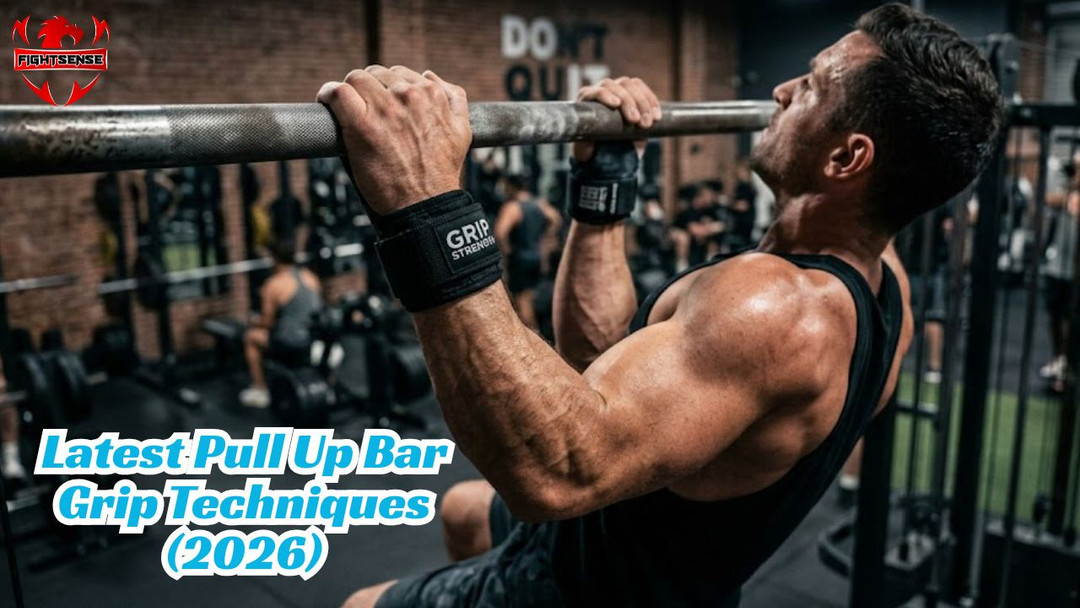
Latest Pull Up Bar Grip Techniques (2026)
Keynotes:
- Improve pull up performance with better grip tools
- Boost strength using advanced grip training support
- Train longer with forearm grip assistance gear
- Upgrade your workouts with modern grip techniques
- Build stronger forearms and back with proper grip use
What is a Pull Up Bar Grip and Why It Matters?
The way you hold the bar during a pull-up is called a pull-up bar grip. This includes the direction of your hands (overhand or underhand), the space between them (large or narrow), and the way you hold the object.
Why is it important?
- It decides which muscles are used.
- It changes how strong you are.
- It makes the risk of injury lower or higher.
- It limits the number of reps you can do.
For instance, a broader hold works your back muscles more, whereas a narrower grip works your arms more. You could not be training well if you don't know how to grasp.
Types of Pull up hand grip:
Understanding different grip styles is key to building a stronger and more balanced upper body.
Overhand Grip (Pronated Grip)
This is the most common pull up bar grip where your palms face away from you.
Benefits:
- Targets lats (back muscles) more
- Builds upper-body strength
- More challenging, great for progression
Underhand Grip (Chin-Up Grip)
In this grip, your palms face toward you.
Benefits:
- Activates biceps more
- Easier for beginners
- Helps increase total reps
Neutral Grip
Your palms face each other (usually done on parallel bars).
Benefits:
- Less stress on wrists and shoulders
- Balanced muscle engagement
- Ideal for people with joint pain
Wide Grip vs Close Grip
Wide Grip:
- Focuses on upper back
- Reduces range of motion
- More difficult
Close Grip:
- Targets arms more
- Better control
- Easier for beginners
Which Pull up holding technique is Best for Your Goal?
There is no one best grip; it all depends on what you want to achieve.
To Build Muscle
To work your back muscles well, use a mix of wide and overhand grips.
For Newbies
Begin with variations that use an underhand or close grip. These give you more control and more reps.
For Stamina
The neutral grip is better since it puts less stress on your joints and lets you do longer sets.
For working out
Athletes that are more advanced often switch between different grips to build balanced strength.
A lot of athletes who use structured training programs, like those from Fightsense, say that changing up their grip is an important element of getting better.
Which Pull Up Bar Grip Builds Strength Faster?
It's not just about performing more reps to get stronger faster; it's also about employing the appropriate pull-up bar grip techniques. In 2026, modern training focuses on more advanced methods such fat grip training, towel grip pull-ups, mixed grip methods, and the fake grip technique.
These methods make your forearms work harder, improve your grip strength, and make your upper body work better overall. You may better target muscles, break through plateaus, and speed up your strength gains by incorporating these grip changes to your workout program.
How to Improve Pull Up Grip Strength Fast?
You need to work on your grip strength directly if your hands give up before your muscles.
Hanging Dead
- Just hang from the bar for as long as you can.
- This swiftly builds up strength.
Carries for Farmers
- Walk while holding heavy things.
- Makes forearms stronger
- Makes the grip more stable
Use Trainers for Grip
- Hand grippers can help you get stronger and last longer as you crush things.
Overload that becomes worse over time
Slowly raise:
- Time spent under stress
- Variations in grip difficulty
Some current training programs, like the ones backed by Fightsense, include grip-specific drills to speed up results without overtraining.
Common Pull Up Grip Mistakes to Avoid:
If you want to make steady development, don't make these mistakes:
Grip Too Wide
Can hurt shoulders and make you weaker.
Weak Position of the Thumb
For the best control, always wrap your thumb around the bar.
Using straps too much
Straps slow down grip development, so use them sparingly.
Not training your forearms
If your forearms are weak, your grip will fail.
The end:
Getting the perfect hold on the pull up bar grip can radically change how you work out your upper body. Using diverse grip types helps you work out more effectively and avoid plateaus, whether you're a novice or an established athlete.
If you really want to improve your performance, try out different grips and keep track of how you're doing. Even tiny changes can have a large impact over time.
Note:
This information is meant for educational purposes. Before commencing any training regimen, you should talk to a fitness expert. You are responsible for doing all of the workouts.
FAQS:
Q1: Which grip on the pull-up bar gives you the fastest strength increase in 2026?
Grip modifications that put more weight on the forearm and keep it under stress for longer periods of time tend to make strength gains happen faster.
Q2: What does it matter if you change your grip when doing pull-ups?
It modifies how muscles work and stops adaptation plateaus from happening during training.
Q3: Can exercising your grip make you a better athlete overall?
Yes, a stronger grip makes it easier to pull, control, and stay stable in a lot of upper-body actions.
Q4: What stops most people from doing pull-ups: their muscles or their grip?
In a lot of cases, grip fatigue sets in before the big muscles in the back or arms are fully engaged.
Q5: How often should you add grip-focused training to your workouts?
Short, regular workouts throughout the week are preferable than hard training that only happens once in a while.