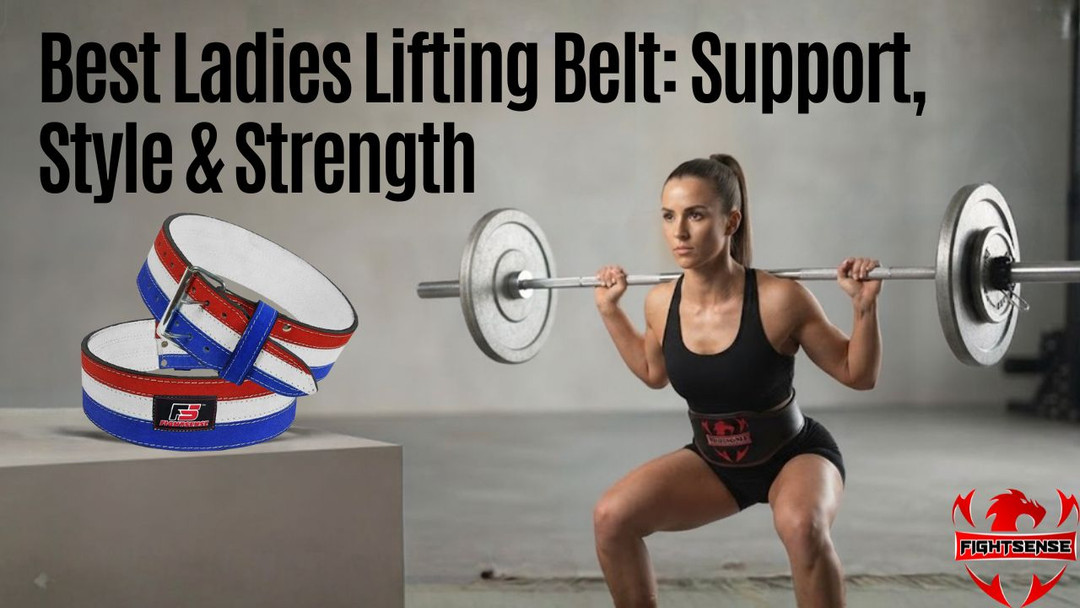
Best Ladies Lifting Belt: Support, Style & Strength
Let’s be completely honest for a moment. If you are searching for the ultimate ladies lifting belt, how many times have you walked into a commercial gym, looked over at the free-weight section, and felt a slight wave of intimidation? Maybe you’ve watched someone load up a barbell with heavy plates, strap themselves into a thick belt, and hoist the weight up with absolute confidence.
For the longest time, the fitness industry treated women’s strength training as an afterthought. Gym floors were flooded with gear built strictly for male proportions. But the fitness landscape has shifted dramatically. Women are squatting heavily, pulling massive deadlifts, and redefining strength.
If you want to level up your training and push past stubborn plateaus, investing in a dedicated ladies lifting belt isn't just an optional luxury—it's a total game-changer. Whether you're pulling 150 lbs off the floor or starting compound lifts, having the correct support gives you the core stability and confidence you need to lift heavier, smarter, and safer.
Why Traditional Lifting Belts Fail Women
Before we dive into the deep end, we need to address the elephant in the room: Why can’t women just use a standard men’s or unisex lifting belt?
If you’ve ever tried wearing a traditional, heavy-duty powerlifting belt, you probably noticed a few uncomfortable things immediately. Traditional belts are often uniformly wide all the way around—usually a full 4 to 6 inches. Because men generally have longer torsos and broader hip structures, these massive belts fit them comfortably.
However, women typically have shorter torsos and a sharper hip-to-waist ratio. When a woman straps on a rigid, overly wide men's belt, several annoying issues occur:
- The Rib Pinch: The top edge of the belt digs painfully into the lower ribs every time you bend down to squat or tie your shoes.
- Hip Bone Bruising: The bottom edge clashes directly with the top of your hip bones, causing bruising and restricting your ability to hinge properly at the hips.
- Poor Coverage: Because of sizing discrepancies, it fails to sit snugly against the narrowest part of your natural waist, rendering it loose where you actually need the support.
This is precisely why a ladies lifting belt matters. These specialized belts are engineered specifically keeping the female anatomy in mind. They feature a contoured design that hugs the natural curve of your waist, narrower side profiles to ensure your hips and ribs remain free from painful pinching, and precision sizing that actually locks down securely on smaller frames.
The Science of Support: Why Your Core Needs Backup
A lot of beginners mistakenly believe that a lifting belt does all the work for you—as if it’s a magical corset that lifts the weight while your muscles take a nap. In reality, the science behind a lifting belt is far more active and empowering.
When you lift heavy objects, your body relies on your core musculature (including your transverse abdominis, obliques, and lower back muscles) to create something called intra-abdominal pressure (IAP). Think of your core like a soda can. When the can is full and sealed under pressure, it is remarkably strong and difficult to crush. When it's empty, it collapses easily.
Your lifting belt acts as that exterior wall. When you take a deep breath, brace your core, and push your abdomen outward against the belt, you create a powerful column of internal pressure. This pressure acts like an internal brace, locking your spine into a safe, neutral position and preventing your lower back from rounding under heavy loads.
The Top Benefits of Using a Ladies Lifting Belt
Here is a closer look at how bringing the right belt into your training arsenal transforms your physical progress:
1. Enhanced Core Stability and Bracing
You can’t fire a cannon from a canoe, and you certainly can’t lift heavy weights from an unstable core. By giving your abdominal muscles a solid surface to brace against, a quality lifting belt helps you maintain superior spinal alignment through every phase of a lift. This stability translates directly to more efficient power transfer from your lower body to the barbell.
2. Radical Injury Prevention and Pain Reduction
Lower back strain is one of the most common complaints among gym-goers. Whether it’s lingering discomfort after leg day or a sharp tweak during a heavy squat set, lower back issues can sideline your fitness journey for weeks. A dependable support belt significantly reduces the risk of hyperextension, muscle strains, and spinal fatigue during high-demand compound movements.
3. An Instant Boost in Mental and Physical Confidence
Lifting heavy weights can be genuinely terrifying. Stepping up to a barbell loaded with plates heavier than your body weight triggers a natural psychological barrier. Putting on your belt acts as a physical cue to your brain: It’s time to work. That tactile sensation of security provides an immediate surge of mental clarity and courage, helping you push past fear and hit numbers you never thought possible.
My Personal Story: How a FightSense Belt Smashed My Deadlift Plateau
I’ll admit it—I wasn’t always a believer in lifting belts. For the longest time, my ego got in the way. I thought belts were strictly for elite powerlifters or bodybuilders prepping for a stage, and that using one meant I wasn't "strong enough" naturally.
That mindset changed drastically a couple of years ago. I had hit an absolute brick wall with my deadlifts. No matter how much I ate, how well I slept, or how strictly I followed my programming, my lower back would fatigue long before my hamstrings and glutes ever gave out. My form would break down around the 200 lbs mark, and frustration was setting in fast.
A fellow trainer pulled me aside one day and suggested I try a proper female-support belt. Skeptical but desperate for a change, I picked up a FightSense ladies gym belt.
The transformation wasn't just gradual; it was immediate. From the very first session wearing it, the difference in my stability was night and day. My lower back pain vanished because my core was finally supported correctly, allowing me to keep my spine locked safely in place. Within two weeks of consistent use, not only did I break through my plateau, but I hit a brand-new personal record that I had been chasing for six months.
Today, my FightSense belt lives permanently in my gym bag right alongside my lifting grips, wrist wraps, and water bottle. It isn't just a piece of gear to me anymore—it's my ultimate training partner.
Get Yours Now!
How to Choose the Right Ladies Weight Belt for Your Goals
With so many options flooding the fitness market, finding the right belt can feel overwhelming. Not all belts serve the same purpose, and choosing the right one depends heavily on your training style, comfort preferences, and anatomical fit. Here is a breakdown of what you need to look for.
1. Fit, Sizing, and Fastening Systems
A good belt must fit snugly around your natural waist—typically resting right above your hip bones and below your ribcage. Never guess your size based on your jeans or leggings size; always use a soft measuring tape around your waist.
- Velcro Straps with Steel Roller Buckles: Highly adjustable, lightweight, and incredibly fast to take on and off. Perfect if your workouts involve transitioning rapidly between different exercises.
- Lever or Prong Buckles: Typically found on thicker leather belts. They offer a locked-in, unchanging level of tension that provides maximum rigidity for heavy lifting sessions.
2. Material Selection: Leather vs. Nylon
- Leather Belts: Provide maximum rigidity, stiffness, and uncompromising back support. If your primary focus is powerlifting, maximal heavy squats, and low-rep heavy deadlifts, leather is your best friend.
- Nylon/Velcro Belts: Lightweight, highly flexible, and breathable. They give you enough support for heavy compound lifts while remaining flexible enough for dynamic movements like CrossFit, circuit training, kettlebell swings, and functional fitness classes.
3. Width and Thickness
For most women, a 4-inch width with a tapered front is the absolute gold standard. It provides exceptional surface area across your lower back and abdomen to maximize intra-abdominal pressure without cutting into your ribs or restricting your breathing.
Final Thoughts: Invest in Your Strength Safely
At the end of the day, fitness is an investment in yourself. If you are searching for the best weight lifting belt for female athletes, your priority should always be finding a balance of comfort, durability, and reliable structural support.
A ladies lifting belt isn’t a shortcut or a cheat code; it is an intelligent tool designed to help you lift smarter, move safer, and train with absolute peace of mind. Whether you are stepping into a gym for the very first time or you’re a seasoned lifter chasing a new competition PR, strapping on a quality belt helps you feel supported, focused, and ready to dominate every single session.
Frequently Asked Questions (FAQs)
1. What is the primary purpose of a ladies lifting belt?
A ladies lifting belt is designed to stabilize your core and lower back by dramatically increasing intra-abdominal pressure during heavy compound lifts like squats, deadlifts, and overhead presses. By creating an internal brace, it protects your spine from hyperextension and fatigue.
2. Do beginners need a women's weight lifting belt?
While beginners can certainly build foundational core strength without a belt, introducing one early in your journey can be extremely beneficial. It helps you safely learn the proper biomechanics of bracing your core and safeguards your spine as you gradually scale up your working weights.
3. How tight should a female weight lifting belt fit?
Your belt should fit snugly around your natural waist, offering firm, unyielding support when you take a deep breath and brace your core against it. However, it should never pinch your skin raw, cause sharp pain against your ribs or hips, or entirely restrict your ability to breathe normally between reps.
4. Can I use the same belt for all my gym exercises?
Yes, if you choose a versatile option—such as a high-grade nylon Velcro belt—you can comfortably wear it across a wide range of strength training, bodybuilding, and functional conditioning workouts without needing to constantly swap gear.
5. Are leather lifting belts better than Velcro lifting belts?
Neither is objectively "better"—it entirely depends on your individual training style. Leather offers superior, rigid support that is ideal for heavy powerlifting and maximal strength work. On the other hand, Velcro offers flexibility, breathability, and rapid adjustments, making it far superior for dynamic, fast-paced workouts.