
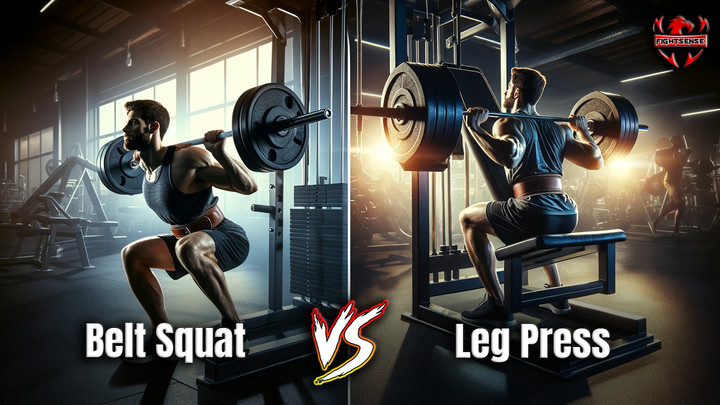
Belt Squat vs Leg Press: Comparing Leg Exercises
19th Mar 2025
Belt squat vs leg press is a common debate when it comes to building lower-body strength. Regarding building your lower body, belt squats and leg presses usually take center stage. Both are beneficial for building leg strength, though each has unique benefits. In this blog, we will take a closer look at belt squat vs leg press, along with how belt squats compare to back squats and barbell squats, providing a thorough comparison. Knowing these exercises will let you, regardless of your fitness experience, customize your program for optimal results.
Key Highlights:
-
Belt squat vs leg press: Leg presses allow heavier loads, but belt squats engage more muscles, especially glutes and hamstrings.
-
Belt squats are safer for those with back issues while still improving leg strength.
-
Barbell squats build quads and overall strength best, but belt squats reduce lower-back strain.
-
Choose exercises based on injuries and fitness goals, and always prioritize proper warm-up and form.
What is a Belt Squat?
Targeting your quads, hamstrings, and glutes, the belt squat is a lower-body exercise. Whereas conventional squats place weight on your shoulders, the belt squat uses a belt around your waist to suspend weights from the lower body. For people with back problems or those trying to reduce injury risk while still growing strong legs, this unusual arrangement lowers stress on your spine and is therefore an excellent choice.
Benefits of the belt squat:
-
It releases back and spine strain.
-
This approach reduces overall involvement while effectively targeting the legs.
-
Those with limited mobility or lower back discomfort would find a perfect fit for this device.
Understanding the Leg Press: Benefits and Key Tips:
When comparing belt squat vs leg press, the leg press is a machine-based lower-body exercise where you push a weighted platform with your legs. It primarily targets the quads, hamstrings, and glutes, making it effective for overall leg development. Compared to free-weight exercises, the leg press offers more stability and support, which is especially helpful for beginners or anyone looking to lift heavier weights safely.
Benefits of the Leg Press:
-
Provides full back support, reducing strain on the lower back while lifting heavy.
-
Ideal for beginners or those starting strength training.
-
Allows safer loading of heavier weights due to guided movement.
-
Helps isolate leg muscles more effectively than free-weight squats.
-
Can be adjusted to target different muscle groups by changing foot placement (high for glutes/hamstrings, low for quads).
Tips for Effective Leg Press:
-
Keep your feet flat and avoid locking knees at full extension.
-
Control the movement slowly for maximum muscle engagement.
-
Gradually increase weight to avoid joint stress.
When deciding between exercises, belt squat vs leg press depends on your goals: belt squats engage more muscles like glutes and hamstrings, while leg presses allow heavier loads with more stability.
A side-by-comparison of belt squat against leg press:
Three key areas—muscle activation, spinal health, and weight capacity—allow us to separate the comparison between belt squat and leg press.
Muscle Contraction:
Usually, the argument between the belt squat and the leg press is around which exercise best engages the muscles. Better glute and hamstring activation and a more natural, deeper range of motion made possible by the belt squat allow Conversely, especially when employing a limited foot stance, the leg press usually pays greater attention to the quadriceps. The belt squat offers the best total muscle activation if your goal is for more balanced leg development.
Back & Spinal Health:
The capacity of the belt squat to lower the load on the spine is one main benefit. A belt around your waist supports the weight; hence, there is much less compression on your spinal column than in the leg press or standard squats. For those with lower back problems or those healing from back ailments, advantage makes the belt squat a great option.
Load and weight capacity:
Although both workouts lead to significant leg growth, the leg press is meant to handle more weights because of its machine-based structure and steady platform. The leg press can be the go-to choice for people wishing to push great weight.
But if you give spinal health top priority and want to concentrate more on the leg muscles, the belt squat offers a safer, more under-control setting to increase strength without compromising efficacy.
How Do Belt Squats Compare to Back Squats?
The argument between belt squats and back squats raises significant variations in how each exercise works on your body. Using a barbell across your upper back, back squats work the entire body—especially the core and upper back. For developing full-body strength and power, they are successful; nevertheless, especially if done incorrectly or with too much weight, they can be taxing on the spine.
Targeting the legs more directly, belt squats also reduce tension on the lower back and spine. For those with spinal problems or those seeking a less taxing substitute for back squats yet still want significant leg development, belt squats are a perfect fit.
Which is better for you—a belt squat or a barbell squat?
Comparing a belt squat to a barbell squat helps one appreciate the different advantages of both. Barbell squats, regarded as the gold standard for developing leg and core strength, engage multiple muscle groups and contribute to the development of functional strength. For athletes or others looking to acquire total-body power, they are superb.
For those healing from injuries or those trying to concentrate just on leg strength, belt squats provide a lower-risk alternative that lessens back pressure. Belt squats are simpler for novices than barbell squats and require less technical ability to complete well.
Shop Now !
FAQs:
1. What muscles do they work?
Quads, hamstrings, glutes; belt squats also hit hip stabilizers more.
2. Best for beginners?
Leg press—for support and safer heavy lifting.
3. Are belt squats safer than barbell squats?
Yes, they reduce spine and lower-back strain.
4. Belt squat vs leg press—which to choose?
Leg press for heavier lifts, belt squat for more muscle engagement.
5. Can they replace barbell squats?
No, barbell squats are best for overall leg strength; combining all is ideal.
Final Thoughts:
When deciding between belt squat vs leg press, your goals, injury concerns, and personal preferences will guide your choice. A belt squat is ideal if you want a safer squat alternative that reduces spine strain. Conversely, the leg press is better for focusing on lifting heavier weights with stability. Barbell squats remain unmatched for overall leg strength and power. Each exercise has value, and combining them in your program can help you build balanced, strong legs.
Disclaimer:
Remember always to see a fitness professional or healthcare provider before starting a new workout program, especially if you have pre-existing injuries or medical issues.