
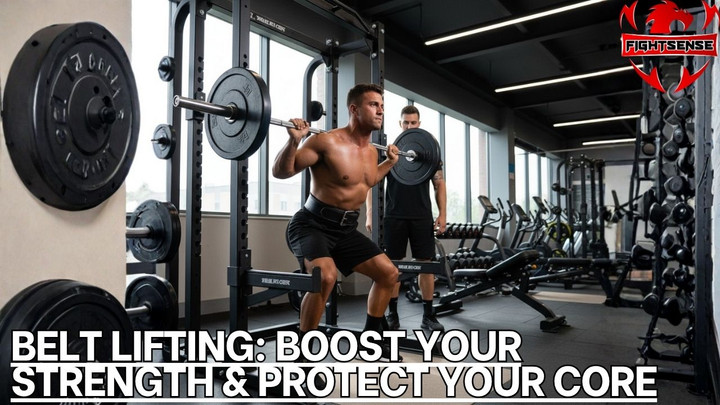
Belt Lifting: Boost Your Strength & Protect Your Core
4th Apr 2025
Weightlifting belts are common among serious lifters—and for good reason. If you’ve ever watched someone at the gym handling heavy weights, chances are they were using one. But what exactly is a support belt, and why should you consider incorporating it into your workouts?
No matter your experience level, a lifting strap can greatly improve your posture, enhance performance, and increase safety. In this guide, we’ll explore proper techniques, the key benefits of using a custom lifting belt, and why every heavy lifter should make it part of their routine.
Key Highlights:
- Lower back support during big lifts depends on Support belt.
- A lifting belt keeps spine alignment and improves posture.
- By using belts weightlifting, one lowers their lifting injury risk.
- A lifting belt used correctly can increase performance and stability.
- Both new and seasoned lifters will find considerable benefit from Support belt.
What Does Belt Lifting Do?
Support belt guarantees that your body gets the support it requires during vigorous exercises, not only that you're wearing a belt for style. Particularly in the abdomen and lower back areas, belt lifting compresses around your core and helps preserve correct posture during lifting. This procedure helps you to raise more weight without running the danger of spinal damage.
Particularly helpful during complex motions, including squats, deadlifts, and overhead presses, is a lifting belt. These exercises need great spinal stability, which the belt offers, so you are guaranteed to keep the right form all during the lift.
Why Use a Lifting Belt for Weightlifting?
For dedicated lifters, a lifting belt changes everything for a number of reasons. The main advantages are here:
Core Stability and Support
The stability a lifting belt offers to your core is one of the main advantages. The belt assists you in bracing your core muscles by applying pressure around your abdomen, so enhancing your capacity to keep good posture and prevent injury.
Reduced Risk of Injury
Particularly to the lower back, belts weightlifting drastically lessen the risk of damage. he belt's support lets you prevent too much spinal flexion or extension during large lifts, which could cause injury. Your lifting belt shields you from pointless strain.
Improved Lifting Performance
Increased core support lets you concentrate all of your effort on the lift itself. This implies you can confidently raise additional weight. The higher intra-abdominal pressure facilitates more efficient muscle engagement, therefore enhancing your output of strength.
Posture and Alignment
Safely doing weightlifting workouts depends on good posture. Under high loads, a lifting belt helps you keep a neutral spine. This reduces your likelihood of rounding your back or leaning forward during lifts, which might result in damage.
When Should You Use a Lifting Belt?
Every lift does not call for a lifting belt. Safety and performance both depend on knowing when to wear a lifting belt. During maximal lifts—that is, squats, deadlifts, and overhead presses—that are either close to or at your 1RM, it is most helpful. Lighter sets or exercises devoid of significant spine pressure, however, usually do not need it.
Priorities should also include form and technique before deciding on a lifting belt. Using the belt as a crutch without first learning good posture may lower the efficacy of long-term training.
Choosing the Right Belt for Weightlifting:
If you are thinking about Support belt selecting the correct lifting belt is absolutely vital. Maximizing your performance and safety depends on selecting a belt that fits your body and requirements; not all belts are made equal. These considerations should help you decide on a lifting belt:
- Material: Leather belts give the best support for large lifts and are the most robust. For smaller lifts or longer training sessions, however, fabric belts are lighter and could provide better comfort.
- Width and Thickness: The belt's breadth and thickness should complement your lifting technique and degree of comfort level. For the best support during squats and deadlifts, wider belts usually help.
- Fit: Make sure the belt tightly fits your waist. A well-fitting belt will help you brace your core more precisely and lower the possibility of it slipping during lifts.
Conclusion:
Weightlifting belts in your routine are one of the best ways to protect your lower back and boost performance. Whether your focus is on strength training or heavy lifting sessions, a support belt can significantly impact your results. Every serious lifter should have this essential gear, as it strengthens the core, reduces injury risk, and enhances overall performance.
Disclaimer
This blog should not be regarded as professional fitness or medical advice; it is only for informative purposes. Before adding new equipment to your workout program, always speak with a qualified trainer or healthcare expert.
FAQs:
1. What is Support belt?
In weightlifting, a Support belt is the technique of employing a belt lifting belt to increase core and lower back support, therefore lowering the risk of injury and improving posture.
2. Why ought I to wear a lifting belt?
Particularly while lifting big weights, a lifting belt helps you maintain good posture, stabilizes the core, and lowers your chances of back problems.
3. For every exercise, can I rely just on a lifting belt?
Although a lifting belt is especially useful for compound exercises like squats and deadlifts, it's best worn for large lifts stressing the spine.
4. During a big lift, what does a lifting belt accomplish?
It increases intra-abdominal pressure, stabilizing the spine and preventing back discomfort, allowing you to lift heavier and more safely.
5. As a novice, do I need a lifting belt?
Using a lifting belt will help beginners, especially as they start lifting more weight. Still, before depending on tools, one should first master the correct method.