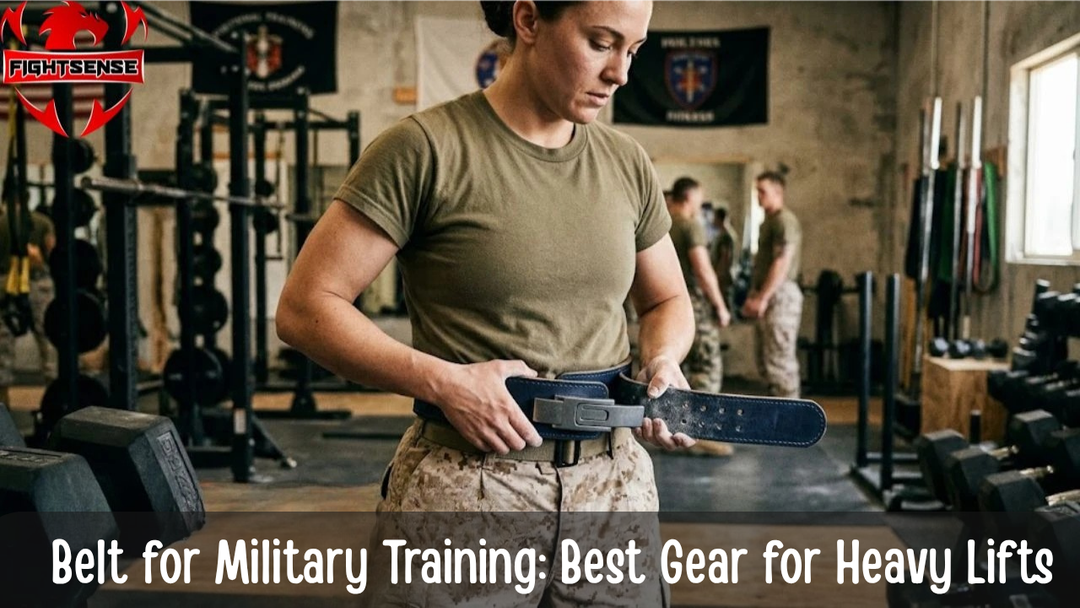
Belt for Military Training: Best Gear for Heavy Lifts
Whether you need a reliable belt for military fitness tests, tactical calisthenics, or heavy barbell PRs, safeguarding your spine is non-negotiable. While operators require rugged durability, strength athletes demand absolute core stability—bridging the gap with specialized gear.
Modern tactical conditioning goes far beyond basic pushups, relying heavily on powerlifting and heavy compound movements. Because standard utility gear cannot handle extreme spinal pressure, high-performance training demands elite reinforcement. This is why brands like FightSense provide heavy-duty weightlifting and lever options engineered for brutal, uncompromising workouts.
What is a Military Belt? Unpacking Tactical Core Support
According to physical fitness and hard strength exercises, the appropriate belt for military use can refer to two completely different pieces of equipment. On the other hand, you have standard utility and battle rigs designed to hold sidearms, ammo pouches, and survival equipment. But then, you have the specialist stability gear that is required for high physical conditioning, rucking, and loaded compound actions.
This isn’t a basic canvas belt to hold up your trousers or tactical pouches, but a performance-oriented support system built to withstand tremendous loads. It gives something for your abdominal wall to press against, protecting your lower back during multi-phase tactical exercises and maximal-effort training with the barbell.
Why Surviving Brutal Tactical WODs Demands a Heavy-Duty Belt for Military Training
There’s no way to determine military fitness.” It subjects the human body to a punishing gauntlet of endurance rucks, high-speed agility drills, and heavy compound weight training. If you put a barbell on with maximal weight soon after an exhaustive training circuit, your core muscles become extremely fatigued.
The structural shape gradually collapses under pressure unless there is good lumbar reinforcement. When performing military fitness routines, selecting the correct belt will help you avoid hyper-extension, absorbing the shear stresses that your vertebrae are susceptible to when doing heavy deadlifts, cleans, and overhead presses.
Inside the Armor: What Makes a Top-Tier Lifting Rig Unbreakable?
Not all fitness accessories are forged equal. When evaluating heavy equipment built to endure intense physical conditioning, certain structural standards are what separate elite gear from cheap knockoffs:
- Material Integrity: Genuine top-grain leather or multi-layer reinforced polymer for lasting durability against frequent sweat, friction, and heavy weights.
- Consistent width profiles: The consistent 4-inch design maximizes the surface area coverage in the core and lower back area.
- Heavy-Duty Fastening Hardware: Aircraft-grade steel prongs or instant-release lever mechanisms seal the rig shut under maximum strain.
Battle Rigs vs. Heavy-Duty Support: Why Your Duty Gear Won't Save Your Spine
A massive mistake athletes make is confusing standard tactical duty gear with a true heavy-lifting belt. Understanding this structural difference prevents injuries and wasted investment.
|
Feature |
Standard Duty & Utility Rigs |
High-Performance Lifting Gear |
|
Core Function |
Transporting sidearms, radios, and field tools |
Delivering intense spinal and lumbar bracing during heavy lifts |
|
Material Composition |
Flexible nylon webbing or canvas |
Rigid leather or reinforced composite polymer |
|
Profile Structure |
Tapered or narrow utility layouts |
Wide uniform profile engineered for maximum intra-abdominal pressure |
|
Load Threshold |
Designed for gear weight, not structural spine compression |
Built to withstand extreme vertical spinal compression forces |
The Iron Showdown: Quick-Lock Lever Action vs. Classic Steel Prongs
The closure mechanism is important in how well you transition between moves during a high-intensity session.
Lever-action choices employ a strong steel plate that snaps shut with tremendous force, enabling you to lock and release your core support swiftly in a single move. On the flip side, classic multi-prong steel pins provide micro-adjustable flexibility, making them excellent if your body weight fluctuates frequently or if you share equipment across a team.
The Lockdown Blueprint: How to Rig and Position Your Gear for Maximum Gains
Placement is the basis of how your gear protects your spinal column. To properly secure your belt for military training and heavy lifts, follow these exact steps:
- Center the Placement: Wrap your heavy-duty FightSense band around your waist, just on top of your lower back and abdominal wall above your hip bones.
- Adjust the Tension: Take a big breath into your abdomen, expanding outward. Secure the rig so that it bites snugly against your braced core without restricting your diaphragm.
- Lock It In: Snap the heavy-duty lever belt into place, or tightly lock the metal prongs through the pinhole provided.
- Test Circuit: Do a light bodyweight squat to confirm that your hip mobility is fine and that you don’t have any skin pinching.
The Ultimate Trade-Off: Pros and Cons of Heavy Lifting Gear
Advantages
- Improved Spinal Protection: Greatly decreases the possibility of lumbar strain and spinal flexion under maximum loads.
- Increased Strength Power: Allows you to powerlift heavier weights with complete confidence and mechanical advantage.
- Kinesthetic Feedback: Offers solid walls to press your abdominal muscles up against, strengthening superior breathing patterns.
Disadvantages
- Risk of Muscular Dependency: If unsupported work is neglected, relying on artificial support alone can damage natural core stabilizers.
- Initial Stiffness: High-grade leather and reinforced polymer platforms will take a little time to mold to your body shape, so be patient.
Pro Secrets for Mastering Intra-Abdominal Pressure Under Extreme Loads
- Breathe Deeply into the Diaphragm: Take a breath into your stomach, not your upper chest, before each descent.
- Save It for Heavy Working Sets: Don't wear your support for light warm-up activities. Use it only when your working sets are more than 80% of your full capacity.
- Add Complementary Armor: Protect your whole kinetic chain, pairing your core stabilization gear with heavy-duty wrist wraps or neoprene sleeves.
Avoid These Dangerous Mistakes When Bracing Your Core
- Too high or too low: If you place the machine over your ribcage, it inhibits breathing. If it falls too low, it clogs your hip flexors. Center it right then.
- Sucking In: Your Stomach: Don't suck your stomach in before you lock your gear. You have to push out to make the inside pressure safe and life-saving.
- It’s Like a Miracle: You May Be Able to Rely on External Support to Protect Your Spine, but It Will Never Be a Substitute for Perfect Biomechanical Form and Progressive Overload.
FAQs:
Can I wear regular military web gear for hard squats?
No. Tactical utility rigs aren't designed to carry tactical gear; they're designed to take the extreme spine-compression stresses of heavy powerlifting.
Are lever closures superior to prong arrangements?
Lever closures enable instantaneous, perfect one-second release, whereas prong systems provide for more size modification options.
Is FightSense equipment appropriate for tactical strength training?
Yes. FightSense designs heavy-duty weightlifting and lever solutions to withstand hard strength training, providing the solid stability tactical athletes demand.
Should a beginner lifter get an external core support?
There’s also supporting gear that can help beginners acquire the appropriate mechanics of intra-abdominal bracing… as long as they’re also developing raw, unassisted core strength.
What width measurements are ideal for support?
The consistent 4-inch-wide profile is the gold standard for full torso and lumbar coverage.
Does a stabilizing band eliminate all back injuries?
No, while it dramatically minimizes spinal risk, injury avoidance nevertheless requires pristine lifting technique and regulated motion.
Conclusion:
To reach top physical conditioning, you need equipment intended to match your persistent drive. Whether you’re establishing functional capability for difficult tactical circumstances or crushing hefty personal records at the box, safeguarding your spinal health is priority one. Looking for a good belt for military conditioning? FightSense has reinforced weightlifting and lever belts that keep your core locked in under maximal pressure. Get the correct gear, protect your frame, and push your training limits farther.
Disclaimer:
For informational purposes only. Check official military uniform regulations for duty gear, and consult a professional before heavy strength training.