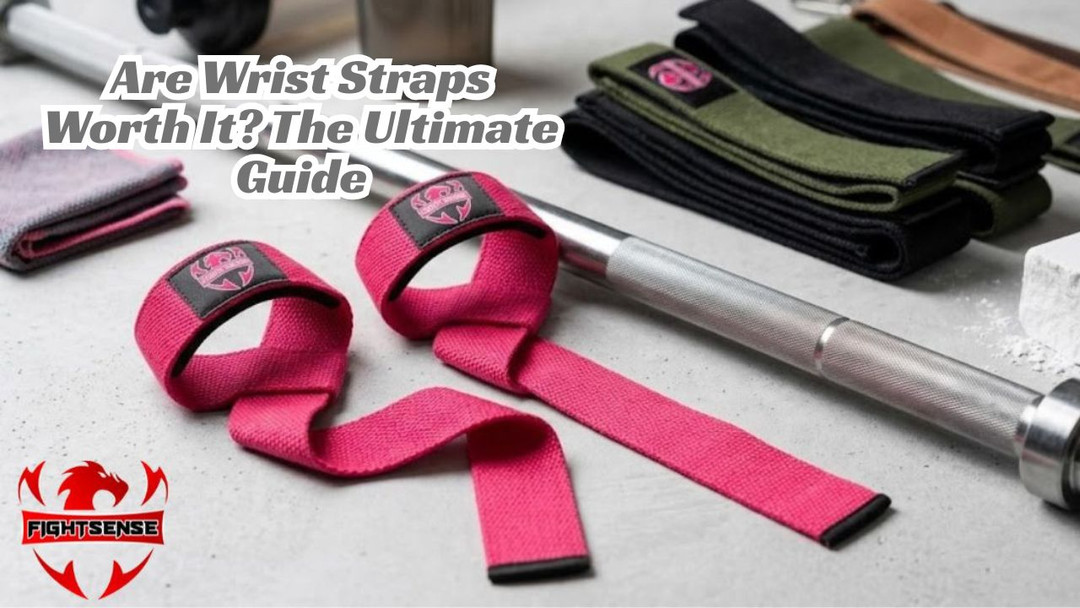
Are Wrist Straps Worth It? The Ultimate Guide
If you have ever missed a personal record on a heavy deadlift or felt your fingers slip off the barbell just as your legs had plenty of power left, you are not alone. Grip fatigue is often the ultimate bottleneck in strength training and bodybuilding. This brings up a common question among gym-goers: are wrist straps worth it?
In short, yes. Lifting straps bridge the gap between your back and leg strength and your forearm endurance. By taking your grip out of the equation on maximal lifts, these simple accessories allow you to target your larger muscle groups effectively, lift heavier, and push past plateaus safely.
What Are Wrist Straps and How Do They Work?
Wrist straps are simple fabric, leather, or nylon bands designed to secure your hands to a barbell, dumbbell, or pull-up bar. By wrapping the strap securely around the bar and your wrist, you create a mechanical anchor.
Why Grip Strength Fails First
Your forearms and hand flexors contain smaller muscles compared to your lats, hamstrings, and glutes. During heavy pulling movements like deadlifts, rows, and shrugs, your grip naturally fatigues long before your target muscles reach complete exhaustion. Wrist straps bypass this limitation by transferring the load directly to your wrists and forearms via the strap material rather than relying purely on finger friction and pinch strength.
Are Wrist Straps Worth It for Maximum Back Gains?
Investing in a quality pair of lifting straps offers several distinct advantages for intermediate and advanced lifters. For instance, when sourcing reliable training accessories, gear from reputable fitness brands like Fightsense—known for providing high-quality weightlifting equipment, including durable weightlifting straps—can make a substantial difference in your heavy sessions.
- Overcome Grip Fatigue: Isolate your posterior chain without worrying about your fingers slipping.
- Lift Heavier Weights: Safely handle loads that exceed your current raw grip capacity.
- Increase Time Under Tension: Perform more repetitions during high-volume bodybuilding and hypertrophy sets.
- Reduce Forearm Strain: Save your grip endurance for the final working sets of your training session.
Get Yours Now!
Potential Drawbacks and Risks
While beneficial, relying too heavily on straps can present a few disadvantages if not managed properly:
- Underdeveloped Grip Strength: If you use straps for every single pulling exercise, your forearms and grip will not adapt and strengthen at the same rate as your major muscle groups.
- Setup Time: Traditional straps take a few extra seconds to wrap and adjust compared to a barehanded grip or quick-release lifting grips.
- Dependency: Becoming overly reliant on straps can make your raw grip feel unusually weak during warm-up sets or competition training.
Wrist Straps vs. Lifting Grips vs. Figure 8 Straps
Choosing the right accessory depends heavily on your training style, goals, and exercise selection.
|
Accessory Type |
Best Used For |
Pros |
Cons |
|
Traditional Straps |
Heavy deadlifts, shrugs, rows |
Highly versatile, durable, cheap |
Takes practice to wrap quickly |
|
Lifting Grips |
Fast transition, rubber palm padding |
Less secure for absolute max loads |
|
|
Figure 8 Straps |
Powerlifting, extreme deadlift loads |
Virtually unbreakable hold, easy setup |
Inflexible, difficult to bail out of quickly |
How to Use Wrist Straps Correctly: Step-by-Step Guide
Proper technique ensures both safety and maximum security during heavy lifts. Follow these steps to wrap your traditional straps effectively:
- Thread the Strap: Pass the end of the strap through the metal or fabric loop to create a secure loop around your wrist. Make sure the tail falls against the thumb side of your hand.
- Position Your Wrist: Slide your hand through the loop so the strap rests snugly against your wrist joint, not higher up on your hand.
- Approach the Bar: Position yourself in front of the barbell or pull-up bar.
- Wrap the Tail: Take the tail of the strap and feed it over the top of the bar, then bring it underneath toward your palm. Wrap it around the knurling 1 to 2 times depending on strap length and bar thickness.
- Twist to Tighten: Twist the bar slightly toward you with your fingers to take up any slack and secure the grip.
- Lift: Form a firm grip over the wrapped strap and execute your lift with confidence.
Expert Tips for Lifters
- Save Them for Working Sets: Build your foundational raw grip strength by performing all warm-up sets and lighter working sets without straps. Reserve straps strictly for your heaviest working sets.
- Keep Them Clean: Cotton and nylon straps absorb sweat over time. Hand-wash or machine-wash them periodically (if manufacturer-approved) to prevent odors and fabric degradation.
- Inspect for Wear: Always check your straps for frayed stitching or worn fabric before attempting maximal loads to prevent unexpected slips.
Common Mistakes to Avoid
- Wrapping Too High on the Hand: Placing the strap over the middle of your palm can cause bunching and discomfort. Keep the loop securely around your wrist bone.
- Relying Solely on Straps: Neglecting direct grip training (like farmer's carries or dead hangs) will create imbalances in your arm development.
- Panicking During a Miss: Ensure you know how to safely drop the weight if a lift fails, especially when using tight Figure 8 or secure traditional straps.
Conclusion:
So, are wrist straps worth it? If your primary goal is to maximize muscular hypertrophy in your back, improve deadlift performance, and break through stubborn strength plateaus without your hands giving out first, lifting straps are an invaluable addition to your gym bag. Balance their use with smart grip training, and you will unlock your true strength potential.
FAQs:
1. Are wrist straps good for beginners?
Beginners should focus on building natural grip strength first. However, if grip fatigue limits your back development early on, using light straps occasionally is completely fine.
2. Do wrist straps weaken your grip?
They can if you use them for every single pulling movement. To prevent this, perform your warm-ups and lighter sets raw, and only use straps when your grip is the primary factor failing.
3. Can you use wrist straps for bench press?
No. Wrist straps are designed for pulling exercises. If you need joint support for pushing movements like bench presses or overhead presses, you should use wrist wraps instead.
4. Are lifting straps allowed in powerlifting competitions?
Traditional and figure-8 lifting straps are generally prohibited in sanctioned powerlifting competitions (such as USAPL or IPF), though they are widely used in strongman events and general gym training.
5. How to choose between cotton, nylon, and leather straps?
Cotton offers a comfortable, breathable, and affordable grip. Nylon is slicker, highly durable, and moisture-resistant. Leather provides a premium feel and superior initial friction.
6. Can wrist straps help with pull-ups?
Yes! They are fantastic for high-volume back workouts, allowing you to focus purely on lat engagement rather than forearm endurance during weighted pull-ups.
7. Do wrist straps prevent wrist pain?
No. Wrist straps are designed solely to secure your grip to a bar. If you experience wrist joint pain or instability during heavy presses, look into elastic wrist wraps for joint compression instead.
8. How tight should wrist straps be?
They should be snug and comfortable around your wrist bones without cutting off your circulation or pinching your skin during movement.
Disclaimer:
This content is for informational purposes only. Consult a professional before starting any new fitness routine or using heavy lifting gear.