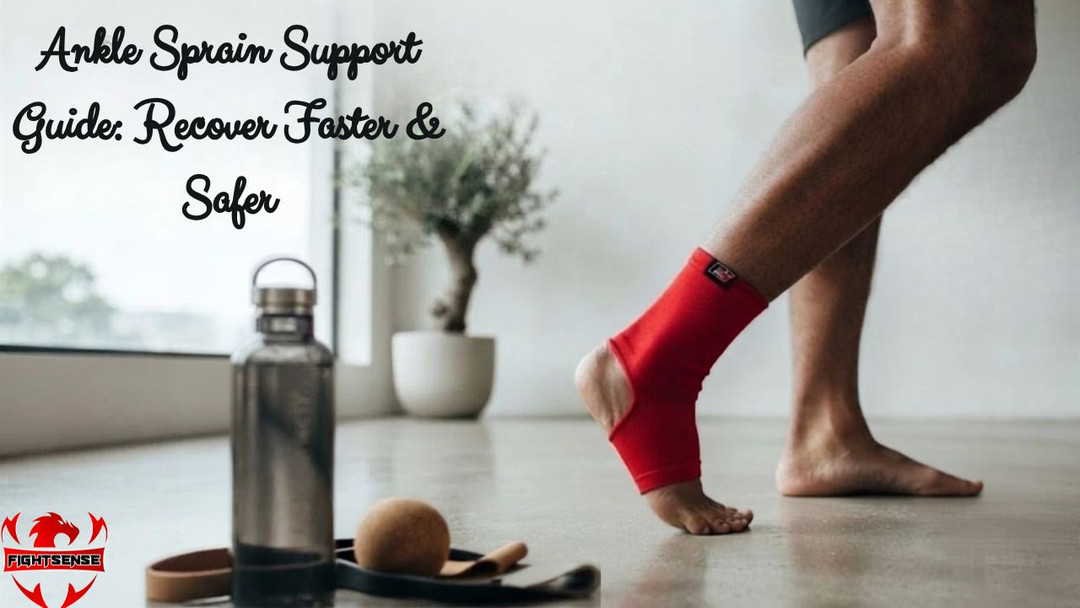
Ankle Sprain Support Guide: Recover Faster & Safer
Ankle sprain support is essential whether you're dealing with a sudden twist during a morning run or an awkward landing at the gym that instantly halts your routine. Sprains are among the most common injuries for athletes and active individuals alike. Getting the right support right from the start not only speeds up healing but also gives you the confidence that you won't roll your ankle again. Let's break down everything you need to know about healing faster, moving safely, and choosing the right gear.
Key Takeaways:
-
Proactive Protection: Reliable ankle sprain support prevents recurring twists and joint instability.
-
Targeted Compression: Specialized foot support boosts circulation and minimizes post-injury swelling.
-
Mobility Meets Stability: A quality ankle sleeve secures the joint while preserving natural movement.
-
The Recovery Blueprint: True healing balances acute R.I.C.E. protocols with gradual strengthening.
-
Long-Term Resilience: Consistent support safeguards your joints and builds lasting structural confidence.
What Are the Different Grades of Ankle Sprain Support and How Do They Differ?
An ankle sprain happens when the tough bands of tissue (ligaments) connecting your leg bones to your foot stretch beyond their limits or tear. Because injuries range from a mild tweak to a severe structural rupture, identifying the exact grade of your sprain is the most critical step toward proper rehabilitation:
Grade 1 (Mild Sprain)
This involves micro-stretching of the ligament fibers. You’ll likely feel minor tenderness, a mild ache, and very minimal swelling, allowing you to bear weight with only slight discomfort. Healing typically takes 1 to 2 weeks with basic home care and light compression.
Grade 2 (Moderate Sprain)
This is a partial tear of the ligament. Expect noticeable swelling, localized bruising, stiffness, and distinct pain when walking or shifting weight. Recovery usually spans 3 to 6 weeks and requires consistent support, such as a semi-rigid ankle support brace or structured stabilization.
Grade 3 (Severe Sprain)
This involves a complete rupture or tear of the ligament, leading to intense swelling, extensive bruising, and joint instability where your ankle feels like it might "give out." This level of injury often requires medical evaluation, physical therapy, and prolonged immobilization or specialized bracing to restore full stability.
What Are the Immediate Support Steps After an Injury?
The first 48 hours after an injury are critical. Following the R.I.C.E. method early on can make a massive difference in your recovery:
-
Rest: Stay off the injured foot as much as possible. Give it a break, and use crutches if the pain is sharp.
-
Ice: Apply an ice pack for 15 to 20 minutes every 2 to 3 hours to keep swelling under control.
-
Compression: Wear a breathable elastic bandage or a supportive ankle sleeve to gently stabilize the joint.
-
Elevation: Whenever you're sitting or lying down, prop your foot up above heart level to let gravity drain the swelling.
Comprehensive Ankle Sprain Support Guide for Faster Recovery
Once your ankle begins to feel better, it’s important to focus on strengthening it to prevent future sprains. Exercises using a resistance band can help build the muscles around your ankle, providing better support and stability.
Calf raises are also effective, as they improve balance and overall ankle strength. Additionally, balance board training can enhance proprioception, helping your ankle respond better to sudden twists or movements and reducing the risk of re-injury.
Gradually reintroduce activities like walking, jogging, or sports only when your ankle feels stable, pain-free, and strong enough to handle movement safely.
Types of Foot Ankle Support:
- Sleeves: Provide light compression, ideal for mild sprains or as a preventive measure.
- Wraps: Adjustable and provide targeted compression, suitable for moderate sprains.
- Braces: Offer maximum support and stability, especially for severe sprains or during rehabilitation.
- Compression: Helps reduce swelling and improves blood circulation, aiding in faster healing.
- Protection: Keeps the ankle joint stable while preventing further injury during physical activities.
How to Use Taping for Extra Stability During Daily Movement
While wearing a supportive ankle brace is great for compression, adding a basic athletic or kinesiology tape method can give you extra mechanical stability when you first step back onto your feet.
-
The Figure-Eight Technique: Wrapping athletic tape in a figure-eight pattern around your arch and ankle joint helps restrict excessive inward rolling (inversion) without completely locking up your movement.
-
Don't Wrap Too Tight: Taping should provide firm support, never numbness or tingling. If your toes turn cold or bluish, the tape is wrapped too tightly and is cutting off circulation.
-
Pair with Your Support Sleeve: For extra protection during intense workouts, you can wear certain low-profile compression sleeves right over or alongside supportive athletic tape.
How Can Fightsense Brand Gear Help with Ankle Support and Recovery?
When it comes to bouncing back stronger and getting back into your training routine, having dependable gear makes all the difference. Fightsense ankle sprain supports and compression sleeves are built specifically for athletes and active folks who need reliable joint stability without losing mobility. Whether you are lifting heavy, hitting the cardio tracks, or training in combat sports, Fightsense gear delivers the targeted compression and structural support you need to keep swelling down and your confidence high.
Common Mistakes That Delay Ankle Recovery
-
Removing Support Too Early: Quitting your ankle sleeve or brace the moment the sharp pain stops leaves the healing ligament vulnerable to re-injury.
-
Skipping Mobility Work: Prolonged rest can cause joint stiffness. Once the acute pain subsides, incorporate light movements like ankle circles or "alphabet tracing" with your foot.
-
Mixing Up Ice and Heat: Applying heat to a fresh injury increases swelling. Stick strictly to ice for the first 48 hours before introducing heat therapy.
Ankle Brace Sleeve: A Perfect Solution for Stabilization:
| Feature / Aspect | Benefits & Details |
| Compression | Alleviates swelling (edema) and boosts blood circulation for faster tissue repair. |
| Thermal Support | Keeps the joint warm to enhance blood flow and loosen up stiff tissues. |
| Stabilization | Locks the ankle in a secure position while still letting you move naturally. |
| Lightweight Design | Low-profile build that fits easily and discreetly inside your regular shoes or sneakers. |
| Flexibility | Allows natural, unrestricted movement during daily walks or light workouts. |
| Injury Prevention | Absorbs minor strains and significantly lowers the chance of re-injury. |
| Comfort | Soft, skin-friendly fabrics designed for all-day wear without irritation. |
Conclusion:
Ankle sprains might force you to hit the pause button on your routine temporarily, but they don't have to sideline you for long. By combining smart recovery habits with reliable ankle sprain support gear like a Fightsense support sleeve, you can protect your joint and get back on your feet much faster.
Healing is all about giving your body the right structural support, keeping inflammation in check, and rebuilding strength step by step. Listen to your body, follow the right recovery steps, and return to your active lifestyle with full confidence and stability!
FAQs:
Q: What is the difference between a sleeve and a rigid brace?
Sleeves offer uniform pressure for blood flow, while rigid braces physically restrict side-to-side rolling.
Q: Why does swelling persist weeks after acute pain disappears?
Sluggish lymphatic drainage or premature removal of compression causes fluid to pool around the joint.
Q: How do thermal properties aid tissue recovery?
Retained warmth dilates micro-vessels, accelerating oxygen and nutrient delivery to damaged fibers.
Q: When is it safe to switch from a rigid brace to a sleeve?
The transition is safe once acute pain subsides, swelling is minimal, and the joint bears full weight comfortably.
Q: Does cold therapy directly heal torn ligament fibers?
No. Ice only numbs pain and controls acute inflammation during the initial 48 hours.
Q: Why do unhealed sprains cause knee or lower back pain?
An unstable gait forces the body to compensate, placing abnormal stress on the upper kinetic chain.
Q: How does targeted compression manage post-injury edema?
Consistent external pressure stops fluid from accumulating, keeping daily swelling under control.
Note:
This blog provides general information for educational purposes. Always consult a healthcare provider for specific medical advice or treatment related to ankle injuries.