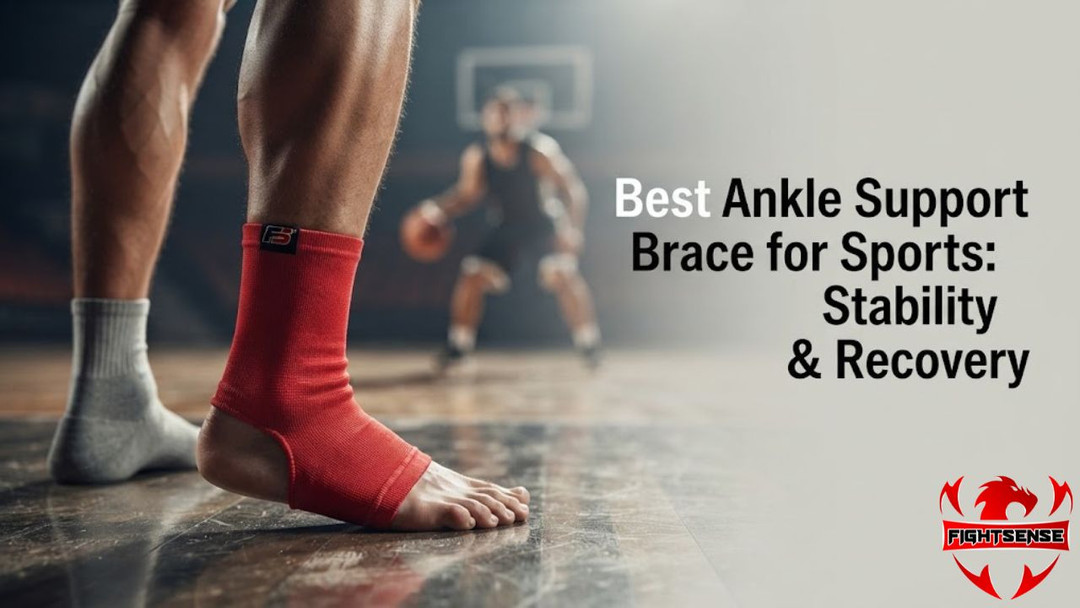
Best Ankle Support Brace for Sports: Stability & Recovery
An ankle support brace is the ultimate key to maintaining an active lifestyle and dominating on the field. Did you know that over 40% of court sports injuries involve ankle sprains? Whether you are sprinting toward the finish line or battling for a rebound on the court, your ankles are the foundation of every movement.
A professional-grade brace acts as your first line of defense—delivering targeted compression and structural stability to prevent painful sprains, minimize fatigue, and speed up recovery.
What is an Ankle Support Brace?
Think of an ankle support brace as your joint’s personal safety net. It is a specialized, protective device designed to stabilize the ankle joint during movement. Whether you are a professional athlete, recovering from a past injury, or simply someone who plays high-impact sports, a brace acts as a structural reinforcement for your ligaments.
Its primary goal is to limit excessive or unnatural joint rotation—the kind that leads to painful sprains—while still providing enough flexibility for you to pivot, jump, and sprint with full range of motion.
Benefits of Wearing an Ankle Support Brace:
Wearing an ankle brace isn’t just about protecting yourself after an injury; it’s about maximizing your confidence on the court or field. Here is how a high-quality brace changes the game:
1. Proactive Injury Prevention
Think of an ankle brace as your primary defense against the unexpected. Whether you’re cutting across a basketball court or running on uneven turf, our braces provide the external structural support needed to prevent the most common culprit—the dreaded ankle roll. By stabilizing the joint, you lower the risk of ligament tears and sprains, allowing you to focus on your play rather than the ground beneath you.
2. Rock-Solid Stability
If you’ve battled a previous injury, you know that "fear factor" of re-injury. An ankle support restores your movement confidence by ensuring your joint stays in proper alignment. By reducing unnecessary strain on your muscles and ligaments, the brace handles the structural stress, letting you perform your best moves with the security of a stable, reinforced joint.
3. Accelerated Recovery Cycle
Resting is important, but total inactivity can lead to stiffness. A compression-based ankle brace promotes faster recovery by managing inflammation. The gentle, consistent compression helps minimize post-activity swelling, allowing you to stay mobile and keep your blood flowing—which is key to healing damaged tissue faster and getting back to your training sooner.
4. Ergonomic Comfort for Long Sessions
Nothing ruins a game faster than gear that digs into your skin or restricts movement. Modern sports braces are built for long-duration wear, featuring breathable, moisture-wicking fabrics and ergonomic strap systems. Whether you’re in a high-intensity game or out for a long-distance run, the right support feels like a natural extension of your leg, keeping you comfortable from warm-up to the final whistle.
Finding Your Perfect Fit
| Support Type | Primary Sport / Activity | Support Level | Key Benefit |
| Sports Ankle Sleeve | Running, Gym & General Fitness | Light to Moderate | Fluid Agility & Swelling Reduction |
| Dual-Strap Hybrid Brace | Basketball, Soccer & Volleyball | Moderate to High | Lateral Roll Prevention & Dynamic Agility |
| Lace-Up Rigid Brace | Post-Injury & High-Impact Sports | Maximum Stability | Heavy-Duty Ligament Immobilization |
Sports Ankle Support Sleeve: Essential Protection for Active Athletes:
In high-intensity sports like soccer, basketball, and football, your ankles are the foundation of every movement. From explosive sprints to high-leaping rebounds and rapid, game-changing pivots, your joints endure constant, heavy stress. A standard brace might protect you, but a high-performance sports ankle support sleeve is designed to keep you agile.
Engineered for the Elite Athlete: Unlike bulky, restrictive braces, a professional-grade sleeve offers a perfect balance of durable protection and unrestricted mobility. It acts as a second skin, providing a streamlined fit that fits easily under your socks and inside your cleats or basketball shoes.
Ankle Brace: Stability and Performance in Play:
Basketball is arguably one of the most demanding sports for your ankles. Every jump, landing, and explosive pivot puts significant torque on your ankle joint. In a game defined by split-second decisions and constant motion, you cannot afford to have "weak links" in your gear. This is where a specialized basketball ankle brace becomes an essential part of your kit.
Engineered for the Court: Unlike generic supports, a basketball-specific brace is built to handle the unique physics of the game. It is designed to provide lateral support—blocking the unnatural side-to-side movements that lead to severe sprains—while leaving your forward-and-back motion fluid for sprinting and jumping.
How to Choose the Right Performance Ankle Support
Finding the perfect brace is about matching your gear to your game. Keep these 4 factors in mind:
- 1. Match Support to Your Needs: Recovering from a recent injury? Go for a rigid, high-stability brace. Playing healthy and need proactive protection? Choose a flexible, lightweight sleeve for maximum agility.
- 2. Prioritize Breathable Materials: Avoid sweat-trapping fabric. Look for moisture-wicking, premium elastic knits or neoprene to keep your skin dry and comfortable during long training sessions.
- 3. Aim for a "Second-Skin" Fit: The brace should be snug, not restrictive. Look for adjustable straps that let you customize the compression without cutting off your circulation.
- 4. Sport-Specific Design: Don’t use a "one-size-fits-all" approach. Basketball players should prioritize lateral support for jumping and pivoting, while runners should look for lightweight, fatigue-reducing sleeves.
Conclusion:
Ankle injuries may be a common hurdle for athletes, but they do not have to become a recurring part of physical training. By choosing the right support, athletes protect their joints and invest in long-term performance and peace of mind. Whether pivoting on the court, sprinting on the track, or pushing through a high-intensity workout, the proper brace provides the stability needed to move without hesitation.
Do not wait for an injury to remind individuals how much they rely on mobility. Take control of safety today, upgrade athletic gear, and perform with the confidence deserved.
FAQs:
How does an ankle brace differ from kinesiology tape?
Braces offer reusable, consistent structural compression, whereas tape provides temporary neuromuscular feedback.
Can a brace prevent sudden ankle sprains during court sports?
Compression and side support significantly reduce the risk of lateral rolling during abrupt movements.
Should a brace be worn during sleep or overnight recovery?
Nighttime wear is discouraged unless specifically prescribed by a medical professional to maintain normal blood flow.
How does sizing affect the effectiveness of an ankle support?
Incorrect sizing reduces compression pressure, leading to slippage or insufficient joint stabilization.
Are breathable materials suitable for high-intensity sweating?
Moisture-wicking, medical-grade knit fabrics prevent skin irritation and overheating during heavy workouts.
When should a worn-out ankle brace be replaced?
Replacement is recommended every 6 to 12 months, or when visible fraying and loss of elasticity occur.
Note:
This blog is for general information only and not medical advice. Consult a healthcare professional before using any ankle support brace.