Ankle Protection Guide: Ultimate Gear for Peak Athletic Performance
Ankle protection is vital: are you preparing to hit a heavy squat in the gym, or lacing up your cleats to step onto the turf—only for a wave of doubt to suddenly hit you? Will your ankle withstand this weight or a sudden twist? If you have ever rolled or twisted your ankle during training or a match, you know firsthand how painful and long-lasting that recovery can be.
Have you ever wondered why some athletes breeze through heavy lifts and fast sprints without a shred of fear, while others flinch at every minor movement? The answer lies in mastering proper ankle protection. Let us break down how safeguarding your joints can instantly elevate your athletic performance to the next level.
Key Takeaways:
- Proactive Defense: Build joint stability before sprains slow you down.
- Sport-Specific Gear: Use tailored tools to absorb impacts without losing agility.
- Neurological Agility: Train your nervous system to react to sudden surface shifts.
- Smart Footwear: Choose proper arch support to stop unnecessary joint stress.
- The Fightsense Edge: Combine mindful movement and gear for fearless training.
The Anatomy of an Ankle Sprain: Why Prevention Beats Cure
Understanding how ankle injuries happen can fundamentally change how you approach your daily training. Most sprains occur during sudden lateral movements, awkward landings, or unexpected surface changes that force the foot to roll inward or outward beyond its normal range of motion. When this happens, the ligaments that hold your joint bones together stretch past their breaking point, resulting in micro-tears or complete ruptures.
This is precisely why relying on reactive treatments like ice and rest alone is not enough; proactive fortification is required. By acknowledging the structural limits of your joints and integrating preventive tools early, you create a physiological buffer that absorbs high-impact forces before they can cause structural damage.
What Gear Do Soccer Players Choose When Stepping Onto the Pitch?
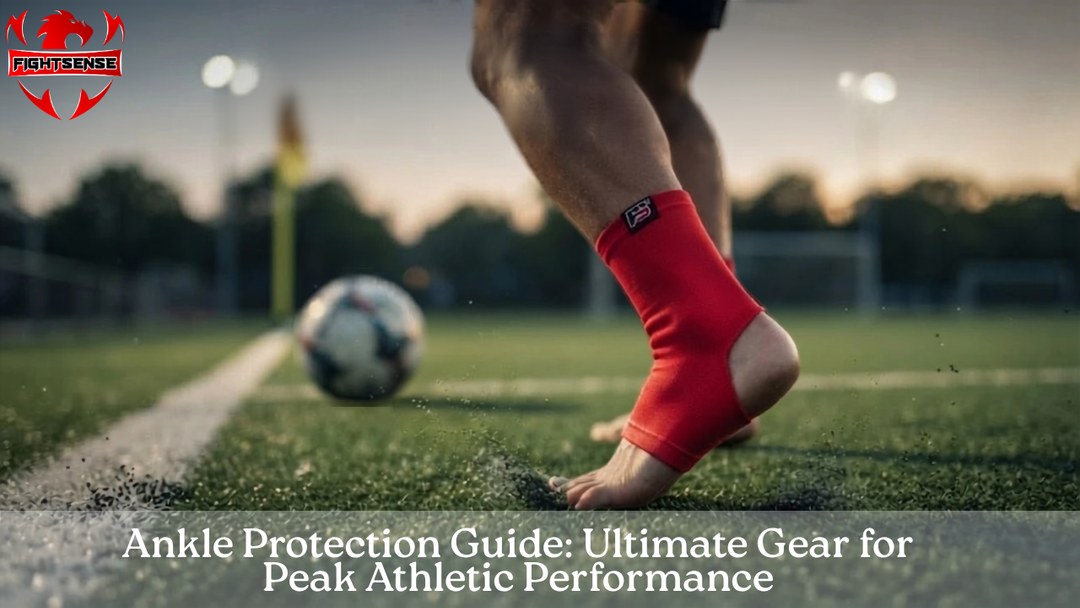
Football and soccer are packed with sudden changes of direction, fast sprints, sliding tackles, and unexpected duels, making players highly susceptible to ankle sprains and ligament damage. Professionals combat this high-intensity risk by utilizing a specialized soccer ankle compression sleeve that grants maximum stability without restricting their natural range of motion or speed.
Additionally, many players pair traditional sports socks with shin guards featuring built-in ankle protection. This combination not only shields the lower legs from direct cleat impacts, but it also creates a dependable defensive barrier around the fragile joint, making it a vital addition to any player's kit bag.
Are Your Sports Shoes Actually Giving You Support?
Most of us focus entirely on design, cushioning, and aesthetics when buying new trainers or running shoes. But have you ever considered how well the shoe's structure actually supports your arches and lateral movements?
When you head out for a long run or hit the pavement, your joints absorb multiple times your body weight with every single step. Because of this, relying on basic fashion trainers just won't cut it, making the use of running shoes with ankle support brace protection necessary. These specialized shoes feature built-in technology, reinforced heel counters, and dual-density midsoles designed to prevent the ankle from rolling while keeping your stride rock-solid.
The Role of Proprioception and Balance in Long-Term Joint Health
Physical stability is not just about muscle strength or thick ligaments—it heavily relies on your nervous system's awareness of joint position, known as proprioception. When you train on uneven surfaces, execute rapid directional changes, or push through high-intensity fatigue, your brain constantly communicates with micro-receptors in your ankles to keep you upright.
If these neurological pathways become sluggish, your reaction time slows down, leaving you vulnerable to missteps. Incorporating targeted balance drills, unstable surface training, and specialized ankle support brace wear helps sharpen this mind-body connection. Over time, this neurological conditioning trains your feet to react instinctively to micro-shifts, drastically lowering the odds of a sudden, painful twist during competitive play.
3 Common Mistakes That Are Weakening Your Ankles
Are you unintentionally making simple mistakes that slowly break down your joint health from the inside out? Keeping these pitfalls in mind is critical for long-term health:
- Skipping Dynamic Warm-Ups: Jumping straight into heavy lifting or sprinting without mobility work or activation drills is a leading cause of sudden ankle sprains.
- Choosing the Wrong Footwear: Wearing shoes or worn-out cleats that fail to provide adequate arch support, proper width, and secure ankle lockdown.
- Ignoring Early Pain Signals: Pushing through minor discomfort, swelling, or nagging aches instead of giving your joints proper time to rest, ice, and recover.
Choosing Your Shield: Ankle Support Comparison Guide
Every sport has unique demands. The breakdown below highlights which protective gear works best for specific activities:
|
Activity / Sport |
Ideal Protection Gear |
Primary Benefit |
Best For |
|
Running & Jogging |
Stabilized Running Shoes |
Lateral arch grip & shock absorption |
Long-distance runners & daily joggers |
|
Soccer & Turf Sports |
Integrated Shin Guards & Braces |
Direct impact defense & twist control |
Football players & agility athletes |
|
Gym & Weight Training |
Compression Sleeves & Wraps |
Blood flow improvement & mild joint warmth |
Heavy lifters & CrossFit enthusiasts |
|
Contact Martial Arts |
Padded Ankle Protection Guards |
Skin abrasion & joint bone protection |
Strikers, grapplers, & fighters |
Essential Ankle Exercises to Build Strength and Resilience
Wearing protective gear is only half the battle; true stability comes from building internal strength. Incorporating these simple exercises into your weekly routine will fortify your joints:
- Single-Leg Balance Drills: Stand on one leg on an unstable surface (like a foam pad or folded towel) for 30 seconds to train your stabilizer muscles.
- Resistance Band Push-Outs: Loop a resistance band around your foot and push outward and inward against the tension to strengthen your ankle tendons.
- Controlled Calf Raises: Perform slow, full-range calf raises on a step to build lower leg endurance and protect the Achilles tendon.
Ankle Protection and Smart Training with Fightsense
Embarking on a fitness journey requires more than just physical gear—it demands a smart mindset. This is where the core philosophy of Fightsense comes into play. Rather than merely equipment, the brand represents a comprehensive training philosophy centered around listening to your body, mastering proper footwork, and maintaining situational awareness.
Whether you are practicing lightning-fast footwork in a boxing ring, executing high kicks in martial arts, or pushing through a brutal conditioning session, Fightsense protective gear offers maximum security without ever sacrificing your flexibility. Blending proper balance, mindful movement, and targeted protection lets you crush your goals with total peace of mind.
Conclusion:
Ankle Protection isn't just about avoiding injuries—it is the key to unlocking your full athletic potential. By combining smart training habits, proper footwear, and reliable gear like Fightsense protection, you can step onto the pitch or into the gym with absolute confidence. Stay strong, train smart, and keep moving forward fearlessly.
FAQs:
1. Does ankle taping replace specialized protective gear?
Taping offers temporary stability, but dedicated braces provide consistent, long-term support during high-impact movements.
2. How do turf surfaces differ from natural grass in injury risks?
Turf creates higher shoe traction, increasing rotational torque and the likelihood of sudden joint twists during sharp cuts.
3. What role does proprioceptive training play in joint health?
Balance drills retrain the nervous system to react instantly to micro-movements, preventing accidental rolls.
4. Do high-top shoes protect against lateral ankle sprains?
They offer mild reassurance, but true lateral protection requires targeted mechanical reinforcement rather than shoe height alone.
5. How long do specialized ankle protection their elasticity?
Most high-performance braces lose optimal tension after six to twelve months of heavy athletic use and need replacement.
6. Does cold weather negatively impact ankle ligament flexibility?
Lower temperatures reduce soft tissue elasticity, making active warm-ups essential before outdoor training.
Disclaimer:
This guide is for educational purposes only and does not replace medical advice. Always consult a professional before starting a new training routine.