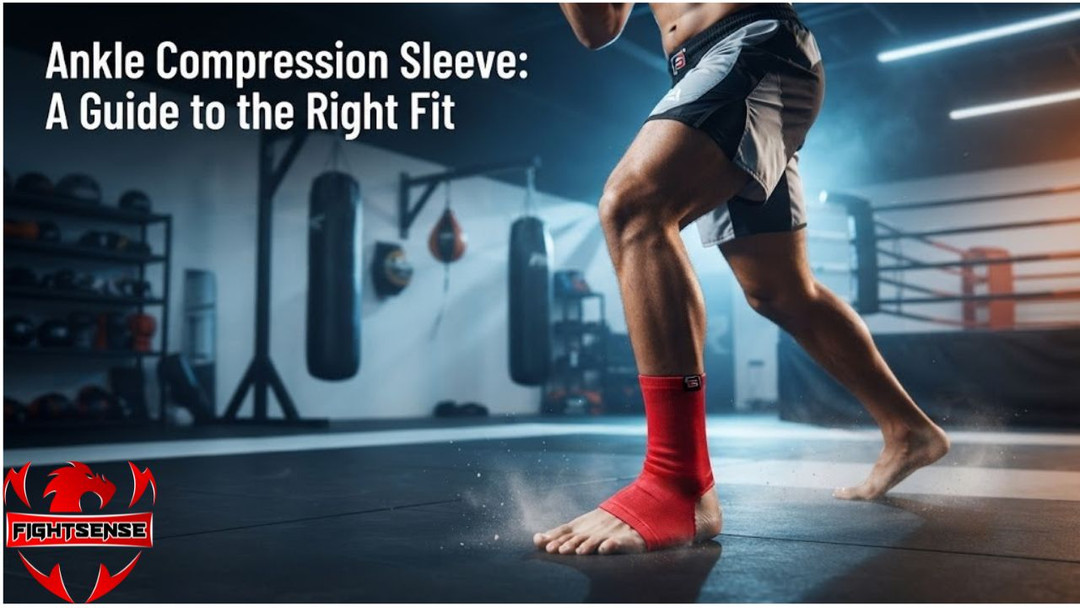
Ankle Compression Sleeve: A Guide to the Right Fit
Ankle Compression Sleeve support is often the missing piece in a fighter’s training regime. Let’s be honest: when you’re mid-sparring or pushing for that personal best on the heavy bag, the last thing you want to think about is your feet. But as any seasoned fighter knows, the moment your balance shifts or your ankle rolls, your entire game crumbles.
If you’ve ever felt that nagging ache after a session or that lingering fear of a "misstep," you aren’t alone. We treat our ankles like they’re made of steel, but in reality, they’re the most overworked joints in our body.
Key Takeaways:
- Energy Efficiency: A stable ankle stops "energy leaks," turning every movement into pure, explosive power.
- Sharper Reflexes: Compression improves ground-feel, making your footwork faster and more reactive.
- Proactive Defense: Don't just recover—prevent injury by keeping ligaments warm and ready for combat.
- Full Commitment: Support removes the fear of rolling an ankle, allowing you to strike with 100% confidence.
- Performance Gear: True elite gear, like Fightsense, offers precision compression without limiting your agility.
The Foundation of Every Power Move
Think about your footwork. Whether you’re a striker throwing lightning-fast roundhouse kicks or a grappler moving for a takedown, your power starts from the ground up. If your ankles aren’t stable, you’re essentially leaking energy. It’s like trying to fire a cannon from a canoe—you just won’t get the results you’re looking for.
This is where smart recovery and support gear come into play. A lot of people think support gear is only for "after" you get hurt. That’s a mistake. The best fighters use support as a tool for longevity, not just a patch for damage.
Understanding the Mechanics: Why Your Ankle Needs Help
Most fighters assume only heavy lifting or jumping causes ankle stress, but the real culprit is "repetitive impact." Every time you pivot on the mat, your ankle joint endures a micro-twist. When you wear an Ankle Compression Sleeve, you aren't just providing support; you are keeping the joint warm. Warm muscles and ligaments are significantly more flexible, reducing the risk of a tear by up to 40%.
The Science of Proprioception
Proprioception is your brain's ability to understand where your body is in space. When you hit the point of exhaustion during a session, this sense starts to fade. A quality sleeve stimulates the skin receptors, helping your brain monitor your ankle position more effectively. Fightsense has engineered their gear with this exact principle in mind, ensuring your balance remains rock-solid during high-intensity sparring.
Choosing the Right Gear: A Quick Breakdown
Not all support gear is created equal. You need something that won’t bunch up under your wraps or slide off when you’re drenched in sweat.
|
Type of Gear |
Best For |
Support Level |
Mobility |
|
Elastic Wraps |
Quick adjustments |
Customizable |
Medium |
|
Ankle Compression Sleeve |
Daily training |
Consistent |
High |
|
Rigid Braces |
Post-injury rehab |
Extreme |
Low |
|
Ankle Guards |
Light sparring |
Minimal |
Very High |
Integrating Fightsense into Your Routine
When you need gear that survives the brutality of a fight gym, you need materials that breathe. We’ve seen many brands, but Fightsense has truly mastered the balance between compression and freedom of movement. Their gear doesn't just sit there; it works with your muscle contractions.
Using an Ankle Compression Sleeve from their collection allows you to maintain that "locked-in" feeling without feeling like your foot is trapped in a cast. This is crucial for fighters who need to stay agile on the mats.
Pro-Tips: Wraps, Recovery, and Longevity
Should you wear it under or over your wraps? Most professionals prefer to wear the sleeve directly on the skin under their hand wraps or shin guards. This absorbs sweat and prevents a slippery feel on the mat.
- Chronic Issues: Wear your support 30 minutes before training to prime your blood flow.
- Acute Injuries: If you’re currently nursing a fresh strain, combine your sleeve with the R.I.C.E method (Rest, Ice, Compression, Elevation).
Many athletes report that once they started using a dedicated Ankle Compression Sleeve during conditioning, their footwork speed actually increased. Because they weren't spending mental energy worrying about stability, they could spend it exploding into their movements.
Common Mistakes to Avoid
- Waiting for the pain: Don't wait until you're limping to use support.
- Going too tight: If your toes are tingling, you've gone too far.
- Ignoring material: If it doesn’t wick moisture, it’s a liability. Fightsense uses a unique four-way stretch fabric specifically to solve this issue.
- Improper washing: Never throw your gear in the dryer. Heat destroys the elastic fibers that give you that vital "snap-back" support.
Final Thoughts
Your career is defined by how long you can stay in the game. It’s not about training the hardest; it’s about training the smartest. Integrating a reliable Ankle Compression Sleeve into your gym bag is a small, tactical decision that pays massive dividends in your ability to train consistently.
At the end of the day, when you step onto the mats, you want to focus on your technique, not your joints. With the right support from gear engineered by Fightsense, you can stop worrying about the ground and start focusing on your next win.
Ready to level up your footwork? Check out the latest collection and see how the right gear changes everything.
FAQs:
1. What defines graduated compression?
It applies varying pressure, being tightest at the joint to boost blood flow and reduce lactic acid faster than uniform sleeves.
2. Does usage cause muscle dependency?
No. It optimizes natural muscle mechanics and stability, allowing for safer training loads without creating reliance.
3. Can sleeves be worn under shin guards?
Yes. High-quality, low-profile sleeves fit seamlessly beneath gear, providing protection without adding uncomfortable bulk.
4. Does compression impact joint range of motion?
Advanced designs maintain full range of motion while providing the mechanical stability required for rapid lateral movements.
5. How does temperature control assist performance?
Keeping ligaments warm reduces stiffness, effectively lowering the risk of strains caused by sudden, cold-start explosive movements.
Disclaimer:
This content is for educational purposes only and does not replace professional medical advice. Always consult a healthcare provider before treating injuries or starting new training gear.