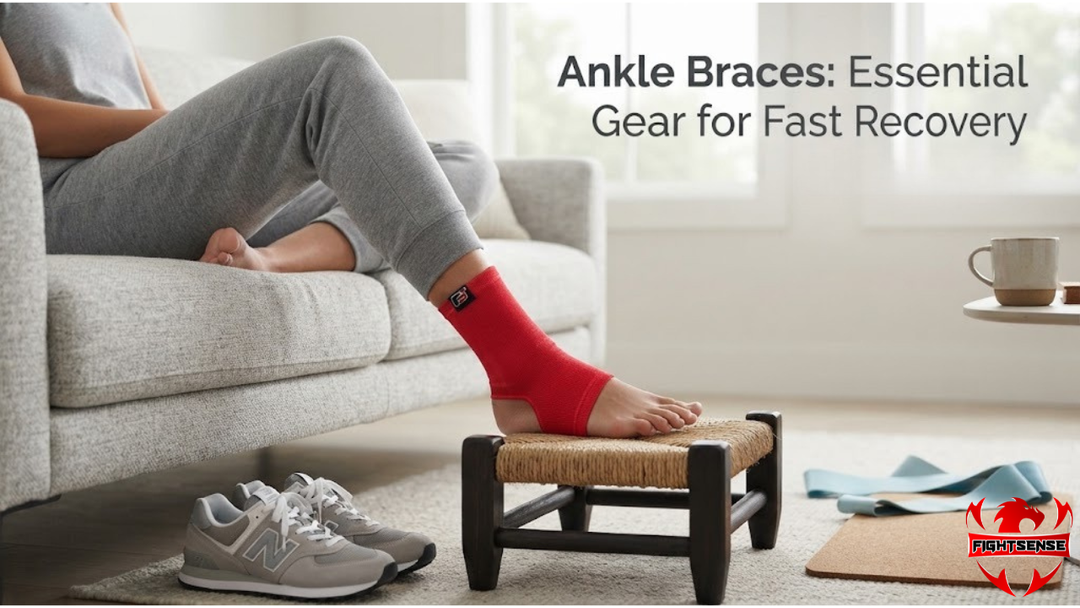
Ankle Braces: Essential Gear for Fast Recovery
Finding the right ankle braces is essential when nagging ankle pain or instability throws off your routine. Whether you are an athlete or pushing through a long workday, protecting your lower leg without losing mobility can be tough. Let us dive deep into why your ankles hurt, how different supports work, and how to pick the ideal gear to get you back on your feet safely and comfortably.
Key Takeaways:
- Target the right hardware for your specific injury, from rigid air stirrups to low-profile sleeves.
- Pair external stabilization with active rehab exercises to rebuild joint strength safely.
- Prioritize medical-grade neoprene and breathable materials to prevent skin irritation during daily wear.
- Use compression to actively reduce swelling, accelerate tissue healing, and stop the re-injury cycle.
- Balance daily support with mobility work to restore your natural stride and total joint confidence.
Why Does Your Ankle Feel So Weak After an Injury?
Think about how much pressure your lower extremities take every single day. Every step, jump, and pivot puts multiple times your body weight onto a complex network of bones, ligaments, and tendons. When one of those components gets stretched or torn—like during an awkward landing on the field—your body's natural response is immediate inflammation and swelling.
Without proper stabilization, that joint heals loosely, leading to chronic instability. This is where targeted medical and athletic gear changes the game. Compression, rigidity, and proper anatomical alignment do not just mask the pain; they actively protect the tissue while it repairs itself, preventing that dreaded re-injury cycle. Choosing the soft ankle braces early in your recovery process can dramatically shorten your downtime.
What Are the Best Options for Specific Ankle Conditions?
Not all ankle pain is the same, meaning a one-size-fits-all approach simply does not work. Let's look at how targeted supports address specific medical and athletic needs.
Dealing with Outer Foot Pain?
If you feel a sharp, stabbing pain running along the outside of your ankle and down the foot, you might be dealing with inflammation of the outer tendons. Managing this condition requires careful stabilization to prevent the foot from rolling outward. Using a specialized ankle brace for peroneal tendonitis helps offload tension from the inflamed tendon, giving it the crucial rest it needs while you walk or move.
Recovering from a Bad Rolling Injury?
Severe sprains require serious hardware to lock the joint in place and stop lateral wobbling while the ligaments heal. When doctors or physical therapists want maximum sideways stability without completely immobilizing the foot, they often recommend an Aircast air stirrup ankle brace, which uses rigid plastic shells combined with adjustable air cells to compress swelling and lock out dangerous side-to-side motion.
Battling Heel and Arch Pain in the Morning?
That agonizing first step out of bed in the morning is a classic sign of lower foot inflammation. While people usually focus on stretching the bottom of the foot, wrapping the joint correctly makes a massive difference throughout the day. Wearing an ankle brace for plantar fasciitis helps distribute pressure evenly across the foot structure, reducing microscopic tears in the plantar fascia tissue while you move.
How Do You Choose Between Daily Comfort and Athletic Performance?
Depending on whether you are sitting at a desk, hitting the gym, or stepping onto a competitive pitch, your support needs change completely.
Do You Need Low-Profile Comfort for Everyday Wear?
If you are managing mild soreness, long shifts on your feet, or minor fatigue, heavy medical hardware will just feel bulky and annoying. What you want is something sleek, breathable, and tight enough to boost blood flow. Slips-on like a flexible ankle brace compression sleeve fit smoothly inside standard sneakers or work boots, providing gentle warmth, reducing daily swelling, and keeping your circulation pumping without restricting your natural stride.
What About High-Intensity Team Sports?
Playing aggressive field sports requires a completely different level of defense. A standard fabric ankle sleeve won't cut it when you are cutting hard, sliding, or battling for a ball in a crowd. Players need a rugged sports ankle brace soccer players rely on to protect against high-velocity impacts and sudden directional shifts, ensuring the joint stays anchored even under extreme athletic stress
How Can Physical Therapy and Bracing Work Together?
Wearing an ankle sleeve, a piece of supportive gear, is only half the battle when you are trying to bounce back from a bad twist or a chronic tweak. Have you ever wondered why physical therapists almost always combine external hardware with targeted rehabilitation exercises?
The truth is that external supports act as your training wheels. They give your brain the confidence to move normally without guarding against pain, but they do not rebuild the microscopic balance fibers inside your joint. True recovery happens when you pair your daily stabilization device with light resistance band work, calf raises, and single-leg balance drills. Over time, as your proprioception—your body's awareness of where the joint is in space—improves, you can gradually step down from heavy hardware to lighter wraps.
What Common Mistakes Do People Make When Wearing Support Gear?
Even the highest quality gear will fail if it is used incorrectly. Let’s look at a few pitfalls that people frequently stumble into during their healing journey:
- Sizing Blindly: Grabbing a random size off the shelf without measuring your arch or ankle circumference can either cut off your circulation or leave the joint completely unsupported.
- Over-Reliance Without Stretching: Relying completely on a piece of equipment without doing any mobility work can cause the surrounding calf and foot muscles to grow stiff over time.
- Ignoring Skin Hygiene: Wearing a tight wrap for hours on end without letting the skin breathe can lead to sweat buildup and irritation. Always wash your gear regularly and let your skin dry out completely.
Side-by-Side Breakdown: Finding the Right Support for Your Routine
|
Support Type |
Best For |
Key Benefit |
Ideal Activity |
|
Compression Sleeve |
Daily fatigue, mild swelling |
Low-profile warmth & blood flow |
Walking, office work, light gym |
|
Air Stirrup / Rigid |
Severe sprains, post-surgery |
Maximum lateral stability |
Early recovery, high-impact sports |
|
Lace-Up Athletic |
Chronic instability, sports |
Customizable tightness & lockdown |
Basketball, soccer, running |
|
Tendon-Focused Wrap |
Specific tendonitis & strains |
Targeted pressure relief |
Hiking, running, daily movement |
Fightsense Ankle Braces: Finding the Right Support for Your Lifestyle
When you strap something onto an injured joint, cheap materials will break down, stretch out, or cause uncomfortable skin chafing within a week. High-performance brands like Fightsense focus heavily on medical-grade neoprene, breathable nylon mesh, and reinforced stitching to ensure durability.
Quality gear maintains its elasticity and structural integrity wash after wash, giving you consistent protection when you need it most. Investing in trusted Ankle Braces engineered with advanced moisture-wicking fabrics ensures you stay dry and blister-free during long training sessions.
The Hidden Traps of Long-Term Recovery and Footwear
Relying on external stabilization too long can inadvertently cause your peroneal muscles to weaken, making a phased weaning strategy essential for true healing. Furthermore, adding a bulky brace often alters your footwear fit and overall gait; wearing them with worn-out soles or zero-drop minimalist trainers can shift physical stress upward, creating secondary pain in your knees and hips.
Conclusion
Recovering from ankle braces doesn't mean you have to sacrifice your active lifestyle or live in fear of the next misstep. By pairing reliable gear like Fightsense ankle supports with smart footwear choices, targeted rehab, and a phased weaning strategy, you can rebuild real joint strength from the ground up. Whether you are pushing for a new personal record or simply trying to get through the workday pain-free, listening to your body and choosing the right protection makes all the difference. Step back into your routine with total confidence—your recovery starts today.
FAQs:
Can cold therapy be combined with wearing a stabilization sleeve?
Yes, using ice packs after removing the support helps manage localized swelling without compromising blood flow during rest periods.
Do compression textiles lose their elasticity over time?
Regular machine washing and high-heat drying break down elastane fibers, requiring replacement every three to six months for proper tension.
How do environmental factors affect synthetic stabilization fabrics?
High humidity and sweat accumulation trap moisture against the skin, making breathable, anti-microbial weaves essential for preventing rashes.
Can repetitive jumping worsen chronic lateral ligament laxity?
High-impact landings place multi-directional stress on the outer joint, accelerating wear if unassisted by dynamic lateral stabilization.
How does improper lace tension impact circulation in the foot?
Pulling fasteners too tightly across the upper arch restricts blood flow to the toes, causing coldness and tingling during extended wear.
Disclaimer:
This content is for informational purposes only and is not medical advice. Consult a healthcare professional before starting any recovery plan.