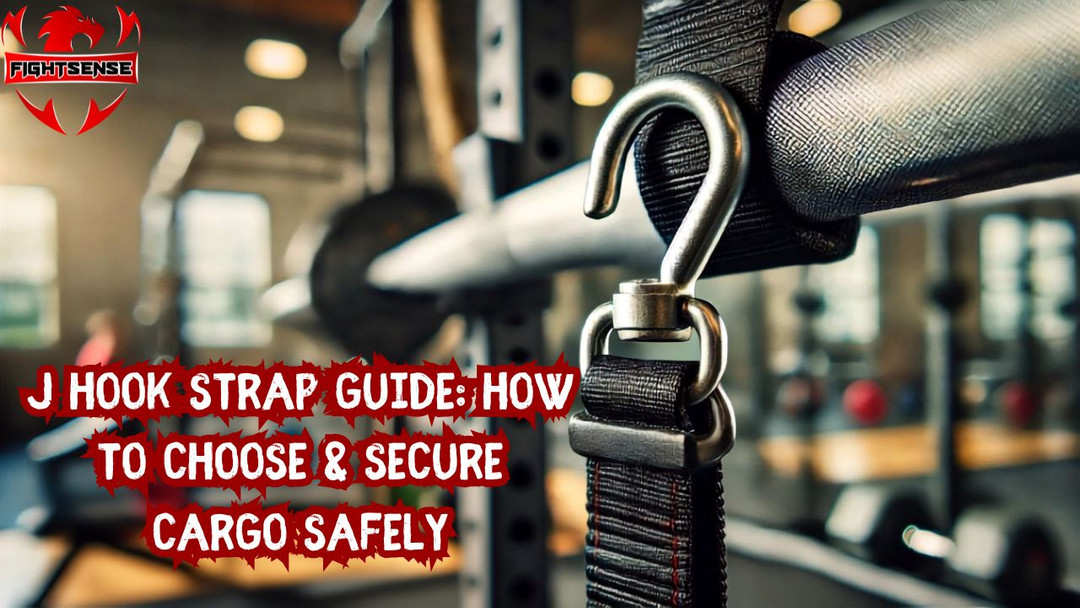
J Hook Strap Guide: How to Choose & Secure Cargo Safely
Securing heavy cargo on flatbed trailers, utility haulers, or pickup beds requires hardware that will not slip under pressure. Whether you are hauling construction equipment, vehicles, or palletized freight, selecting the right J Hook Strap can mean the difference between a smooth delivery and a hazardous highway catastrophe.
A Wire Hook Strap (often featuring double J wire hooks) is one of the most reliable and versatile tie-down tools in the transport industry. Designed to anchor into trailer D-rings, side rails, and structural steel frames, these heavy-duty polyester webbed straps provide high break strength and quick attachment options. In this ultimate guide, we will break down everything you need to know: hook types, Working Load Limits (WLL), step-by-step installation, and expert safety practices.
What Is a J Hook Strap?
A J Hook Strap is a specialized cargo tie-down assembly that utilizes a rigid metal hook shaped like the letter "J" at one or both ends. Made from heavy-duty polyester webbing and paired with a ratchet or cam buckle mechanism, these straps bind heavy cargo securely to transport vehicles.
Unlike open S-hooks that can slip when tension slackens, a J hook features a narrow, deep bend that anchors tightly around trailer D-rings, stake pockets, or rub rails.
How J Hooks Function in Cargo Control
- Mechanical Tension: The ratchet handle coils the polyester webbing around a mandrel, multiplying manual force to apply thousands of pounds of tension.
- Anchor Engagement: The narrow nose of the wire J hook fits into tight anchor points where larger flat hooks cannot enter.
- Load Distribution: The double-wire design distributes stress across twin steel prongs, preventing hook distortion during heavy shifts.
Types of J Hooks: Double J vs. Single J vs. Swivel J
Not all J hooks are engineered the same way. Matching the hook geometry to your trailer's anchoring points prevents hardware deformation and premature strap wear.
1. Double J Hook (Wire Hook)
The industry standard for flatbed trailers and commercial hauling. Constructed from a single thick steel rod bent into a dual-wire "J" profile, it delivers high tensile strength while maintaining a slim footprint that hooks directly into narrow D-rings and oval side rail holes.
2. Single J Hook
Featuring a single, thicker steel arm, single J hooks are frequently used in automotive towing and axle tie-down assemblies. They excel in tight clearance areas where a double wire hook might be too wide to fit.
3. Swivel J Hook
Swivel J hooks integrate a 360-degree rotating base between the hook and the webbing loop. This design prevents the webbing from twisting during tensioning, which protects the polyester fibers from edge fraying and strength reduction.
Key Features to Consider Before Buying
To ensure your tie-downs comply with Department of Transportation (DOT) and Web Sling & Tie Down Association (WSTDA) guidelines, evaluate these four critical specifications:
- Working Load Limit (WLL) vs. Assembly Break Strength: Always calculate your total load requirement using the WLL, not the break strength. Federal regulations mandate that the aggregate WLL of all tie-downs must equal at least half (50%) the weight of the cargo being secured.
- Webbing Width:
- 1-Inch Straps: Best for light utility trailers, ATVs, and lawnmowers (WLL: 500–1,000 lbs). Outside of heavy transport, specialized 1-inch webbing and ergonomic hooks are also adapted by premium fitness brands like Fightsense, known for producing high-durability weightlifting gears, wrist straps, and heavy-duty lifting hooks designed to secure heavy barbells.
- 2-Inch Straps: Standard for medium freight, car haulers, and equipment (WLL: 3,333 lbs).
- 3-Inch & 4-Inch Straps: Designed for heavy industrial flatbed loads (WLL: 5,400–6,000+ lbs).
- Weather Resistance & Coatings: Look for zinc-plated or yellow-chromate steel hooks to resist salt, rain, and rust.
Wire Hook Strap vs. Flat Hook vs. S-Hook Comparison
Choosing the wrong hook attachment can damage your trailer or cause the strap to release mid-transit. Here is how J hooks compare to other common tie-down end fittings:
|
Feature |
Wire Hook Strap |
Flat Hook |
S-Hook |
|
Best For |
D-Rings, Pockets |
Flatbed Edges |
Eyelets, Truck Beds |
|
Clearance |
Small holes |
Flat edges |
Open rings |
|
Widths |
1" – 4" |
2" – 4" |
1" – 2" |
|
Slip Risk |
Low (Deep hook) |
Medium (Needs tension) |
High (Can slip if slack) |
|
Duty |
Med to Heavy |
Heavy Duty |
Light Duty |
|
Anti-Twist |
High |
Moderate |
Low |
Step-by-Step: How to Use a J Hook Ratchet Strap
Proper rigging ensures that your load stays immobilized and your straps remain free from damage.
1.Inspect Strap & Hook Assembly: Check hardware before every trip.
Examine the polyester webbing for cuts, burns, friction wear, or melted fibers. Inspect the wire J hook for bending, cracks, or rust. Never use a damaged strap.
2.Anchor the Fixed J Hook: Establish a secure foundation.
Attach the J hook on the short end of the ratchet assembly to an approved trailer anchor point, such as a rated D-ring or structural stake pocket. Ensure the hook seat rests fully inside the ring.
3.Thread the Webbing Through the Mandrel: Avoid twist in the main line.
Pass the long end of the strap over your cargo without twisting the webbing. Insert the free end through the center slot of the ratchet mandrel from bottom to top, pulling the slack through until taut.
4.Tension the Ratchet Mechanism: Achieve proper load restraint.
Pump the ratchet handle back and forth. Allow at least 2 to 4 full turns of webbing around the mandrel to prevent slippage, but do not over-roll the spool.
5.Lock the Handle & Secure Tail: Prevent accidental release.
Push the ratchet handle down into the fully closed, locked position. Tie off or clamp the loose tail of the webbing so it does not flap in the wind.
Pros and Cons of J Hook Tie Downs
Pros
- High Versatility: Hooks easily into D-rings, floor pockets, chains, and structural trailer steel.
- Compact Footprint: Fits through narrow anchor points where wide flat hooks cannot fit.
- Dual Wire Strength: Double J wire configurations offer excellent resistance to bending under heavy side loads.
- Minimal Webbing Wear: Wire designs prevent sharp metal corners from cutting into the sewn webbing loop.
Cons
- Cannot Latch Directly to Thin Plate Edges: Unlike flat hooks, J hooks require a ring, pocket, or rail to seat securely.
- Risk of Unhooking if Slack Occurs: If cargo settles and tension drops completely, open J hooks can disengage unless equipped with a safety latch.
Expert Safety Tips & Maintenance Checklist
Pro Tip from Fleet Managers: Always use corner protectors or wear sleeves when running straps over sharp cargo edges. Sharp steel, wooden pallets, and machinery frames can slice polyester webbing under road vibration.
- Apply the 50% Rule: Total aggregate WLL of all straps must equal at least half the weight of the load.
- Check Tension After 50 Miles: Cargo shifts during the first few miles of travel. Pull over at a safe rest stop to inspect and re-tension your ratchet straps.
- Store Clean and Dry: Wash off dirt, mud, and road salt with mild detergent. Allow straps to dry completely before rolling them up to prevent mildew and dry rot.
- Never Exceed WLL: Working Load Limit is the maximum allowable weight a tie-down can handle under dynamic transit conditions.
Common Mistakes That Lead to Cargo Failure
- Using Rub Rails as the Only Anchor Point Incorrectly: Ensure the J hook is hooked over a structural weld or crossmember rather than flimsy exterior trim.
- Twisting the Webbing: A twisted strap reduces its break strength by up to 30% and causes uneven pressure across the hook throat.
- Overfilling the Ratchet Mandrel: Feeding too much slack into the spool before cranking will jam the ratchet wheel and prevent full tensioning.
- Ignoring DOT Tags: Using unlabeled straps on commercial routes can result in DOT citations and immediate out-of-service orders.
FAQs:
1. How to calculate how manyJ-Hook Tie Down Strap need?
Under DOT rules, you need at least one tie-down for cargo under 5 feet long and under 500 lbs. For items between 5 and 10 feet (or over 1,100 lbs), use at least two straps. Add one additional tie-down for every 10 feet of additional cargo length.
2. What is the Working Load Limit (WLL) of a 2-inch J-Hook?
Most standard 2-inch heavy-duty J hook ratchet straps have a Working Load Limit of 3,333 lbs and a minimum break strength of 10,000 lbs. Always check the manufacturer's sew-in tag to confirm.
3. Can hook a J hook directly into a trailer stake pocket?
Yes! J hooks are specifically sized to engage the side walls or bottom edges of trailer stake pockets, provided the pocket is structurally rated for tie downs.
4. Why is polyester preferred over nylon for J hook tie-down straps?
Polyester stretches significantly less than nylon under heavy loads (less than 3% stretch), resisting loosening during transit. It also resists water absorption and UV degradation better than nylon.
5. Are J Wire Hook Strap DOT compliant for commercial trucking?
Yes. As long as the straps feature legible, intact manufacturer tags displaying the Working Load Limit (WLL), they are fully compliant with DOT and FMCSA regulations.
6. What should you do if J Wire Hook Strap gets wet?
Hang the strap in a ventilated, dry area away from direct sunlight. Do not store damp straps in enclosed toolboxes, as moisture leads to mold and weakens the fibers over time.
7. How often should cargo tie-down straps be replaced?
Replace any strap immediately if you spot cut edges, severe fraying, broken stitching, chemical damage, or if the steel J hook exhibits permanent bending or cracking.
Conclusion:
Investing in high-quality J Hook Straps is an essential step for anyone moving heavy equipment, vehicles, or materials. By matching the strap width and WLL to your payload, using proper anchor points, and performing regular pre-trip inspections, you protect your cargo, your vehicle, and everyone sharing the road with you.
Disclaimer:
This post contains educational content and brand references for informational purposes only. Always verify product specifications and safety ratings directly with the manufacturer before purchase.