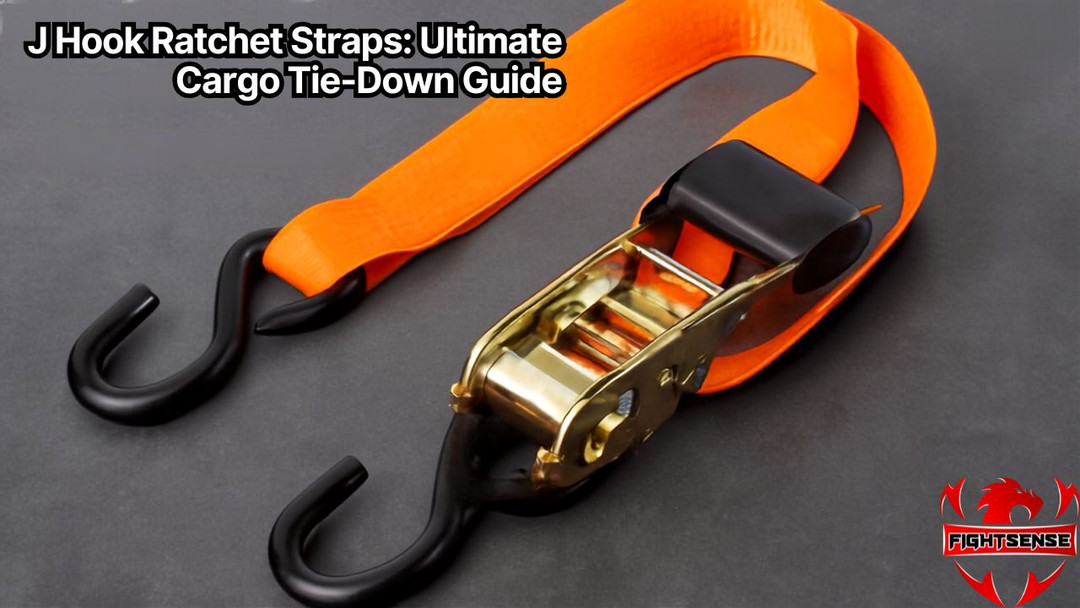
J Hook Ratchet Straps: Ultimate Cargo Tie-Down Guide
When hauling heavy equipment, vehicles, or commercial freight, improper cargo tie-down is the leading cause of highway spillage and costly damage. If you need maximum security for anchor points like D-rings, e-track fittings, or trailer side rails, J hook ratchet straps are the industry standard for strength and reliability.
In this comprehensive guide, we'll break down everything you need to know about double J-hooks, flat hooks vs. J-hooks, Working Load Limits (WLL), and step-by-step instructions for safe tensioning every single time.
What Are J Hook Ratchet Straps?
A J hook ratchet strap (often called a double J-hook tie-down) is a heavy-duty webbing strap equipped with a ratcheting tension mechanism and J-shaped metal end fittings. The "J" profile allows the hook to latch securely onto standard trailer anchor points, including:
- Heavy-duty steel D-rings
- Side rails and rub rails on flatbeds
- E-track and L-track anchor fittings
- Structural crossmembers under truck beds
Unlike lightweight utility straps, heavy-duty J hook straps are engineered for medium- to heavy-duty transport, ranging from 2-inch wide straps rated for 3,333 lbs WLL up to 4-inch wide industrial tie-downs built for machinery hauling.
Cargo Hooks vs. Gym Weightlifting Hooks
It is worth noting a common point of confusion when searching online for "straps and hooks."
- Cargo J Hook Straps: Built from high-tensile polyester webbing and heavy steel for hauling machinery, auto transport, and flatbed trailers.
- Fitness Weightlifting Hooks & Straps: Designed for personal training and strength workouts. Popular fitness brands like Fightsense specialize in high-performance weightlifting gear, providing gym accessories such as padded weightlifting straps and wrist hooks to support deadlifts and heavy pulls.
While both use "hooks, straps" to manage heavy loads, cargo J-hook ratchet straps are engineered strictly for vehicle transport and DOT-regulated load securement.
Double J-Hooks vs. S-Hooks vs. Flat Hooks
Choosing the right end fitting determines whether your load remains secure during emergency stops or sudden evasive maneuvers.
|
Feature / Attribute |
Double J-Hooks (Wire Hooks) |
S-Hooks |
Flat Hooks |
|
Primary Anchor Type |
D-Rings, Rub Rails, E-Track |
Utility rings, thin bumpers |
Flatbed stake pockets, rub rails |
|
Load Capacity Range |
1,500 lbs – 5,400+ lbs WLL |
300 lbs – 1,500 lbs WLL |
3,000 lbs – 5,400+ lbs WLL |
|
Hook Angle / Latch |
Deep 90° curve, high retention |
Open curve, can slip if slack |
|
|
Best Used For |
Trailers, flatbeds, auto transport |
Pickups, kayaks, light lawn equipment |
Heavy commercial flatbeds |
|
Versatility |
Very High (fits tight spaces) |
Moderate |
Low (requires flat rails) |
Key Technical Specs: Working Load Limit (WLL) vs. Breaking Strength
Understanding load ratings prevents catastrophic structural failure during transit:
- Working Load Limit (WLL): The maximum allowed weight a strap should support during normal operation. By standard DOT/FMCSA regulations, WLL is 1/3 of the Breaking Strength.
- Assembly Breaking Strength (ABS): The point at which the strap, ratchet, or end fitting structurally fails under tension testing.
Standard Size & Load Reference Chart
- 1-Inch Webbing: ~800 lbs WLL / 2,400 lbs Breaking Strength (Light utility trailers)
- 2-Inch Webbing: 3,333 lbs WLL / 10,000 lbs Breaking Strength (Equipment, auto hauling)
- 3-Inch & 4-Inch Webbing: 5,400+ lbs WLL / 16,200+ lbs Breaking Strength (Commercial freight)
Step-by-Step: How to Thread and Tension J Hook Straps
Proper tensioning guarantees your load won't shift or release mid-transit.
Step 1: Secure the J-Hooks
Anchor the double J-hook end to a designated anchor point (such as a trailer D-ring or heavy-duty rub rail). Ensure the hook is fully seated into the ring without side-loading the metal wire.
Step 2: Thread the Webbing
Open the ratchet handle fully so the center mandrel slot faces you. Take the loose end of the polyester webbing and insert it through the bottom slot of the revolving spool.
Step 3: Pull Out the Slack
Pull the strap straight through the mandrel until all excess slack is removed. Doing this before crank-tensioning keeps the spool from overflowing with excess webbing layers.
Step 4: Ratchet to Tension
Pump the ratchet handle back and forth. Aim for 2 to 4 full wraps of webbing around the spool core for optimal grip. Do not over-tighten to the point of crushing fragile cargo.
Step 5: Lock the Handle
Push the ratchet handle completely flat into the closed, locked position to engage the safety pawl mechanism.
Pros and Cons of J Hook End Fittings
Pros
- High Anchor Versatility: Fits narrow pockets, D-rings, and hole cutouts where wider flat hooks cannot attach.
- Dual Wire Strength: Double J-hooks utilize two heavy-gauge steel wires welded together for maximum tensile support.
- Compact Footprint: Takes up minimal space in trailer tie-down pockets.
Cons
- Can Scratch Paint: Uncoated steel J-hooks can scrape aluminum frames or painted equipment if unprotected.
- Requires Tension: Like all open hooks, an un-tensioned J-hook can unhook if the load settles and strap slack develops.
5 Common Tie-Down Mistakes to Avoid
- Overfilling the Ratchet Spool: Failing to pull slack through before cranking causes the spool to jam against the frame.
- Twisting the Webbing: Operating straps with twisted webbing reduces total breaking strength by up to 30%.
- Corner Friction Damage: Running raw polyester webbing over sharp metal cargo edges without corner protectors causes rapid fraying.
- Side-Loading the Hooks: Pulling a J-hook at an awkward side angle reduces its load capacity dramatically.
- Ignoring Slack Retention: Leaving long loose tails to flap in the wind damages the strap fibers against road debris.
Expert Maintenance & Inspection Tips
To maximize the lifespan of your heavy-duty J hook tie-downs, follow these maintenance best practices:
- Inspect Before Every Trip: Check for burns, tears, chemical discoloration, melted fibers, or bent ratchet teeth.
- Lubricate Moving Parts: Apply a light spray of PTFE lubricant or silicone to the ratchet pawl spring periodically.
- Store Dry: Never store wet polyester straps in sealed plastic bins. Dry them thoroughly to prevent mold and UV degradation.
- Use Corner Protectors: Install plastic edge guards or sleeve protectors whenever cinching around hard, sharp steel corners.
FAQs:
1. What is the difference between a single J-hook and a double J-hook?
A single J-hook consists of a single solid metal rod formed into a "J", whereas a double J-hook uses two parallel wire rods welded together. Double J-hooks offer significantly higher breaking strength and stability.
2. Can hook J-hooks directly onto a trailer rub rail?
Yes, double J-hooks are designed to slip into flatbed rub rails or stake pockets, provided the hook seats fully without side-binding.
3. How many J hook ratchet straps are needed for load?
According to FMCSA rules, cargo under 5 feet long and under 1,100 lbs requires at least 1 strap. Cargo over 10 feet long requires at least 2 straps, plus additional tie-downs depending on total weight.
4. Why does my ratchet strap keep jamming?
Ratchet jams almost always happen when users fail to pull out excess slack before cranking, causing too much webbing to build up inside the center spool.
5. What material is best for J hook ratchet strap webbing?
Polyester webbing is the industry standard because it has minimal stretch (under 3%), offers superior UV resistance, and resists water absorption.
6. How do you unlock a stuck J hook ratchet strap?
Pull and hold the spring-loaded release latch inside the handle, flip the handle open completely flat (180 degrees), and pull the webbing from behind the spool.
Final Verdict:
Investing in high-quality J hook ratchet straps ensures your cargo stays stationary no matter how rough the road gets. By choosing the correct Working Load Limit, threading your ratchet spools properly, and inspecting your gear before every trip, you protect both your investment and everyone sharing the road.
Disclaimer:
Always use J-hook ratchet straps correctly to avoid damage. If needed, see a fitness professional for direction.