
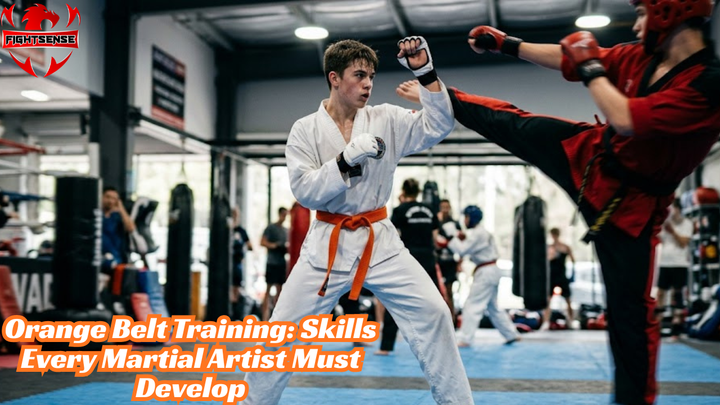
Orange Belt Training: Skills Every Martial Artist Must Develop
7th Mar 2025
In martial arts progression, the Orange Belt represents an important transitional phase where practitioners move beyond basic fundamentals into more structured and performance-oriented training.
At this stage, improvement is no longer about simply learning new techniques. The focus shifts toward refining timing, enhancing control, improving reaction quality, and developing better decision-making during sparring sessions. Each training session starts to play a more strategic role in shaping long-term progress.
Modern training environments are also evolving. Along with traditional coaching methods, athletes now benefit from structured performance tracking systems. In this context, Fightsense supports martial artists by helping them better understand how they train and how their performance improves over time.
Key Highlights:
- Performance-focused training turns practice into measurable progress, not just repetition.
- Small improvements in timing and awareness create big differences in fight readiness.
- Structured feedback helps athletes understand how they move, not just what they do.
- Modern training is shifting from guesswork to data-informed skill development.
- True progression comes from refining reactions, not just learning new techniques.
Understanding the Orange Belt Stage in Martial Arts Progression:
The orange belt level is typically recognised as the early-intermediate point in many martial arts systems. It’s a transition from learning single motions to combinations and controlled approaches in practical training situations.
At this level, practitioners should demonstrate:
- Basic attacking and defending combos
- Better postural stability and balance control
- Improved sense of distance and location
- Introduction to Regulated Sparring
- Uniformity in discipline and training procedures
Here is when students start to combine physical technique with awareness and time.
Core Skills That Define Level 2 belt Development:
At this point, better reaction ability is a major development. Instead of simply doing procedures learnt in the past , the practitioners begin to understand how to properly react to events in motion .
Key areas of attention are:
- Quicker detection of incoming attacks
- Enhancing defensive reaction time
- Creating counter-attack timings
- Improved awareness of environment during sparring
At this level, training is more about precision and control than about speed.
Footwork & Movement Efficiency:
At the orange belt level, your footwork will play a big role in how well you do. Proper movement allows practitioners to control distance, create angles, and maintain balance in exchanges.
Key aspects include:
- Controlled changes in body position
- Directional movement that is efficient
- Distance control in sparring
- Less superfluous movement
Good footwork is often the difference between a basic practitioner and an athlete advancing into the intermediate level.
Structured Sparring Awareness:
Sparring becomes a controlled learning environment from a simple trade-off practice. The goal is not control, but improvement through real-time applications.
At this point practitioners begin to develop.
- Tactical awareness in trades
- Emotional Regulation under Stress
- Opponent pattern recognition
- Safer, smarter engagement practices
This is where learning is very much situational and adaptive.
Combination Based Execution:
Orange belt training is less about specific techniques and more on flow and combinations.
This encompasses:
- Connecting strikes into combos
- Switching from offensive to defensive
- Using movement to aid an attack
- Adjusting methods in sparring scenarios
One of the major milestones in the evolution of martial arts is the ability to integrate techniques successfully.
Common Challenges at Mid-tier belt Level:
This phase also presents similar issues for many practitioners such as:
- Poor reaction time in sparring situations
- Attacking too aggressively
- Periodic motions
- Poor defensive awareness
- Dithering under duress
Challenges are natural in the process of development and show where disciplined improvement and persistent practice are needed.
Role of Performance-Focused Training Tools:
Development of Modern Martial Arts Training
Today, martial arts training is not just about repetition. Athletes and coaches are increasingly employing performance analysis and structured feedback systems to enhance skill development at different levels.
Fightsense & Performance-Based Training Assistance
Fightsense is not a belt grading or certification platform; it is a gym integrated performance tool that allows athletes to understand and enhance how they practice at each stage of their evolution. It doesn’t give out belts, but instead produces measurable increases in important performance metrics such as reaction time, movement efficiency, and training consistency.
Why the Intermediate belt stage matters
This is particularly useful at the Intermediate belt level, when the practitioner begins to go from just doing the skill to doing the skill more adaptively and with more control. At this point, slight increases in timing, awareness and quality of reaction can make a big difference to overall development.
Data-Driven Approaches to Improve Training
Fightsense provides organised insights on training behaviour that allow athletes and coaches more easily detect performance gaps and alter training programs accordingly. This makes training sessions more targeted, data-informed and goal-oriented.
How to Progress Faster After the Orange Belt?
Getting through this stage is more about consistent planned training than it is about intensity. Practitioners who progress steadily tend to have a more disciplined or planned approach.
Key principles are:
- A preference for precision of technique over power
- Awareness in sparring
- Train your speed of reaction. Practice and drills.
- Learning from the feedback of coaches
- Consistent and well-structured training programs
These behaviours create a solid foundation for upper level martial arts performance.
Conclusion:
The Orange Belt stage marks a key transition in martial arts development. It is the passage from learning basic technique, to applied performance and all it means in terms of timing, awareness and control.
As martial arts training evolves, things like Fightsense become essential supplements to traditional teaching approaches. They help athletes train smarter, recognise problems earlier, and proceed more effectively via planned development stages by focusing on measurable performance improvement rather than certification.
Disclaimer
This guide provides general information about Intermediate belt in martial arts, fashion, and work gear. Before purchasing, consider your specific needs, material preferences, and sizing for the best experience.
FAQs:
What is an orange belt in martial arts?
The Intermediate belt is an early-intermediate level where students move beyond basics and focus on timing, control, and structured sparring.
What skills should an Second belt rank martial artist focus on?
An Second belt rank should focus on reaction timing, footwork, defensive awareness, combination techniques, and controlled sparring.
How do I improve faster at Early intermediate belt level?
Improve faster by practicing consistently, focusing on technique over power, training reaction drills, and learning from sparring feedback.
Why is sparring important for Intermediate belt students?
Sparring helps develop real-time decision-making, timing, distance control, and the ability to apply techniques under pressure.
Can training tools improve martial arts performance?
Yes, performance-focused tools can help track reaction speed, movement efficiency, and training consistency for structured improvement.