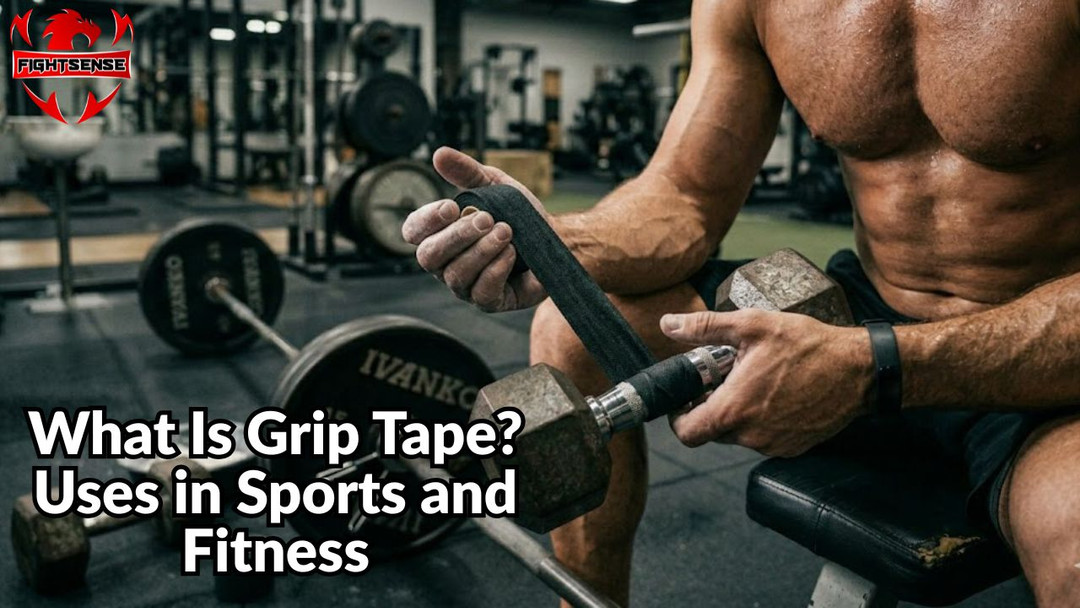
What Is Grip Tape? Uses in Sports and Fitness
Keynotes:
- Grip tape increases surface friction to improve control, balance, and safety in sports and fitness activities.
- It is widely used in skateboarding but its concept extends to gym training, scooters, and other athletic equipment.
- Better grip directly enhances performance by reducing slipping and improving movement stability.
- The condition and durability of grip tape depend on usage, cleaning, and environmental exposure.
- Strong grip is a fundamental factor in athletic performance, supporting strength, confidence, and injury prevention.
What Is Grip Tape?
Grip tape is a kind of rough, sandpaper-like material with an adhesive backing that is placed on surfaces to increase the grip. Its major purpose is to avoid slippage and improve control when moving. It gives the user more grip on the surface, making it easier for them to stay balanced and stable.
The most common example is a skateboard deck, with grip tape added to ensure the rider’s feet stay firmly in place when doing tricks or riding at speed. Grip tape is not just for skateboards . The same concept is used in a lot of sports and training contexts where grip is vital for performance and safety.
How Grip Tape Originated and Evolved?
In the 1970s grip tape was popularised and was launched in the skating industry. Before its development, skateboarders would resort to homemade remedies such as rough sandpaper or adhesive coatings to boost traction but these methods were not reliable, comfortable or long-lasting.
As skateboarding became a more professional activity, grip tape became more advanced in quality, texture, and durability. It was an important feature of skateboard design, giving riders more control, stability and safety during tricks and high-speed manoeuvres.
Today, grip tape is a basic component of skateboards and has also inspired comparable usage in other sports equipment and training items where grip and control are vital for performance.
Types of Grip Tape:
Grip tape comes in different types depending on its usage and surface requirements:
- Standard Grip Tape: Commonly used in skateboards, offering a rough surface for maximum grip and control.
- Fine Grip Tape: Has a slightly smoother texture and is used where controlled grip is needed.
- Industrial Grip Tape: Used for safety purposes on stairs, ramps, and tools to prevent slipping.
- Sport-Specific Grip Materials: Used in fitness gear like gloves and training equipment to enhance grip and performance.
Uses of Grip Tape in Sports and Fitness:
Skateboarding
The most familiar use for grip tape is for skateboarding.
It benefits riders:
- Keep your balance on the board
- Perform stunts like flipping, jumping and sliding
- Prevent slippery during high speed movement
- Improve the overall control and stability
Without grip tape, skateboarding would be dangerous and it would be nearly impossible to do any expert skateboarding.
Scooters & Other Action Sports
Grip tape is also used on scooters, skate style boards and similar equipment.
It has the following benefits:
- Improved foot placement
- Enhanced safety while moving
- Increased confidence while riding
These tiny grip enhancements can make a big difference in performance in action sports.
Weight Lifting and Gym
Grip strength is a big part of practically every workout in a fitness/gym setting.
While traditional grip tape isn’t usually used directly, the concept of grip support is incredibly significant. The following requires a strong grip from the athletes:
- Deadlift and Squat Bars
- Dumbbells for strength training
- Pull-up bars for upper body
- Kettlebell Training Functional
A better grip equals better performance, less chance of injury, and the ability to safely lift bigger weights.
Fightsense backs up this fitness philosophy with training gear that enhances strength, endurance and controlled movement during workouts.
Mixed Martial Arts (MMA & Boxing)
Grip is an important aspect of training and competitiveness in combat sports.
Strong grip helps athlete:
- Control movement while clutching or grappling
- Maintain your endurance in your training sessions
- Equipment and glove handling improvement
Fightsense supports combat athletes by promoting training standards that enhance strength, control, and physical performance.
Why Grip Is Important in Sports and Fitness?
Grip is not just about holding something tightly; it is directly connected to performance and safety.
A strong grip provides:
- Better control over equipment
- Improved balance and stability
- Reduced risk of injuries
- Enhanced strength performance
- Greater confidence during training
Even small improvements in grip strength can make a noticeable difference in overall athletic ability.
How Grip Tape Improves Performance?
Grip tape is not only about preventing slipping—it also plays an important role in improving overall performance in sports and training:
- Enhances balance and stability during movement
- Improves control during tricks, lifts, and exercises
- Reduces the risk of injury caused by slipping
- Increases confidence during physical activity
- Helps athletes maintain better focus and efficiency
A stronger grip often leads to better results in both sports and fitness activities.
Conclusions:
Disclaimer:
To achieve the best results, always follow the manufacturer's directions while putting on grip tape. This blog is just for information; it is not a replacement for expert guidance.