What Does Pepper Spray Do? 2026 Safety Guide
Pepper spray is one of the most popular self-defense tools in the world, and for good reason: it is small, affordable, non-lethal and easy to carry on a keychain or in a pocket. But owning a canister is not the same as understanding it. If you carry pepper spray for protection, it helps to know exactly what it can — and cannot — do before you ever need it. This guide is general information, not legal advice. Always check the rules where you live before carrying pepper spray.
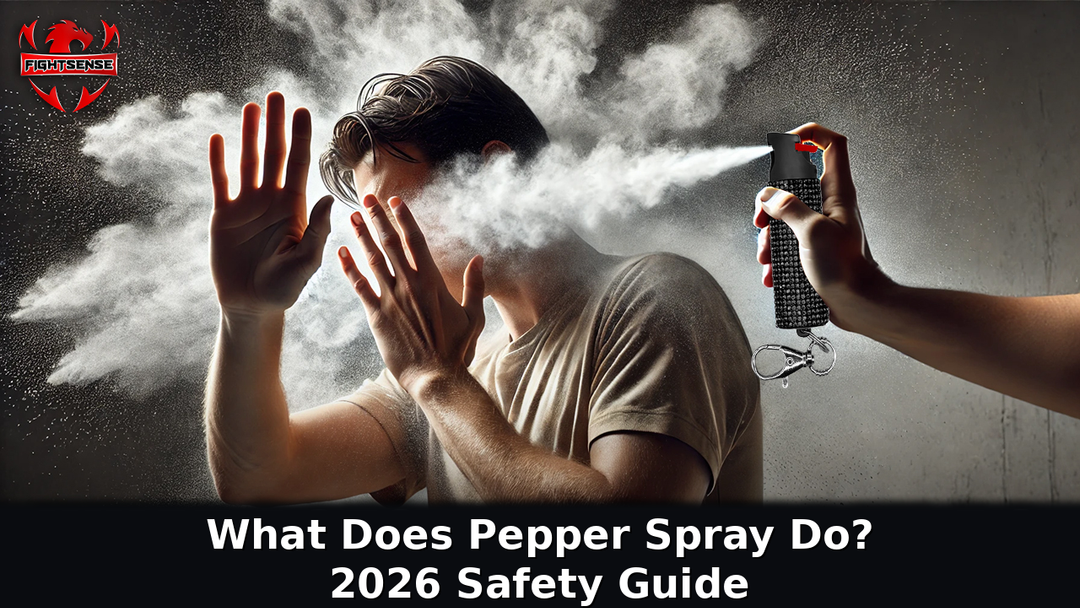
So, what does pepper spray do in a real confrontation? In short, it causes intense burning in the eyes, temporary blindness, coughing and disorientation, giving you a window of time to escape and get help. This guide explains how it works, how long the effects last, when it is safe and legal to carry, and how to use it correctly.
Keynotes:
- Pepper spray temporarily incapacitates an attacker by causing intense burning, tearing and irritation.
- It works within seconds, giving you time to escape and call for help.
- Its active ingredient is oleoresin capsicum (OC), a compound derived from hot peppers.
- The effects are painful but usually temporary, often lasting 15 to 45 minutes.
- It can also deter an aggressive animal, such as a dog, when used correctly.
- Always check the laws where you live before you carry pepper spray.
How Pepper Spray Works: The Science in Simple Terms
If you have ever wondered what does pepper spray do the instant it makes contact, the answer starts with capsaicin, the compound that makes hot peppers burn. Pepper spray is made with oleoresin capsicum (OC), a concentrated extract of chili peppers, mixed with a propellant that pushes it out of the canister in a stream, fog, gel or foam. When that mist touches the eyes, nose, throat or skin, it activates the same pain receptors that react to heat, which is why the burning feels so immediate and intense.
The spray does not need to injure someone to work. It creates a sudden, overwhelming irritation that the body reacts to automatically: eyes slam shut, tears flow, breathing becomes difficult and thinking gets harder. That reaction is the whole point — it stops an attacker in their tracks without causing lasting injury in most cases.
Capsaicin, the Compound Behind the Burn
Capsaicin is measured in Scoville Heat Units, the same scale used for hot peppers, and self-defense sprays use a far stronger concentration than anything you would eat. A compact option such as a mini keychain pepper spray carries that same active ingredient in a canister small enough to clip to your keys, so protection is with you instead of sitting at home in a drawer.
Spray Patterns: Stream, Fog, Gel and Foam
Not every canister sprays the same way. A stream travels in a focused line and is less affected by wind, a fog covers a wider area, a gel sticks to the target and reduces blowback, and a foam is easy to see and harder to wipe away quickly. For most people carrying pepper spray every day, a stream or gel is the easiest pattern to aim accurately under stress.
What Does Pepper Spray Do to the Eyes, Skin and Lungs?
In everyday language, what does pepper spray do to a person who is sprayed? It triggers an intense inflammatory response in the eyes, nose, throat and lungs almost at once. The eyes burn and water, vision blurs or closes completely, the nose runs, the throat feels raw, and coughing or shortness of breath can follow. Skin that is sprayed directly may sting and turn red. Together, these effects make it very hard for someone to keep chasing, grabbing or fighting.
That combination is why pepper spray is used by civilians and law enforcement alike: it can stop a threat quickly without a weapon that causes permanent injury. If you want the technique as well as the theory, read this step-by-step guide to using pepper spray before you carry a canister.
What Does Pepper Spray Do When It Hits the Eyes?
The eyes react first and hardest. On contact, the spray causes immediate burning, involuntary blinking and heavy tearing, and the eyelids often clamp shut on their own. Vision can be blurred or blocked completely for several minutes, which is usually enough time to move away, create distance and call for help.
Effects on Breathing and Skin
Inhaled spray irritates the nose, throat and airways, causing coughing, a burning feeling in the chest and difficulty taking a deep breath. On skin, it causes stinging and redness that usually fades as the residue is washed away. A well-made canister, such as the best pepper spray keychain with a quick-release clip, is designed to deliver a controlled burst so you can aim at the face rather than spraying blindly.
How Long Do the Effects Last, and How Do You Recover?
A fair follow-up question is what does pepper spray do after the first few minutes, and the honest answer is that the effects fade gradually rather than switching off. For most people, the worst discomfort lasts about 15 to 45 minutes, although the exact time depends on how much spray made contact, how quickly it is rinsed off and the person's sensitivity. Eyesight usually returns first, while a burning feeling on the skin can linger a little longer.
How to Rinse Your Eyes and Skin After Exposure
If you or someone near you is sprayed, move to fresh air right away and avoid rubbing your eyes, which only spreads the residue. Rinse the eyes with cool, clean water for 15 minutes, blinking often, and wash the skin with soap and water. Remove contact lenses if you wear them, and change any clothing that has spray on it. Our guide on how to remove pepper spray safely walks through each step in detail.
When to Seek Medical Help
Most exposures improve with fresh air and rinsing, but get medical help promptly if breathing difficulty continues, chest pain develops, symptoms do not improve after about 45 minutes, or the person sprayed has asthma or another breathing condition. Children, older people and anyone with a health condition should also be checked by a medical professional after exposure.
Is Pepper Spray Safe and Legal to Carry?
Before you buy a canister, it also helps to ask what does pepper spray do in the eyes of the law where you live, because the rules differ by state and country. In many places pepper spray is legal for adults to carry for self-defense, while some states and cities limit the size of the canister, the strength of the formula or where it can be carried. A few places restrict it more tightly, and rules for air travel are stricter still.
That is why a quick check of current local rules is part of carrying responsibly. If you are comparing your options, this overview of non-lethal self-defense products explains how pepper spray compares with other tools such as stun guns and personal alarms.
Check the Rules Where You Live
Look up the rules for your state or city before you buy, and check again before you travel with pepper spray, since a canister that is legal at home may not be legal somewhere else. Keep the canister in its original packaging with the label intact, and never carry it into places where weapons are prohibited, such as courthouses, schools or airports.
Carrying It Responsibly Every Day
Carry your spray where you can reach it in seconds — on a keychain, clipped to a bag strap or in an outer pocket — not buried at the bottom of a bag. Check the expiry date regularly and replace an expired canister, because an old spray may not discharge properly. For a two-in-one option, the electric shocker and pepper spray combo pairs a spray stream with a stun feature in a single device.
How to Use Pepper Spray Correctly When Seconds Count
The last thing to understand is what does pepper spray do for you in a real emergency: it buys you distance and seconds to get away, not a reason to stay and fight. That is the mindset to carry with it — spray, move, and call for help as soon as you are safe.
If you are still deciding which canister suits you, start with where to find pepper spray and the kinds of canisters that are easiest to carry every day.
Aim, Spray and Move: A Simple Routine to Practice
Hold the canister firmly with your thumb on the safety and your index finger ready on the trigger. Aim at the attacker's face, specifically the eyes and nose, and press in short one- to two-second bursts from a few feet away. As soon as you have sprayed, step back, move away from the person and head toward people, light or safety while you call for help. Practice the grip and the safety release at home with the canister in your hand so the motion feels familiar if you ever need it.
Common Mistakes to Avoid
Do not wait until you are already being grabbed to reach for your spray, do not spray into the wind, and do not test-fire your only canister until it is empty — a short test burst is enough, and you should replace a canister after use. Keep the safety on until you need it, and choose a design you will actually carry; a discreet option like the rhinestone bling pepper spray keychain works only if it is on your keys when you need it.
Why FightSense Pepper Spray Is a Trusted Choice for Everyday Protection in 2026
Choosing pepper spray is easier when the brand behind it is focused on dependable, easy-to-use self-defense gear. FightSense offers pepper spray in practical, everyday designs — from compact keychain canisters to police-grade models — that are made to be carried daily, not left behind. Many FightSense sprays include a UV marking dye to help identify an attacker later, a safety lock to prevent accidental discharge, and a lifetime replacement program for added peace of mind. When you want protection you can trust, choose a spray that fits your life and carry it with confidence.
Ready to Carry Protection That Fits on Your Keychain?
Don't wait for a scare to get prepared — clip police-grade protection to your keys today and carry confidence everywhere you go.
Plus, orders above $100 ship free at FightSense.
Shop Police Grade Pepper Spray NowConclusion
Pepper spray works by causing intense, temporary irritation to the eyes, skin and airways, giving you the seconds you need to escape and get help. It is simple to carry, simple to use and, when handled responsibly, a practical layer of everyday protection. Learn how your canister works, practice with it, keep it within reach, and check the rules where you live — then carry it with confidence, knowing you are prepared rather than hoping you never need it. This guide is general information, not legal advice. Check the rules where you live before you carry or use pepper spray.
Frequently Asked Questions
How long do pepper spray effects last?
For most people, the worst effects last about 15 to 45 minutes, although the exact time depends on how much spray made contact and how quickly it is rinsed off. If symptoms do not improve after about 45 minutes, seek medical help.
Is pepper spray painful?
Yes. Pepper spray causes intense burning in the eyes, along with tearing, coughing and skin irritation. The pain is usually temporary and fades as the spray is rinsed away.
Can pepper spray cause permanent damage?
For most healthy people, the effects are temporary and fade without lasting harm. However, people with asthma or other breathing conditions can have a more serious reaction, so anyone with ongoing breathing difficulty after exposure should get medical help promptly.
Does pepper spray work on animals?
Pepper spray can deter an aggressive dog and give you time to move away safely, but it is not a substitute for products made specifically for large wildlife. Bear spray, for example, is a different product designed for bears. Never test pepper spray on an animal for fun.
Can I carry pepper spray on a plane?
In the United States, the TSA allows one small container of pepper spray in checked baggage only, never in carry-on luggage. Rules differ by airline and country, so check the current rules before you fly.
How should I store pepper spray?
Store the canister in a cool, dry place away from direct sunlight, heat and vehicle dashboards. Check the expiry date regularly and replace any canister that is expired, leaking or damaged.
Does pepper spray expire?
Yes. Most canisters have an expiry date printed on the label, and an expired canister may not spray properly when you need it. Replace expired pepper spray and keep the new canister where you can reach it quickly.
What should I do if I accidentally spray myself?
Move to fresh air right away, avoid rubbing your eyes, and rinse your eyes with cool, clean water for 15 minutes while blinking often. Wash your skin with soap and water and change any clothing with spray on it. Seek medical help if breathing difficulty continues or symptoms do not improve.