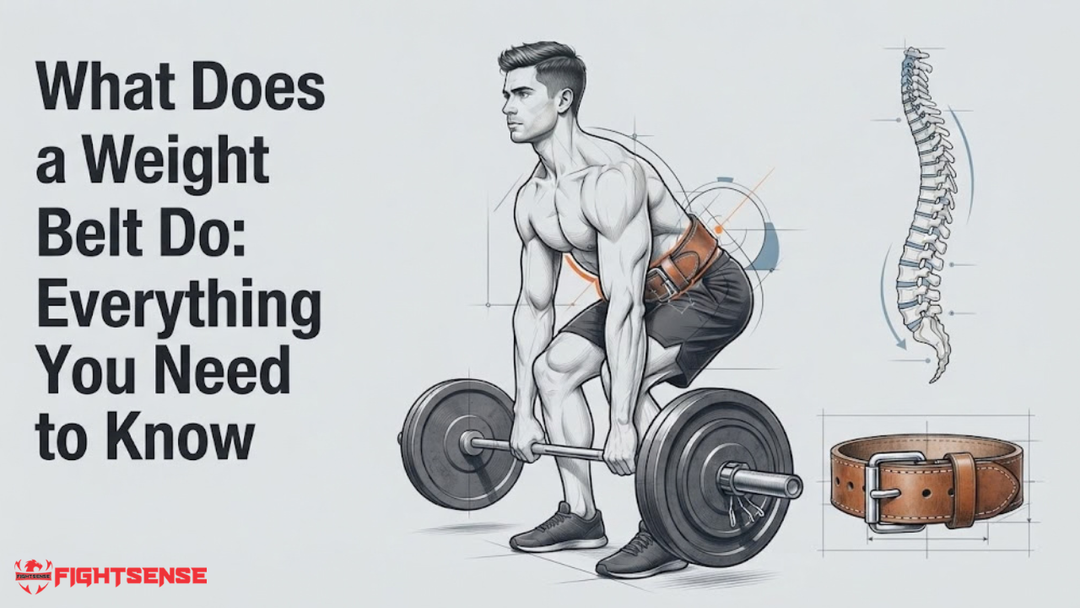
What Does a Weight Belt Do: Everything You Need to Know
What Does a Weight Belt Do? Have you ever wondered why experienced lifters tighten a thick belt around their waist before attempting heavy lifts? That simple-looking piece of equipment is not just a gym accessory—it plays an important role in improving core stability, supporting the spine, and helping lifters perform challenging movements with greater control.
What Is a Weight Belt and Why Do Lifters Use One?
A weight belt is a belt, specially made, worn around the waist during heavy resistance activities. Lifting belts aren’t the same as the belts you wear with your clothes. They’re designed to help you with moves that put a lot of pressure on your midsection and spine.
The main goal of a weight belt is to aid increase stability, by helping your abdominal muscles provide more pressure and support. By bracing your core into the belt, it gives your muscles something to press against, which makes your lifting position more stable.
Many sportsmen wear weight belts during activities like:
- Squat exercise
- Dead lifts
- Overhead presses
- Thick rows
- Exercises for powerlifting
A belt, however, is not intended for every workout. Best used strategically on tough sets where a little extra help can increase performance.
How Does a Weight Belt Actually Work?
Many newbies look for what does a weight belt do to comprehend if it gives true support or it’s just another gym accessory. A weight belt increases intra-abdominal pressure which supports your torso and aids your core bracing.
Many experienced lifters tend to perform better whilst wearing a lifting belt, this is because it helps to stabilize the body and reduce any superfluous movement as well as helping your body to lift large loads more efficiently.
How Does a Weight Belt Stabilise Your Spine?
A weight belt is one of the most important benefits in improving spinal stability when lifting high weights. A weight belt assists with core bracing to provide you a little more support around your torso, so you can maintain good posture and control over the bar during squats and deadlifts.
It doesn’t hold your spine in place by itself. Instead, it causes your muscles to perform more effectively as a team to support hefty activities.
Can a Weight Belt Reduce Stress on the Lower Back?
One of the primary reasons athletes use lifting belts is for lower back support during heavy exercise.
Your lower back, core and surrounding muscles all have to work together to provide stability in heavy compound movements. If your body position is not stable under excessive weight , you may put different places under undue stress .
A properly worn weight belt can aid with trunk stability and encourage better bracing which can help to minimize too much movement when lifting.
Knowing what a weight belt does also helps lifters recognize that it is a support tool, not a replacement for proper training habits.
A belt should never be combined with:
- Proper lifting technique
- Right way to exercise
- The choice of the right weight
- Progress slowly in strength
Does a Weight Belt Help Prevent Excessive Lumbar Extension?
Yes, a weight belt can help minimize excessive lumbar extension, especially in overhead lifts. It enables you to keep a better posture and eliminates unwanted movement in the lower back by enhancing core bracing and stability.
A weight belt is used to support a stronger, more controlled position when performing large lifts, not to limit natural movement.
Can a Weight Belt Improve Lifting Performance?
Athletes also want to know what a weight belt accomplishes because one of its biggest benefits is that it can boost performance.
A stronger, more stable core enables your body to distribute force more efficiently. If you are tight in the torso on a big lift, you waste less energy trying to keep your balance.
Weight belt: may help lifters.
- Haul bigger loads
- Gain confidence in difficult sets
- Keep your technique better under pressure
- Improve training efficiency
That’s why weightlifters, bodybuilders and strength athletes often wear weightlifting belts when they lift high weights.
Why Can Lifters Lift More Weight With a Belt?
Many people find their performance improves when they use a lifting belt. But the belt does not automatically boost muscle strength.
The improvement comes in the form of enhanced stability and better core engagement.
The belt will oppose the abdominal muscles and you will be able to generate a stronger internal pressure. This gives you a more solid torso, and lets your body work better with bigger loads.
The belt does not replace your own strength, it is a performance tool to improve your lifting mechanics.
How Tight Should a Weight Belt Be?
The effectiveness of a weight belt depends on how properly it fits.
A belt should feel secure around your waist but should not prevent you from breathing or moving comfortably. You should be able to take a deep breath, tighten your core, and push against the belt.
A belt that is too loose may not provide enough support, while a belt that is too tight can restrict movement and reduce comfort.
Finding the right balance is essential for getting the best results from your lifting belt.
What kinds of weight belts are available?
Weight belts are available in a variety of materials and styles. Which one to choose ? It is contingent upon your training style , experience level and personal preference .
Weightlifting Belts Leather
Leather belts are long-lasting and offer good support. They are often utilized by serious strength training athletes.
Weightlifting Belts Nylon
Nylon webbing is light, flexible and comfortable, therefore it is suited for general fitness training.
Lever Belts
Lever belts have a buckle system that allows for fast adjustment and a consistent fit. Serious lifters like them for the steady assistance they offer throughout rigorous exercise.
There are fitness brands such as Fightsense that offer quality strength training equipment, such as weightlifting and lever belts, for those athletes who need reliable support during strenuous workouts.
Who Should Use a Weightlifting Belt?
If you are still asking what does a weight belt do and do you need one, the answer depends on your experience and goals in training.
Weight belts are most appropriate for persons who know how to lift properly and need some additional assistance during a difficult lift.
They are used widely by:
- Power Lifter's
- Muscleheads
- Power Athletes
- Experienced gym goers
- Athletes focused on performance
Eventually a belt can be useful for a beginner but the initial steps should always be learning the correct movement patterns and gaining core strength.
What Mistakes Should You Not Make When Wearing A Weight Belt?
- Wearing it during all exercise: Only wear a weight belt when you’re doing hard lifts and need the added support.
- Leaning on the belt, not technique: A belt is an aid to good form, not a fix for bad lifting mechanics.
- The incorrect belt select the suitable size and style for adequate support, comfort and performance.
Are Weight Belts Worth It?
If you are serious about strength training, a weight belt is a good addition to your gym equipment.
It aids with superior core stability, lifting control and enables many athletes to do heavy motions with more confidence.
But the finest results are obtained when the belt is used in conjunction with adequate training, excellent technique and constant progression.
FAQs:
Q: At what weight should you start using a weight belt?
There isn't a specific weight requirement. Most lifters use a weight belt when lifting heavy loads, typically around 80–85% of their one-rep max.
Q: Can you wear a weight belt for every exercise?
No. Weight belts are best reserved for heavy compound lifts rather than isolation exercises or light training sessions.
Q: How long does a weightlifting belt last?
A quality weightlifting belt can last for many years with proper care, especially if it's made from durable leather.
Q: Do Olympic weightlifters wear weight belts?
Yes. Many Olympic weightlifters wear belts during heavy clean and jerks, squats, and other high-intensity lifts for added stability.
Q: What's the difference between a gym belt and a weightlifting belt?
A gym belt is usually designed for comfort or fashion, while a weightlifting belt is specifically built to provide core support during heavy resistance training.
Conclusion:
If you’re still wondering what does a weight belt do, it’s simple: it helps improve core stability, boost intra-abdominal pressure, and retain greater control during large lifts. If used appropriately it can prevent needless stress on the lower back, minimize excessive lumbar extension and boost overall lifting performance.
A good belt from a reputable fitness brand like Fightsense can be a great complement to your strength training routine. Weight belt is not just another gym accessory, it helps you train smarter, lift with greater confidence and perform at your best.
Note:
This article is for informational purposes only and should not replace professional fitness or medical advice. Always use proper lifting technique and consult a qualified trainer if you're unsure about using a weight belt.