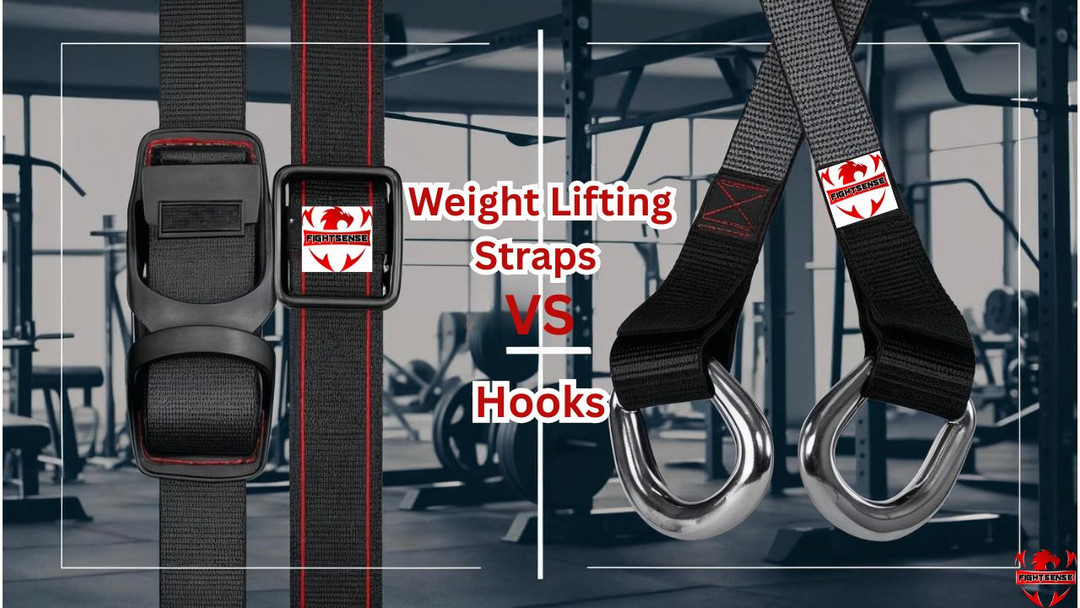
Weight Lifting Straps vs Hooks: Which Is Right for You?
Often, the limiting factor in heavy weightlifting is grip strength. This is where lifting straps and hooks come into play. These tools can significantly enhance your ability to lift, hold, and perform more repetitions, boosting both strength and endurance. But which one is the right choice for you? Let’s break it down so you can decide which option will best improve your performance and help you reach your lifting goals.
Key Highlights:
1. Straps – Wrap around the bar to reduce grip effort; good for endurance.
2. Hooks – Support the bar to lift heavy weights easily.
3. Straps – Prevent grip fatigue during long sessions.
4. Hooks – Best for powerlifting and heavy loads.
5. Both – Help lift more and reduce hand/forearm fatigue.
Weight Lifting Straps and How They Help:
Weightlifting straps are strong, durable pieces of fabric, typically made from cotton, leather, or other tough materials, designed to wrap around your wrists and the barbell. They are particularly useful for exercises like deadlifts, rows, shrugs, and other pulling movements where grip strength can limit performance.
By firmly securing the bar to your hands, straps act as an extension of your grip, reducing strain on your fingers, hands, and forearms, which allows you to lift heavier weights safely and with greater control. This makes them especially beneficial during longer training sessions or high-repetition workouts, as they help prevent grip fatigue and allow you to focus on the muscles being targeted rather than your hold on the bar.
Compared to hooks, which are generally more specialized for lifting very heavy weights with minimal grip effort, straps offer greater versatility and adaptability, making them suitable for a wide range of lifts and training styles.
Advantages of Straps:
- Flexible: Works on numerous varied activities.
- Comfortable: Soft, cushioned fabric makes wearing these comfortable.
- Endurance: Helps you to keep on through those extended sets.
What Are Weight Lifting straps vs Hooks?
A stronger, more exact grip is offered by weight lifting hooks. Made of a metal hook fastened to a wrist strap, they secure to the barbell. This lets you concentrate on lifting big without thinking about your grip slipping. Usually, the weight you are lifting determines whether weight lifting straps vs hooks are more effective. Hooks excel while handling maximum weights.
How Do Hooks Work?
Hooks grab onto the barbell so you won't have to rely on your hands to retain the weight. For heavy lifting particularly in low-rep, high-intensity sets like deadlifts or shrugs, this makes them perfect.
- Strong Grip: Hooks provide advantages especially for maximum loads and big lifts.
- Quick Setup: Just hook on and go; no wrapping the bar is necessary.
- Reliable: Designed for little effort heavy lifting.
Weight lifting straps vs hooks: Which One Should You Choose?
Choosing between weight lifting straps vs hooks really depends on your goals.
- Straps: If you lift for endurance, try for several sets, or engage in workouts requiring more variation using straps. For a variety of motions, they are fantastic; they will also help your grip over extended sessions.
- Hooks: Hooks are a better choice if you are concentrating on strength and lifting highest weights. For heavier lifts, like deadlifts where grip can readily give way under duress they give you a strong grasp.
Pros and Cons of weight lifting straps vs hooks:
Weight Lifting Straps:
- Pros: Flexible, cosy, excellent for endurance.
- Cons: Not as safe for heavier lifts; takes some more time to set up.
- Pros: Fast to use gives a strong hold for big lifts.
- Cons: Less flexible; not best for extended training courses.
FAQs:
1. How do weightlifting straps help with grip fatigue?
Weightlifting straps reduce the load on your hands and fingers, allowing you to lift heavier weights or perform longer sets without your grip giving out.
2. Which is better for powerlifting: weightlifting straps or hooks?
Hooks are generally better for powerlifting because they provide a stronger, more secure hold, making it easier to handle maximal weights safely.
3. Can weightlifting straps be used for all exercises?
Yes, straps are versatile and can be used for deadlifts, rows, shrugs, overhead presses, and many other pulling movements.
4. Are weightlifting hooks suitable for endurance training?
Not really. Hooks are designed for heavy, low-repetition lifts rather than endurance-based or high-rep training.
5. Can I use both straps and hooks in the same workout?
While it’s not usually necessary, you can combine them—hooks for maximal strength lifts and straps for longer, endurance-oriented sets.
Conclusion:
In the end, your particular lifting technique will determine whether weight lifting straps vs hooks is best. If you need endurance and flexibility, straps help you through longer, higher-rep workouts. Conversely, hooks are perfect for powerlifting and heavy lifting since they provide that strong hold required to transfer maximum weights.Both are good instruments to improve your lifting performance; simply choose the one fit for your training objectives.
Disclaimer
This blog is solely for informative needs. Before including new equipment into your program, always see a fitness professional.