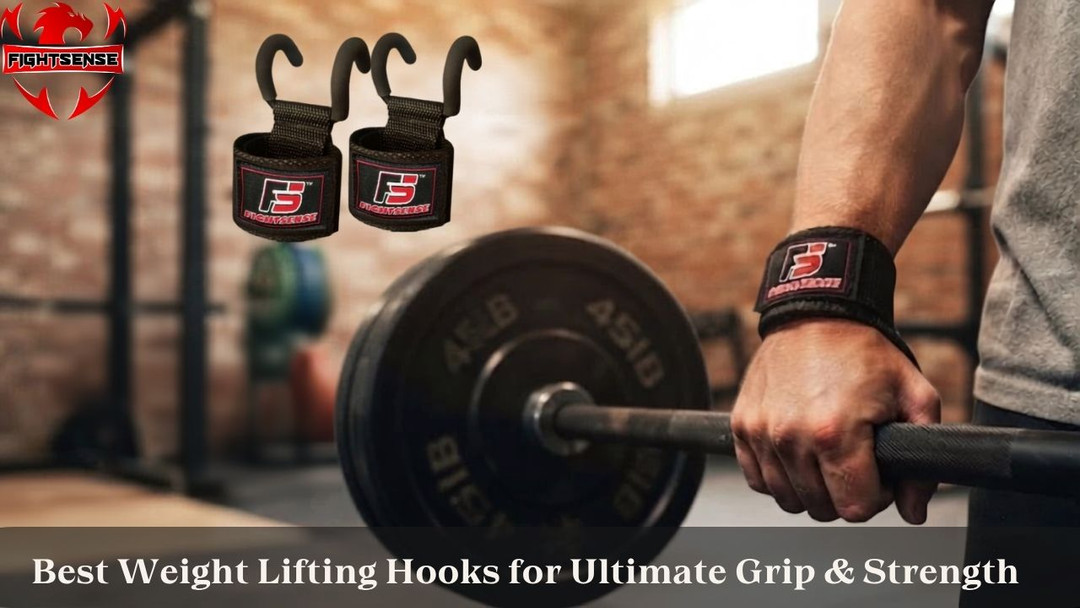
Best Weight Lifting Hooks for Ultimate Grip & Strength
Struggling with grip fatigue on heavy lifts? If your forearms give out during deadlifts long before your back is tired, you aren't alone.
Weight lifting hooks offer a simple solution by securing your hold on the bar, taking the burden off your hands. In this guide, we will explore how these accessories work, how to choose the right gear, and why incorporating Fightsense weightlifting hooks can completely transform your training.
What Are Weight Lifting Hooks and How Do They Function?
What exactly are weightlifting hooks, and how do they change the dynamics of a heavy pull?
At their core, weightlifting hooks are specialized wrist-support straps integrated with sturdy, coated steel hooks that wrap securely around a barbell or dumbbell. Instead of relying entirely on your finger pinch strength and forearm endurance to hold the bar, the steel hook bears the primary weight load.
When you strap into them, the mechanism transfers the weight directly onto your wrists and forearms through the padded strap, bypassing your grip entirely. This allows you to:
- Focus 100% on mind-muscle connection and target muscle engagement.
- Eliminate the fear of the bar slipping out of sweaty hands during max-effort sets.
- Execute clean, controlled repetitions without awkward hand adjustments mid-set.
Why Is Grip Strength Often the Weakest Link in Your Training?
Ever wonder why your back or hamstrings still have fuel left, but you have to drop the bar because your hands give out? Anatomically, your forearm and hand muscles are much smaller and fatigue far quicker than powerhouses like your lats, traps, and glutes. Under heavy loads, immense pressure on your skin and tendons causes your grip to fail long before your target muscles reach exhaustion.
This mismatch stalls your strength and muscle growth by preventing proper progressive overload. Bridging the gap between your large muscle capacity and hand endurance is the absolute key to breaking past this frustrating plateau.
What Are the Hidden Benefits of Using Lifting Hooks?
Beyond just holding onto a heavy barbell, what more tangible advantages do you gain by adding hooks to your gym bag?
1. Exponential Strength Gains on Pulling Movements
When your grip is no longer a limiting factor, you can safely load more plates onto the bar. This progressive overload triggers faster strength adaptations across your entire posterior chain.
2. Dramatic Reduction in Hand Fatigue and Callus Tears
Constantly ripping calluses or dealing with severe skin friction can ruin a workout. Hooks shield your palms from direct metal grinding, keeping your hands healthy and pain-free.
3. Enhanced Posture and Form Integrity
When you aren't fighting to keep your fingers closed, you can maintain a more symmetrical posture, preventing one shoulder or side from dropping due to grip asymmetry.
Weight Lifting Straps Hooks: How Do They Differ and Which Is Right for You?
Are you confused about whether you should use traditional straps or hooks? Let's break down the direct comparison to help you decide.
|
Feature / Factor |
Weight Lifting Hooks |
Traditional Weight Lifting Straps |
|
Ease of Use |
Extremely fast and simple to secure; quick setup between sets. |
Requires manual wrapping and twisting around the bar; has a learning curve. |
|
Grip Security |
Rock-solid mechanical lock; excellent for max-effort heavy loads. |
Relies on friction and tightness of the fabric wrap; can loosen if sweat builds up. |
|
Durability & Build |
Heavy-duty steel hooks paired with reinforced fabric straps. |
Typically made of cotton, nylon, or leather straps that can fray over time. |
|
Best Suited For |
Deadlifts, shrugs, heavy rows, and shrug variations. |
Olympic lifts, snatch/clean variations, and general bodybuilding pulls. |
|
Wrist Support |
Built-in thick padding and rigid wrist support for joint stability. |
Varies; many standard straps offer minimal independent wrist padding. |
If your primary goal is maximizing sheer pulling power on heavy deadlifts and back-building movements with zero setup hassle, weight lifting straps hooks hybrids provide an unbeatable structural advantage.
How to Choose the Best Weight Lifting Hooks for Your Routine?
What criteria should you look for before purchasing a pair of lifting accessories to ensure they last?
- Material Composition: Look for heavy-duty steel hooks coated with non-slip rubber or PVC to protect your equipment and prevent sliding. The wrist material should be industrial-grade nylon or canvas.
- Padding Thickness: Thick neoprene padding around the wrist area is essential to prevent the straps from digging into your skin under heavy loads.
- Weight Capacity: Ensure the hardware is rated to handle extreme loads—ideally several hundred pounds—so you never have to worry about structural failure mid-lift.
- Secure Fastening System: Heavy-duty Velcro closures with steel adjustment loops ensure the fit stays tight and customized to your wrist size.
Why Fightsense Gear Changes Everything
Engineered for serious lifters, Fightsense weightlifting hooks combine steel construction with heavy-duty neoprene padding to cushion your joints and protect your skin during brutal pulling sessions.
Whether you are hitting deadlifts, rows, or heavy shrugs, this reliable gear offers total stability and grip security. By bridging the gap between raw effort and mechanical advantage, they let you focus 100% on your execution and push past your limits safely.
When Should You Use Weightlifting Hooks in Your Workout?
Are you utilizing your hooks at the right moments during your training split?
While these tools are incredible assets, they are most effective when deployed strategically:
- Working Sets on Deadlifts: Save your grip for your heavy working sets. You can perform your warm-ups raw to build baseline grip strength, then strap in once the weight gets heavy.
- Heavy Shrugs: Trap development requires handling massive loads. Hooks allow you to hold weights that would otherwise slip out of your hands instantly.
- High-Rep Rowing Movements: When your back is ready for more reps, but your forearms are cramping, hooks keep the set alive.
Conclusion:
Maximizing your physical potential requires working smart alongside working hard. If subpar grip strength has been holding back your deadlifts, rows, and overall back development, integrating a reliable accessory into your routine is a game-changer.
By choosing premium equipment like Fightsense weight lifting hooks, you eliminate hand fatigue, protect your skin, and unlock the true capacity of your major muscle groups. Step into the gym with confidence, load up the bar, and watch your strength soar to new heights.
FAQs:
How do weightlifting hooks protect the wrist during heavy pulls?
They act as integrated wrist wraps that stabilize the joint, absorbing the primary pressure so your wrists don't bend or strain under massive loads.
Are steel hooks safer than traditional lifting straps?
Steel hooks provide an instant, secure mechanical lock on the bar, eliminating the risk of fabric slipping or complex unwrapping failures mid-set.
Do lifting hooks help prevent calluses and hand tears?
Absolutely, by shifting the friction and direct bar pressure away from your palms and onto the cushioned wrist support.
How does neoprene padding improve comfort during intense sets?
It provides a soft, breathable barrier between the heavy nylon strap and your skin, preventing chafing and bruising during high-rep pulling.
Are lifting hooks suitable for beginners or strictly advanced lifters?
They benefit both; beginners can bypass weak grip limitations to train target muscles, while advanced lifters can push past personal records safely.
How do you maintain and clean gym hooks after a sweaty workout?
Simply wipe down the steel and nylon components with a damp antimicrobial cloth and let them air dry in a well-ventilated area.
Disclaimer
This blog serves informational and educational purposes only. Always consult with a qualified fitness professional or trainer before modifying your exercise program or lifting heavy loads. Proper technique and safety precautions are essential to prevent injury.