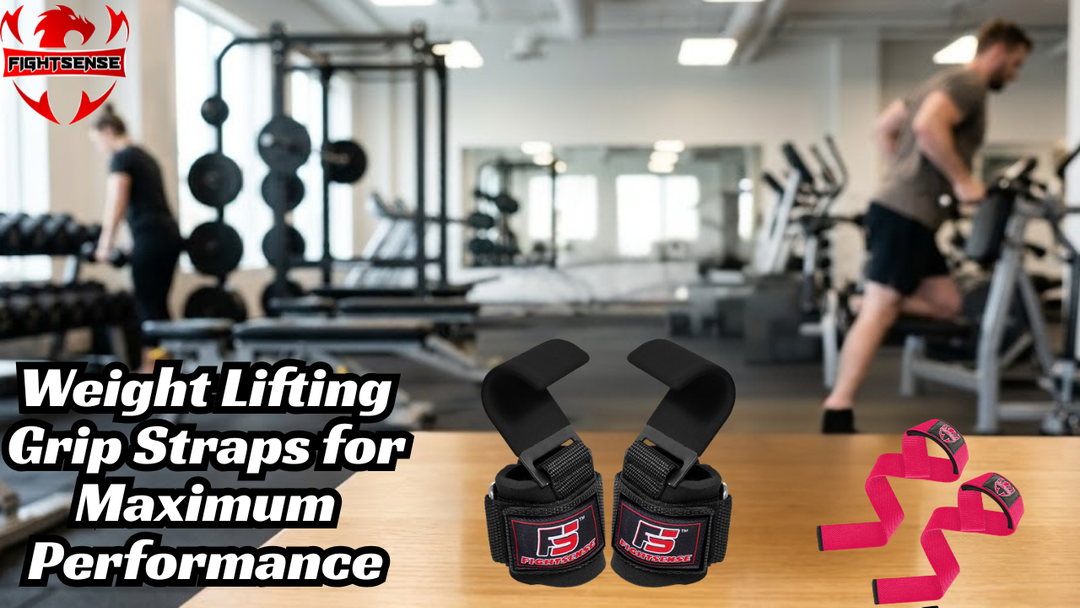
Weight Lifting Grip Straps for Maximum Performance
Weight Lifting Grip Straps can be the difference between a great workout and a frustrating one.
Let’s be honest—grip strength is often the biggest bottleneck in your lifting journey. You’re crushing your back day, fully focused, and then suddenly your hands give out before your muscles do. The bar starts slipping, your rhythm breaks, and your set ends early—not because your lats are done, but because your grip failed.
Sound familiar?
That’s exactly where grip straps come in. And no, they’re not “cheating.” They’re one of the smartest tools for boosting performance, improving muscle activation, and maintaining consistent progress.
So grab your protein shake, and let’s break down grip straps the way real lifters do—simple, practical, and straight to the point.
Keynotes:
- Grip straps unlock heavier lifts by removing grip fatigue as a limiting factor.
- Use them strategically when your target muscles are stronger than your grip.
- They enhance focus, form, and overall training performance.
- Smart use supports progress while still building natural grip strength.
- Choosing reliable gear like Fightsense improves safety, control, and durability.
Why Your Grip Strength Is Slowing You Down More Than You Think?
The reality is that your hands are often the weakest link in pulling exercises.
Consider movements like:
- Dead lift
- Barbell rows
- Pulldowns (lat)
- Romanian deadlifts
- Shrugs.
In all of these examples, your grasp is significantly weaker than the target muscles (back, traps, hamstrings).
So what happens?
Your hands give out first Your set ends early
Your target muscles are not getting the full stimulus
And that caps your gains over time.
That’s where grip straps change the game.
What Exactly Are Weight Lifting Grip Straps?
Weight lifting Grip straps are basic, yet strong tools if you are new to them.
They’re commonly constructed from cotton, nylon or leather and they wrap around:
- Your wrist.
- The barbell/dumbbell
This gives a secure link between your hand and the weight and reduces the strain on your grip.
Briefly:
Grip straps allow your muscles to undertake the task your hands can’t keep up with.
The Big Myth: “Grip Straps Are A Cheat”
Let’s clear this up right here.
Weight lifting Grip straps are NOT cheating!
It’s strategic training, actually.
Here’s why:
- You still pick up the same weight
- Your muscles are still doing the job
- You are removing an arbitrary limitation
It's like this:
- Wearing Elevator Shoes is Not Cheating
- If you use a belt you are cheating
- So why would straps?
Lifting is about progress and building muscle, not how long you can hang from a bar.
How to Use Weight Lifting Grip Straps?
It is crucial to be aware that not every pair needs straps.
When you use them:
Your grip is giving out before your target muscle.
When your hands give out, but your muscles have more to give, especially in pulling exercises where your back is stronger than your grasp. Straps let you keep the exercise going and exhaust the target muscle to its max without being limited by your hands.
You're lifting heavy
Helps you stay safe and in control when doing heavy or low-rep sets where grip becomes a limiting factor rather fast. Straps mean you don’t have to worry about the bar slipping so you can focus on power, stability and perfect form.
High Volume Training
Reduces gripping fatigue for dependable performance throughout extended sessions when your hands tire quicker than your muscles. Straps help you sustain the intensity and land all your reps correctly.
Types of Grip Straps (And Which One You Need)
Not all straps are created equal. Let’s break it down simply.
Lasso Straps (Most Popular)
- Loop design
- Easy to use
- Adjustable
Best for: Beginners to advanced lifters
Figure 8 Straps
- Wrap around wrist and bar twice
- Extremely secure
Best for: Heavy deadlifts
Hook Straps
- Built-in metal or plastic hook
- Fast to use
Best for: Convenience (but less natural grip feel)
4. Olympic Straps
- Shorter design
- Quick release
Best for: Cross-training and fast transitions
How Grip Straps Boost Maximum Performance:
Now let’s talk about the results—because that’s what matters.
1. More Reps, More Growth
When your weight lifting grip straps isn’t failing early, you squeeze out extra reps. And those extra reps? That’s where growth happens.
2. Better Mind-Muscle Connection
Instead of thinking:
“Don’t drop the bar…”
You can focus on:
“Contract your lats… control the movement…”
That’s a huge difference.
3. Heavier Lifts
Straps allow you to handle heavier weights safely—especially in pulling movements.
4. Reduced Risk of Injury
A slipping bar is dangerous. Straps give you control, especially during heavy lifts.
Choosing the Right Grip Straps:
If you’re serious about performance, quality matters.
This is where brands like Fightsense come in.
When choosing straps, look for:
Durability
Cheap straps wear out quickly. You want something that lasts through heavy sessions.
Comfort
Wrist padding is crucial. No one wants bruised wrists mid-workout.
Grip Strength
The material should lock onto the bar without slipping.
Ease of Use
You shouldn’t waste time adjusting straps between sets.
Fightsense has been gaining attention for offering a solid balance of:
- Comfort
- Strength
- Reliability
Which is exactly what you want when pushing your limits.
Common Mistakes to Avoid:
- Using Straps Too Early – Don’t rely on them for every set.
- Wrapping Too Loose – Loose straps reduce effectiveness.
- Ignoring Wrist Comfort – Pain means poor fit or technique.
- Overdependence – Use them as a tool, not a crutch.
Grip Strength vs Grip Straps: Finding the Balance
Here’s the smartest approach:
Train grip strength separately
Use straps for performance sets
You can build grip strength with:
- Farmer’s carries
- Dead hangs
- Plate pinches
Then use straps when:
- You’re pushing limits
- You want maximum muscle activation
This gives you the best of both worlds.
Do You Actually Need Grip Straps?
Let’s keep it simple.
You probably need them if:
- You deadlift regularly
- You train back seriously
- Your grip fails before your muscles
- You want faster progress
You might NOT need them if:
- You’re a complete beginner
- You only lift light weights
- Grip strength is your main goal
The Mental Edge You Didn’t Expect:
Here’s something people don’t talk about enough:
Grip straps also give you confidence.
When you know the bar isn’t slipping:
- You lift more aggressively
- You focus better
- You push harder
That mental shift alone can transform your workouts.
FAQs:
Q1: Do weight lifting grip straps reduce natural grip strength over time?
No, if used correctly. Train grip separately, and use straps only for heavy sets or back-focused work.
Q2: Can beginners use weight lifting grip straps?
Yes, but only after learning proper lifting form. Beginners should not rely on them too early.
Q3: Are straps better than lifting gloves?
Yes for performance. Straps improve bar control, while gloves mainly add comfort and padding.
Q4: Should I use straps for every pulling exercise?
No. Use them only when grip becomes the limiting factor, not during warm-ups or light sets.