
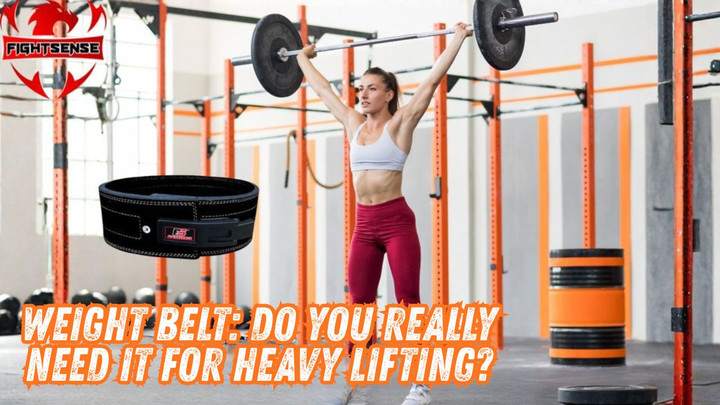
Weight Belt: Do You Really Need It for Heavy Lifting?
6th Jul 2026
Weight Belt is something you usually don’t think about until you see it in a serious gym—someone tightening it right before a heavy lift. That moment naturally raises a question: is a Weightlifting Belt actually necessary, or is it just something lifters use to feel more confident under pressure?
Most beginners ignore it, assuming it’s only for advanced athletes. But as the weights get heavier, the doubt starts to return, especially when the lower back begins to feel unexpected stress during squats or deadlifts.
That’s where understanding a Lifting Belt becomes interesting—not as a simple gym accessory, but as something that might change how your body handles stability, control, and heavy load.
Key Takeaways:
- A Weight Belt doesn’t create strength—it improves how your body manages pressure during heavy lifts.
- It becomes truly useful only when lifting near-max weights where core stability starts to break down.
- Proper use can enhance lifting control, but overuse may reduce natural core engagement over time.
- Not all belts perform the same—quality design (like lever systems) significantly affects stability and comfort.
- The real benefit is confidence under load, allowing lifters to focus on performance instead of instability.
Learning About the Weight Belt
A Weight Belt is not only a gym accessory but a gear that is made to aid the lifters to manage large loads with better stability and control. A Lifting Belt helps to keep you braced correctly and raises your core pressure to help you hold a better lifting position in exercises like squats and deadlifts.
It is not a replacement for strength or technique, but if used appropriately can help to increase confidence and performance on tough lifts.
Why a Lifting Belt is used by some lifters while others skip it
Walk into any gym and you’ll see two totally distinct mentalities. One group tightens their belt before every heavy set as if it were a ritual, the other group stays away from it altogether, thinking that real strength should come exclusively from natural body control. So who is really right? The truth is somewhere in the middle.
A Gym Belt doesn’t give you strength. It helps your body better control internal pressure when lifting hefty loads. Do you really need it? Depends on your workout technique, how heavy you’re lifting, and how stable your core.
What Happens Inside Your Body When You Wear a Belt
Most people think that a Weightlifting Belt will immediately support your back and this is not entirely true. What actually happens is more intriguing. Bracing your core against a belt raises internal abdominal pressure naturally. This provides a support system around your spine and makes large lifts seem more controlled .
It is not doing the work for you, it is aiding your body to grow a stronger internal structure while exerting effort. That’s why you’ll hear experienced lifters talk about that “locked in” feeling during squats or deadlifts.
Why does it feel unnecessary at light weight but essential at heavy weight?
At lower loads, your inherent core strength is usually sufficient to keep your body stable. This is why many lifters notice no difference when they first wear a belt.
But as you get heavier, your body reaches a point where it’s tougher to stay stable.
Then is when things change:
- breathing gets tighter
- lower back starts to take more load
- shape becomes harder to control
In certain moments, a Weight Belt makes sense – not for the strength it adds, but for the lack of instability under pressure.
Is your core the real limiting factor in heavy lifts?
Something that most lifters don’t learn early on in their quest.
Sometimes you have strong legs. You’ve got a strong enough back. But your core can’t stay stable under severe pressure.
And when that happens, your performance is capped automatically.
A belt helps lessen that constraint by providing your core something to push against so your full strength may appear without unneeded instability . Properly employed .
What most lifters experience when weights start getting serious
This is typical when someone goes from moderate weights to a phase of heavier lifting.
The first lift is gentle and controlled. But when the weight gets heavier, especially in the bottom portion of squats and deadlifts, a little instability starts to show its ugly face.
This is where many lifters first try a belt, frequently from brands like Fightsense, which is known for robust training gear made for strength athletes.
The first thing you notice is not just physical, it's mental. When lifting heavy, there is a quick feeling of control and confidence. The bar feels more solid, the setup is more snug, and the movement is more predictable.
But experienced lifters know one key thing:
The belt didn’t make you stronger. It makes you better at handling heavy stress.
Should you constantly use it during training?
No, and here is where a lot of novices go wrong.
It can be overdone over time, and using it for every workout might diminish natural core involvement. That’s why most trainers advocate it just for strong compound movements, not warm-ups or mild accessory training.
The goal is equilibrium, not reliance.
Think of it as a support tool, not a substitute for strength.
Weight Belt vs Traditional Belt — What Actually Matters?
Not all lifting belts are designed the same. The right choice depends on your training style, lifting goals, and how much support you need during heavy movements.
|
Feature |
Weight Belt |
Traditional Belt |
|
Support Level |
Provides strong core support for heavy lifts |
Offers basic support with more flexibility |
|
Tightness Control |
Creates consistent pressure around the core |
Requires manual adjustment for tightness |
|
Ease of Use |
Quick to secure and remove, especially with lever designs |
Takes more time to tighten and adjust |
|
Best For |
Heavy squats, deadlifts, and advanced strength training |
Beginners, general workouts, and everyday gym use |
|
Stability |
High stability during maximum-effort lifts |
Moderate stability for regular training |
The right belt is not about choosing the strongest option—it’s about choosing the one that matches your training needs and helps you lift with better control.
Why do some lifters still avoid it years into training?
Certain training groups feel that the natural development of core strength is hampered by reliance on external support.
There is some validity to this, however it depends on how it is used.
Lifters who don't use belts at all frequently concentrate on:
- raw core strength training
- stability training
- less-is-more lifting method
But competitive lifters are frequently more concerned with performance and safety under maximal loads.
So it’s not a right or bad thing, it’s a training purpose thing.
How do you know it’s time to start using one?
There is no set rule however there are definite signs:
- Your form begins to fall apart during heavy sets
- Before muscles, lower back feels worked
- You strain to keep tight during lifts
- You're working around maximum strength ranges
These signals, when present, are no longer optional for the introduction of a belt.
What most people misunderstand about lifting support gear
A common misconception is that lifting gear makes you stronger.
In reality:
- It doesn’t increase muscle power
- It doesn’t replace technique
- It doesn’t fix poor form
What it does is simple but important:
It helps your body stay stable when loads get close to your maximum capability.
FAQs:
1. Do beginners really need a Weightlifting Belt from day one?
No, beginners should first focus on building core strength, proper form, and lifting technique. A belt becomes useful only when training intensity increases.
2. Does a belt actually make you stronger?
Not directly. It does not increase muscle strength, but it helps you lift more efficiently by improving core stability and reducing energy loss during heavy lifts.
3. At what stage should I start using a belt in training?
You should consider it when you begin lifting heavier weights where your form starts to break or your lower back feels overloaded during compound movements.
4. Can overusing a belt reduce natural core strength?
Yes, if you rely on it for every set, your core may not get enough activation, which can slow down natural stability development over time.
5. Should I wear a belt for all exercises in the gym?
No, it is mainly useful for heavy compound lifts like squats, deadlifts, and overhead presses—not for isolation or light exercises.
Closing Thoughts:
Not every lifter requires one at the same point. But for those going into tougher training periods, it can be a helpful tool for safety and performance.
A weight belt is not about dependency – it is about control. And when utilized appropriately, it lets you push harder without any additional instability holding you back.
That’s why dedicated lifters invest in excellent equipment like Fightsense. The focus isn’t just on lifting more, it’s on lifting more safely.
Disclaimer:
This article is for informational purposes only. A Gym Belt supports stability during heavy lifts but does not replace proper form or professional training advice.