
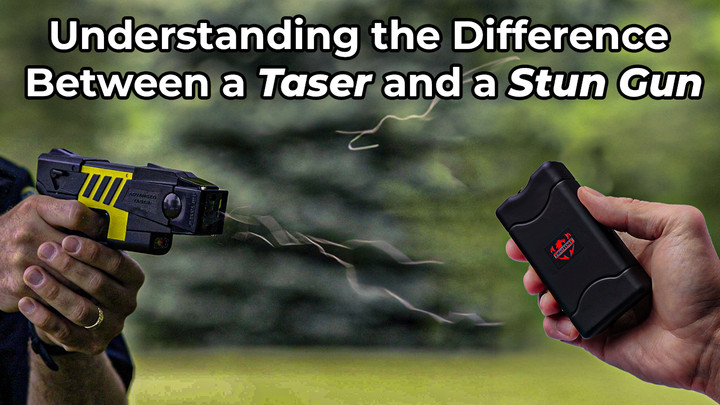
Understanding the Difference Between Taser and a Stun Gun
21st Aug 2024
Difference between Taser and a Stun Gun — this is one of the most common questions people ask when exploring personal self-defense tools. When it comes to personal self-defense, many people are familiar with tasers and stun guns. While both devices are designed to incapacitate an attacker, they operate in significantly different ways.
Understanding the difference between a taser and a stun gun is crucial for selecting the right tool for your self-defense needs.
In this blog, we will explore the unique features, functionality, and uses of each device to help you make an informed decision.
Keynotes
-
Tasers work from 15–30 ft; stun guns need direct contact.
-
Tasers are expensive ($300–$1,500); stun guns are affordable ($20–$200).
-
Tasers shoot probes; stun guns deliver shock on touch.
-
Tasers offer distance safety; stun guns give immediate close-range protection.
What is a Taser?
A taser is an electroshock self-defense device that fires small dart-like probes connected by thin wires to deliver an electric shock from a distance. It disrupts the nervous system, causing temporary paralysis and loss of muscle control, allowing you to stop a threat without direct contact.
The difference between taser and a stun gun in terms of distance is clear: tasers can reach a target from 15 to 30 feet, making them ideal when you need to maintain distance and avoid close physical contact.
What is a Stun Gun?
A stun gun is a handheld device that delivers an electric shock upon direct contact with the attacker, while a taser can be used from a distance and fires projectiles connected by wires to provide the shock.
This direct application of electrical current can cause severe pain and muscle contractions, providing an opportunity for the user to escape or subdue the attacker. Stun guns are generally compact and easy to carry, making them a popular choice for personal self-defense.
Key Differences Between a Taser and a Stun Gun
Range of Effectiveness:
One of the most notable differences between a taser and a stun gun is their range. A taser can incapacitate a target from a distance of up to 30 feet, while a stun gun requires direct contact to be effective.
Method of Delivery:
Tasers use projectiles to deliver an electrical shock from a distance, whereas stun guns require the user to touch the attacker with the device’s electrodes to deliver the shock.
Usage and Deployment:
Tasers are for maintaining distance and are ideal for law enforcement and personal protection when close contact is not feasible. Stun guns are more suited for close-range encounters with immediate contact.
Legal Considerations:
The legality of tasers and stun guns can vary depending on location. In some areas, tasers may be restricted or require special permits, while stun guns might have different regulations. Understanding the legal implications of both devices is crucial before purchasing or carrying them.
Price Comparison
Tasers and stun guns vary significantly in price, reflecting their different functionalities and technologies:
Tasers:
Generally, tasers are more expensive than stun guns due to their advanced technology and range capabilities. Prices for tasers typically range from $300 to $1,500, depending on the model and features. High-end models with advanced targeting systems or additional accessories can be at the higher end of this range.
Stun Guns:
Stun guns are generally more affordable, with prices ranging from $20 to $200. The cost of a stun gun depends on factors such as voltage, size, and additional features like built-in flashlights or rechargeable batteries. Basic models are usually less expensive, while high-voltage or tactical stun guns can be priced higher.
Reliability and Effectiveness
Reliability and effectiveness are crucial factors when considering a self-defense tool:
Tasers:
Tasers are reliable for incapacitating attackers from a distance with high-voltage shocks, but factors like range, battery life, and accuracy can affect their reliability. They are effective in law enforcement and self-defense.
Stun Guns:
Stun guns are reliable for close-quarters self-defense, delivering a painful electric shock upon direct contact with the attacker. Charge level, electrode condition, and proper use affect their reliability. They require proximity but provide immediate and direct incapacitation, making them highly effective in personal defense scenarios.
Difference Between Taser and a Stun Gun for Self-Defense
Difference between Taser and a Stun Gun — When deciding between a taser and a stun gun, consider factors such as the range at which you might need to defend yourself, your comfort with close contact, and local laws regarding these devices.
Both tools offer valuable self-defense capabilities, but their effectiveness depends on the specific circumstance and how you plan to use them.
Get Yours Now!
FAQs
Q: What distinguishes an electronic control device from a handheld stun device?
A: An electronic control device (Taser) can immobilize from a distance, while a handheld stun device requires direct contact to deliver a shock.
Q: Can a contact shock tool be used like a Taser?
A: No, a contact shock tool (stun gun) only works on touch, whereas a Taser can reach a target from several feet away.
Q: How does a conducted energy weapon differ from a personal stun device?
A: Conducted energy weapons (Tasers) fire electrodes to disrupt a target’s nervous system remotely, while personal stun devices affect only on contact.
Q: Are there safety concerns when choosing a spark shock tool over a Taser?
A: Both have safety considerations, but a spark shock tool (stun gun) is safer for close-range defense, while a Taser requires aiming and distance.
Conclusion
Difference between a Taser and a Stun Gun — In summary, the key distinction lies in how each device delivers its shock and the range at which it works. Tasers allow you to stop a threat from a distance by firing probes, while stun guns require direct physical contact to be effective.
Understanding these differences helps you choose the self-defense tool that matches your comfort level, personal safety needs, and the situations you may face.
Disclaimer:
This blog is for informational purposes only and does not constitute legal advice. Always check local regulations and consult with professionals to ensure proper use and compliance with self-defense devices.