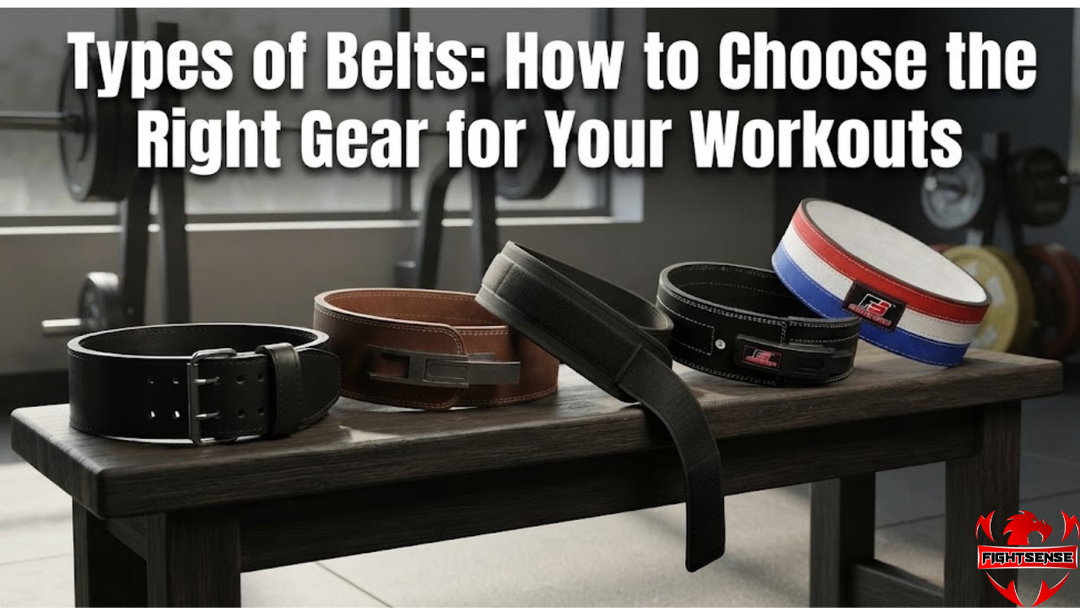
Types of Belts: How to Choose the Right Gear for Your Workouts
Whether you are stepping onto the gym floor to smash a personal record on heavy squats or simply putting the finishing touches on a sharp casual outfit, understanding the different types of belts available is an absolute game-changer. Belts do much more than just keep your pants from falling; in the world of fitness and heavy lifting, they serve as your body's ultimate safety net.
They build crucial intra-abdominal pressure, safeguard your spine, and unlock hidden layers of power. Choosing the right gear can entirely transform your training routine from mediocre to elite. In this comprehensive guide, we will break down the various types of belts, explore their specific use cases, and help you find the absolute best match for your lifestyle and strength goals.
Why Belt Selection Matters in Fitness
Lifting heavy iron places a tremendous amount of structural stress on your spine and core muscles. A lever belt gives your abs a firm wall to push against, significantly enhancing internal pressure and spinal stability. But placing any arbitrary piece of gear on can drastically limit your range of motion or fail to offer you the very support you so desperately need. Knowing the exact type of belt to use for what compound lift will keep you 100% safe, lift with full confidence, and optimize your overall performance.
Deep Dive: Different Types of Belts for Weightlifting
1. Leather Powerlifting Belts
Lifting belts are usually of the same width the whole way around, normally a solid 4 inches, and are made of thick, stiff layers of real leather. They are specifically made for maximum compound exercises like heavy deadlifts and deep squats where you cannot flex your spine. Brands such as FightSense create these heavy-duty leather choices to give you uncompromising trunk stability under high loads.
2. Lever Belts
Of the heavier-duty styles of belts, the lever-action versions are a favorite of competitive powerlifters and advanced athletes. Their high-duty steel lever mechanism locks into place with one satisfying snap, which allows for lightning-fast changes between hard-working sets while still maximizing abdominal tension.
3. Nylon and Velcro Training Belts
If you’re doing high-intensity functional fitness, CrossFit WODs, or explosive Olympic weightlifting belt transitions in your daily workout, a flexible nylon belt with a heavy-duty Velcro closure is your best buddy. These types of belts offer robust structural support when needed, yet remain flexible and lightweight enough for dynamic, fast-paced activities.
4. Tapered Bodybuilding Belts
Tapered Belts are smartly designed. They are wider in the lower back and taper to a narrower width at the front. They give more flexibility of movement in the torso for twisting, rowing, and basic bodybuilding accessory training, while still providing specific protection to the lower back.
About FightSense: Quality Gear for Every Athlete
FightSense is a popular business that provides e-commerce supply of fitness equipment, weightlifting gear, and self-defense products. In the fitness gear section, FightSense is well known for products including weightlifting lever belts, powerlifting belts, wrist wraps, straps, arm blasters, and gym training equipment. The brand delivers excellent, reliable, and affordable gear for strength training enthusiasts and athletes alike, guaranteeing that everyone may obtain access to professional-grade safety equipment without breaking the bank.
Comparison Table: Choosing Your Belt
|
Belt Type |
Best Used For |
Primary Material |
Closure Mechanism |
Level of Support |
|
Powerlifting Belt |
Squats, Deadlifts |
Thick Leather |
Prong / Buckle |
Maximum |
|
Lever Belt |
Heavy Powerlifting |
Heavy-Duty Leather |
Steel Lever |
Maximum |
|
Nylon Belt |
CrossFit, Functional Training |
Reinforced Nylon |
Velcro & Buckle |
Moderate |
|
Tapered Belt |
Bodybuilding, General Gym |
Leather / Synthetic |
Prong / Velcro |
Balanced |
Step-by-Step Guide: How to Fit a Lifting Belt Correctly
- Find Your Natural Waistline: Place the belt on top of your hip bones. It should comfortably cover your lower back and your navel area.
- Initial Tightness Check: The belt should be such that when your core is entirely relaxed, you can fit two fingers comfortably below.
- Practice Core Bracing: Inhale deep down into your stomach and push your abdominal wall out hard against the inside surface of the belt to test the internal pressure.
- Refine the fit. Loosen it a little if you feel squeezed, constricted in your rib cage, or unable to take a full breath until you hit your optimum performance sweet spot.
Pros & Cons of Popular Belt Designs
- Leather Lever Belts
- Pros: amazing structural durability, ultra-fast locking, amazing core stabilization.
- Cons: Not as versatile for dynamic multi-directional movements. Needs a hard break-in time.
- Nylon Velcro Belts
- Pros: Lightweight feel, good adjustability on the fly, great for functional and hybrid training.
- Cons: May wear down quicker in years of intensive, maximal powerlifting belt circumstances.
Expert Tips for Longevity and Performance
- Break It In Gently: If you choose a thick leather choice from the FightSense strength collection, gently roll and flex it before your very first heavy exercise to naturally soften the leather.
- Properly store your gear: Store leather accessories in a dry, well-ventilated area, away from direct sunlight or humid car trunks, to avoid breaking the material.
- Listen to Your Body: Don’t depend on a belt for 100% of your working sets; always work your natural core strength as you would with gear.
Common Mistakes to Avoid
- Wearing It Way Too Slack: A slack belt gives you a false sense of psychological security without delivering the real intra-abdominal pressure needed to preserve your spine.
- Choosing the Wrong Width: If you have a naturally short torso, a full 4-inch uniform belt might produce unpleasant friction and bruising against your ribs and hips.
- Forgetting Core Engagement: Understand that a belt is a supportive device; it doesn’t substitute for the physical habit of bracing your core muscles.
FAQs:
What belt works best for hard squats?
The absolute no-compromise support for big squat sessions is a single-piece 10mm or 13mm leather powerlifting or lever belt.
Can you use nylon straps for hard deadlifts?
Heavy maximal deadlifts are best supported by hard leather choices, while nylon versions are great for functional and circuit training.
How tight is too tight for my training belt?
It should be tight enough so that when you do a heavy brace, your abs are being pushed against it forcefully, but not so tight that you can't breathe at all or your skin is pinched.
Are gym belts good for newbies?
Yes, novices can acquire good core bracing techniques with lighter types of belts under adequate coaching and supervision.
What’s the difference between a lever belt and prong belt?
Unlike prong belts with their metal buckle and typical belt holes, lever belts use a mechanical steel lever that locks into a pre-set tightness in the blink of an eye.
How can I safely clean my leather fitness belt?
Gently wipe it down with a little damp towel and mild soap, then let it air dry entirely in the shade. Do not use harsh chemical cleaners or soak it in water.
Is a broader belt necessarily better for everybody?
Not always. A lot of it relies on body geometry. Tapered or thinner sizes are preferred by shorter athletes or those doing dynamic motions for comfort.
Conclusion:
It doesn’t have to be a daunting jigsaw to figure out the different types of belts available in the market. Match your gear to your training type. Whether you need heavy-duty stability for powerlifting or flexible support for functional fitness, matching your gear to your training style will help you perform safely and successfully.
Note:
This blog serves only for informative needs. Before adding new tools to your program, always see a fitness professional first.