
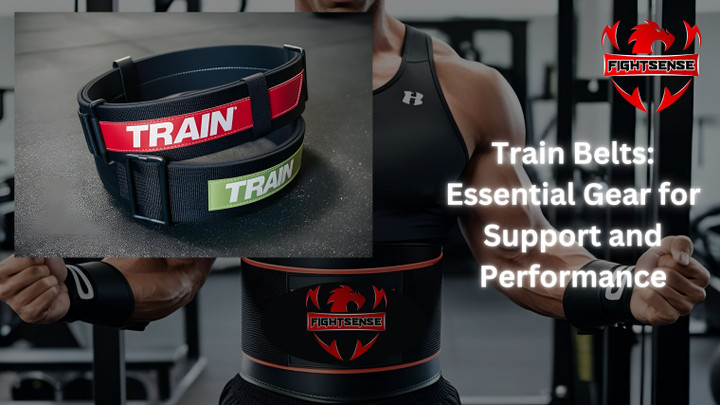
Train Belts: Essential Gear for Support and Performance
11th Mar 2025
Athletes and fitness buffs are always looking for solutions that provide improved performance and support during training.
For their capacity to increase stability, guard the lower back, and maximise lifting effectiveness, train belts have been a mainstay in gyms. Train belts can make a big difference whether your expertise level with fitness is beginner or seasoned lifter.
Key Highlights
- Offers support for both lower back and core.
- Raises intra-abdominal pressure.
- fixes technique and lifting posture.
- lowers the chance of damage during big lifts.
- Perfect for functional fitness, weightlifting, and powerlifting.
What are Train belts?
Wearable supportive workout accessories around the waist called train belts. Their primary goals are to stabilise the spine, lower back, and core during demanding physical exercises including functional training, weightlifting, or powerlifting.
Usually composed of leather, nylon, or neoprene, these belts are meant to fit tightly so that you may keep correct posture. Train belts improve general strength output by increasing intra-abdominal pressure and hence lower the chance of injury.
Picking the Right Train Belt
- The right train belt for you will depend on your body type and what you want to get out of your training. Think about these things:
- Material: Leather: Gives the most support for powerlifting.
- Nylon/Neoprene: This material is light and flexible, making it great for CrossFit or functional training.
- Thickness and Width: Thicker, more uniform belts make it easier to lift big things since they spread the pressure evenly.
- Tapered belts are more comfortable and easier to move around in.
Type of closure:
- Lever or Prong Buckles: Best for lifts that are hefty and steady.
- Velcro belts are easier to change and great for workouts that change.
- Pick what gives you the right amount of support, comfort, and your preferred way of exercising.
- Things You Shouldn't Do When Using a Train Belt
- If you don't use the train belt appropriately, it won't help at all. Don't make these common mistakes:
- Not fitting snugly enough: It needs to fit snugly to support your core.
- Using It for Every Exercise: Too much use can make your natural core strength weaker.
- Bad Positioning: Putting the belt too high or too low makes it less effective.
- Not Bracing Properly: Just wearing the belt isn't enough; you also need to use your core muscles.
- It's just as crucial to use a railroad belt wisely as it is to use it at all.
Train Belts: Who Uses Them
- Abound in gyms, especially for powerlifting, heavy lifting, and strength training
- Bodybuilders, CrossFit athletes, and those healing from back ailments
- Used during deadlifts, bench presses, squats, and overhead exercises
- Occasionally worn by movers or construction workers doing physically demanding jobs
Train Belt Use: Techniques
- Wrap the train belt tightly around your waist, above your hips
- Should feel tight but not constrict breathing
- Lock the belt and brace your core before lifting
- Loose or remove the belt after your set to let your body heal
- Use selectively during maximum or heavy lifts, not the whole exercise
Train Belts: Applications
- Give lower back and core support during heavy lifting
- Help lessen tension on the spine through torso stabilisation
- Improve lifting performance by enabling more confidence and stability
- Keep good posture and lower the injury risk
Benefits of Train Belts
- Offer safer and more efficient big lifts with lower back support
- Improve posture and lifting skill
- Maintain spine stability and lower tension on lower back muscles
- Help avoid injuries
- Raise intra-abdominal pressure for more lifting power and stronger core activation
Different Types of Train Belts Explained
Each sort of train belt is made with a certain training goal in mind, thus they are not all the same.
- Powerlifting Belts: These belts, which are typically thick and uniformly wide, provide the most support possible for heavy deadlifts and squats. For lifters who require the most stability, they are perfect.
- Olympic lifting belts are ideal for clean and jerks or snatches because of its little front taper, which improves mobility.
- Velcro training belts are lightweight, adjustable, and frequently utilized in functional or CrossFit training sessions.
- Lever belts: Designed for serious strength athletes, these belts provide a reliable tightness and a secure lock for optimal performance.
Knowing the differences between the various belt kinds will help you select one that best suits your fitness preferences, whether it be bodybuilding, CrossFit, or competitive lifting.
When Should You Start Using a Train Belt?
Beginners frequently ask themselves, "When should I start using a belt?" Your training objectives and degree of experience will determine the answer.
- Beginners: Prioritize developing your raw core strength. Only when lifting larger weights and form begins to deteriorate can a train belt be added.
- Intermediate Lifters: A belt improves performance and lessens strain while lifting near bodyweight or heavier on complex exercises.
- Advanced Athletes: Make strategic use of belts during maximal effort lifts, tournaments, or training sessions where there is a greater chance of damage.
Relying on a train belt too soon is crucial. Instead, once your natural core stability is established, think of it as a safety tool and performance enhancer.
Conclusion
For high-intensity or heavy lifting exercises, train belts are indispensable. They lessen injury risk, improve posture, and provide support for safer, stronger lifts..
Train belts can help you stay safe and perform at your best whether you work a physically demanding job or lift at the gym. Using train belts in your regimen could be the boost you need for safer, more forceful lifts.
Disclaimer
This manual serves only for informative needs. Train belts should be applied properly even if they can improve performance and safety. Consult a specialist always before employing train belts, particularly if you have back problems.
FAQ:
1. For what purposes do train belts find application?
During hard lifting activities like squats and deadlifts, they help the lower back and core.
2. Are train belts limited to use by professional lifters?
No, anyone doing big lifts—including beginners and those in physically demanding jobs—should find train belts helpful.
3. In what tightness should a train belt be?
A train belt should be tightly enough to support your core without limiting your respiration. It should enable strong bracing.
4. Can I do all exercises with a train belt?
Train belts are advised to be used during maximal or heavy lifts. Lighter workouts or cardio do not call for them.