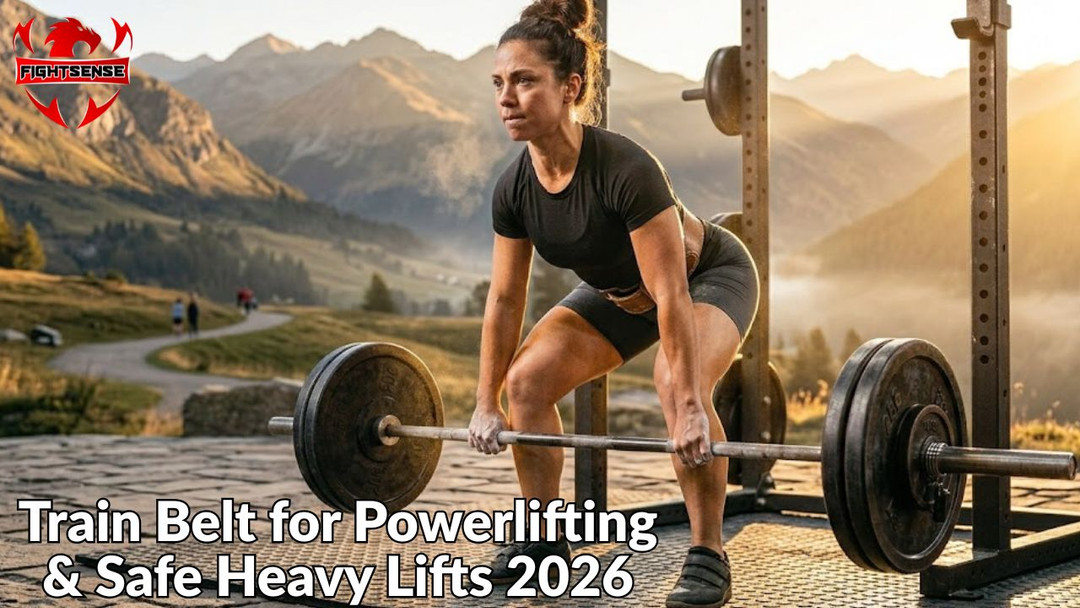
Train Belt for Powerlifting & Safe Heavy Lifts 2026
Train Belt for Powerlifting 2026: boost strength, improve core stability, support heavy lifts safely, and enhance performance in every workout.
Powerlifting in 2026 has become more advanced, competitive, and popular than ever. More people are focusing on strength training, compound lifts, and long-term performance goals instead of just general fitness.
But as weights get heavier, one thing becomes extremely important — stability, control, and safety.
That’s exactly where a Workout belt plays a key role.
It is not just gym equipment — it is a performance tool that helps lifters stay stable, lift heavier with better form, and reduce unnecessary stress on the lower back when used correctly.
Key Takeaways:
- Train belts amplify core bracing efficiency, helping you stay tighter and more stable under heavy loads.
- They are most effective during max-effort compound lifts, not during light or isolation training.
- Proper breathing technique (deep brace + hold) is essential to unlock full belt performance.
- A balanced fit is critical — too tight restricts breathing, too loose reduces support.
- Long-term strength still depends on form, consistency, and core training, not gear alone.
What’s a Train Belt?
A train belt is a supporting lifting accessory that helps you stabilise your core when doing heavy work. It goes around your waist and if you brace well it helps you to create more abdominal pressure.
It is used a lot for:
- Back Squats
- Deadlifts
- Overhead Press
- Barbell training heavy
The basic aim is quite straightforward – to increase core stability so that your spine will be better supported under high loads.
How Does A Lifting Belt Work For Better Core Bracing & Lifting Stability?
A Lifting belt doesn't make you stronger, it helps your body create better internal pressure.
Here is how it works, one step at a time:
- You take a deep breath in your belly
- Your core is diverging
- The belt is resistant to
- Pressure increases in your torso
- Your spine is more stable
Better lifting control because of improved bracing.
Main Advantages of a Workout belt for Strength, Stability & Heavy Lifts:
A train belt is frequently used since it helps both performance and safety when lifting heavy.
Improved Core Stability
It keeps your abdominal muscles taut, allowing for better balance and control while lifting.
Safe Lifting of Heavy Objects
This avoids unneeded tension on your lower back when you are doing hard squats and deadlifts.
Enhanced Performance
Better bracing means more effective force transmission and allows for larger lifts with better form.
When to Wear a Workout belt for Maximum Strength?
A workout belt should be utilized selectively, not for every workout. The fundamental objective is to support your body in big and challenging exercises where stability and core bracing are truly essential. It is most effective when you are pressing with a weight close to your max or when you are doing compound exercises that generate stress on your lower back and core.
Use for big compound lifts, near-max or max-effort training sessions, and strength sets where it gets hard to keep tight form. On the other hand, it’s advisable to avoid wearing a train belt during warm-up sets, isolation exercises and light training days, because these circumstances are supposed to increase natural strength, mobility and control without external assistance.
Weightlifting & Lever Belts For High Performance 2026:
When it comes to serious strength training, the appropriate equipment may make a major difference in your performance and safety. Fightsense provides top quality weightlifting and lever belts for powerlifters and heavy lifters that need dependable core support for tough sessions. The belts are made to give more abdominal compression, more spinal stability and durability over time when carrying large loads.
Whether you’re squatting, deadlifting or maxing out, Fightsense lever belts help increase the efficiency of bracing and lifting control, making them a reliable option for athletes who want both safety and performance in their training regimen.
How to Choosing the Right Belt:
A good train belt should offer:
- Strong stitching
- Durable material
- Comfortable fit
- Long-term performance
High-quality gear matters more than ever in modern strength training.
Best Exercises for Workout belt Use:
A train belt works best during:
- Squats
- Deadlifts
- Overhead press
- Heavy barbell rows
These exercises place the most stress on your core and spine.
Can a Lifting Belt Prevent Injuries?
A Lifting belt cannot guarantee injury prevention.
However, it can help reduce stress on the lower back when combined with:
- Proper technique
- Smart programming
- Controlled progression
Most injuries happen due to poor form, not lack of equipment.
Powerlifting Trends in 2026:
Strength training continues to evolve rapidly.
Current trends include:
- Home gym growth
- Advanced recovery methods
- Smarter training programs
- Better lifting equipment
Modern athletes demand gear that improves both safety and performance.
Common Mistakes to Avoid:
Even experienced lifters misuse a Fitness belt.
Wearing It Too Early: Beginners should first learn proper bracing and technique.
Over-Tightening: If you cannot breathe properly, it is too tight.
Over-Reliance: Your core muscles should still be trained without support gear.
In Conclusion:
In 2026, a train belt is a significant assistance gear for anyone serious about strength training and powerlifting. It helps with core stability, aids with lifting performance and gives you that extra confidence when you do those large compound lifts (if you use it appropriately). But it should always be used as a tool – not a substitute for good technique, core strength and regular training.
The actual progress in lifting is proper programming, form and discipline. Pair those foundations with the proper use of a Fitness belt and you have a safer, more efficient training experience that encourages long-term strength growth.
FAQs:
1: Does a lifting belt activate core muscles or reduce their work?
It enhances core bracing demand, so your muscles work harder under controlled pressure, not less.
2: Should I exhale or hold breath while using a gym belt?
Use the Valsalva maneuver—take a deep breath, brace, and hold during the lift for maximum stability.
3: Can I use a weightlifting belt for hypertrophy training?
Yes, but it is more effective for strength-focused sets than high-rep muscle-building work.
4: What’s better: tight belt or comfortable belt?
A balanced fit is ideal—tight enough for support but still allowing full diaphragmatic breathing.
5: Is a lever belt better than a prong belt?
Lever belts offer faster and more consistent tightness, while prong belts provide more adjustability.