Top Neck Posture Exercises 2026: Stand Taller, Feel Better
If you spend most of your day at a desk, looking down at a phone, or driving for long stretches, your neck may feel stiff by the evening. That tight, heavy feeling is a familiar sign that your head has drifted forward and the muscles at the back of your neck have been working harder than they should. The good news is that small, gentle movements can help you feel more comfortable, and the top neck posture exercises in this guide are a simple place to start.
This guide keeps things practical. You will learn a chin tuck, a shoulder blade squeeze, a chest stretch, and a few light strengthening moves, then see how to fit them into a normal working day. There are no complicated routines here, and you do not need a gym. Move slowly, breathe normally, and let comfort guide how far you go.
Keynotes
- Start gently and move slowly. Stop if a movement causes sharp pain.
- Chin tucks and shoulder blade squeezes are the foundation of a better neck position.
- Stretch the chest and the front of the neck, not just the back.
- Short sessions done regularly are easier to keep up than one long, tiring session.
- If pain persists, gets worse, or spreads to your arm, talk to a doctor or physiotherapist.
Top Neck Posture Exercises for a Stronger, Taller Stance in 2026
Many of the top neck posture exercises below use only your body weight, so you can practise them at home or at your desk. The aim is not to force your neck into a new position. It is to wake up the deep muscles that hold your head over your shoulders and to loosen the tight muscles that pull it forward.
How Top Neck Posture Exercises Fit into a Short Daily Routine
Pick three moves and give them five to ten minutes. A short session in the morning, another during a lunch break, and a gentle stretch before bed is a realistic pattern for most people. Keep the effort light at first, and add repetitions only when the moves feel easy and comfortable.
Start with the Chin Tuck
Sit or stand tall and look straight ahead. Draw your chin straight back, as if you were making a double chin, without tilting your head up or down. Hold for a few seconds, breathe normally, then relax. Repeat a few times. This is one of the top neck posture exercises to practise first, because it teaches your head where neutral is and gently works the deep muscles at the front of your neck.
Add the Shoulder Blade Squeeze
Let your arms hang by your sides and relax your shoulders away from your ears. Squeeze your shoulder blades together, as if you were holding a pencil between them, hold for a few seconds, then release slowly. This move supports the muscles between your shoulder blades, which help your upper back hold your head up. Pair it with slow breathing and keep your ribs relaxed.
Stretch the Front of Your Neck and Chest
When you sit with rounded shoulders, the muscles across your chest and the front of your neck can shorten and feel tight. Stretching them can make it easier to sit tall. The top neck posture exercises in this section focus on opening the front of your body, and the NHS guidance on neck pain offers the same kind of practical advice: sit upright, roll your shoulders, and avoid staying in one position for too long. If you often feel tight across your shoulders as well, read our guide on how to release shoulder and neck tension.
Try the Doorway Chest Stretch
Stand in a doorway and place your forearms on the frame at shoulder height. Step one foot forward until you feel a gentle stretch across your chest, hold for 20 to 30 seconds, and breathe normally. Do not force the stretch or arch your lower back. Step back, relax, and repeat once or twice. A wall corner works just as well if no doorway is handy.
Strengthen Your Upper Back and Deep Neck Muscles
Gentle strengthening helps the muscles that support your neck share the work more evenly. The top neck posture exercises for strength are slow and light: think of controlled rows and wall slides rather than heavy lifting. Our neck training equipment guide explains how simple tools can be used safely, and a FightSense hip resistance band can add light resistance to upper-back and glute work that supports a taller stance.
Use Light Resistance for Upper-Back Work
For a simple band row, hold a light resistance band in front of you with both hands, elbows close to your sides, and pull your hands toward your ribs while squeezing your shoulder blades together. Pause, then return slowly. Keep the band light enough that you can move smoothly and keep your neck relaxed. When you add dumbbell or band work for your upper back, wrist support can help your grip feel steadier, and the FightSense wrist wraps for gym training are made for that kind of session.
Build a Desk-Friendly Routine That Sticks
A routine only helps if you actually do it, so tie your moves to moments that already happen. Do chin tucks while your coffee brews, shoulder rolls between meetings, and a chest stretch after lunch. The top neck posture exercises in this guide are meant to fit around your day, not take it over, and you can learn how to relax tight muscles in the neck and how to relieve a neck cramp quickly and safely for the days when stiffness shows up suddenly. If you train arms as part of a balanced upper-body week, the FightSense arm blaster helps keep your curls strict and your form steady.
Set Up Your Workspace for Better Alignment
Raise your screen so the top of it is near eye level, keep your feet flat on the floor, and let your chair support your lower back. Stand up and move every 30 to 60 minutes, roll your shoulders a few times, and look away from the screen for a short break. Small changes like these make the exercises easier, because you are not fighting your chair all day.
Why Desk Workers Across the United States Trust FightSense Gear to Support Everyday Neck Comfort and Better Posture
People who sit at a desk all day need gear that is simple, comfortable, and easy to use at home. From neck training straps to resistance bands and gym accessories, FightSense makes everyday training equipment for desk workers, gym goers, and anyone who wants to move better and feel more comfortable in their own body. Start with the gentle moves in this guide, add light resistance only when you are ready, and choose tools that fit your space and your routine.
Give Your Neck the Support It Deserves
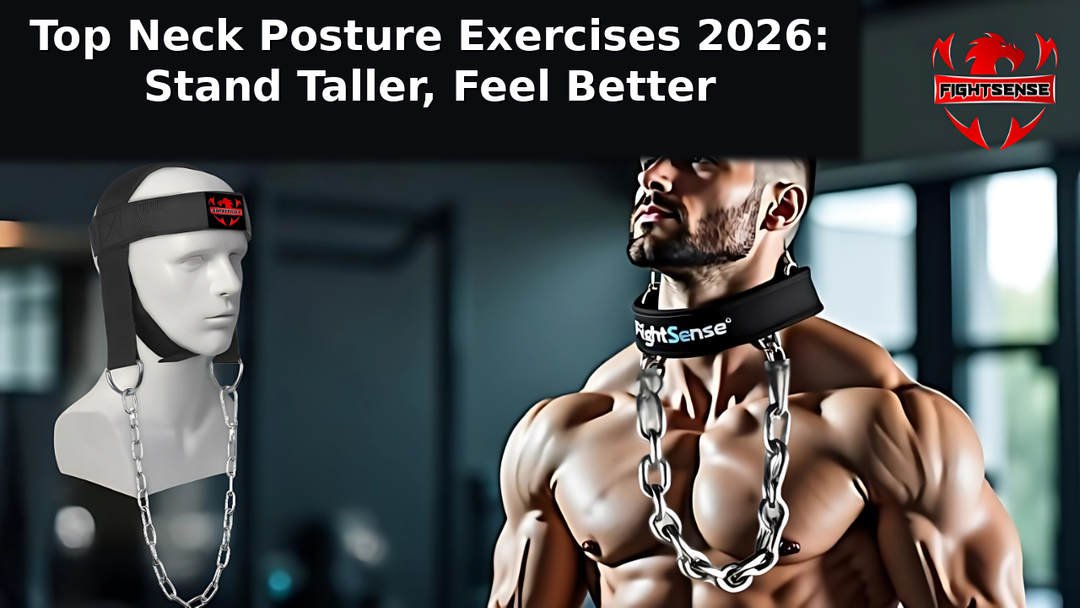
Ready to add gentle resistance to your neck routine? The FightSense head harness lets you train your neck muscles with light, controlled resistance at home.
Shop the FightSense Head Harness
Plus, orders above $100 ship free at FightSense.
Conclusion
Better neck posture is built from small, regular habits: a chin tuck here, a shoulder blade squeeze there, a chest stretch after lunch, and a workspace that does not pull you forward. Start with the gentlest moves, move slowly, and pay attention to what your body tells you. Over time, a short daily routine can become a natural part of your day, and a taller, more relaxed stance can follow.
This article is general information, not medical advice. If you have ongoing pain, numbness, weakness, or a neck injury, talk to a doctor or physiotherapist before starting a new exercise routine.
FAQs
How often should I do neck posture exercises?
A few short sessions each week is a good place to start, and many people build up to short daily sessions. Keep the effort light, rest if your muscles feel tired, and skip a day if you feel sore.
Can neck posture exercises help with forward head posture?
Gentle chin tucks, shoulder blade squeezes, and chest stretches can help support the muscles that hold your head over your shoulders. They are part of a wider picture that also includes your workspace, your screen height, and how often you move during the day.
How long should I hold a chin tuck?
Hold a chin tuck for a few seconds while you breathe normally, then relax and repeat. A few comfortable repetitions matter more than one long, forced hold.
Are neck posture exercises safe if my neck hurts?
If your neck hurts, be extra gentle and stop any movement that causes sharp or spreading pain. If pain is severe, keeps coming back, or follows an injury, talk to a doctor or physiotherapist before continuing.
Do I need equipment for neck posture exercises?
No, most of the moves in this guide use only your body weight. A light resistance band or a neck harness is optional, and only for people who are comfortable adding light resistance to their routine.
What is the best time of day to practise neck posture exercises?
The best time is the time you will actually do them. Many people like a short session in the morning and a gentle stretch during a work break or before bed.
Can I do neck posture exercises at my desk?
Yes, chin tucks, shoulder rolls, and shoulder blade squeezes can all be done while seated. Sit tall, keep your feet flat on the floor, and move slowly.
When should I stop and seek professional advice?
Stop and seek advice promptly if you notice numbness or tingling in your arms or hands, weakness, pain that spreads, dizziness, or pain that does not ease. A doctor or physiotherapist can check what is going on and advise you on the next steps.