
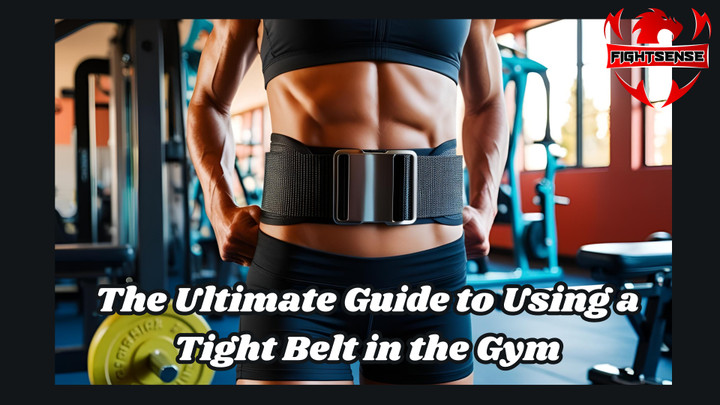
The Ultimate Guide to Using a Tight Belt in the Gym
20th Mar 2025
For weightlifters and strength trainers trying to maximize stability and core involvement, a belt is a necessary gym tool. Better support, more lifting efficiency, and lower injury risks come from a tight lifting technique.
Key Highlights
-
Tight belts aid to preserve intra-abdominal pressure, so enhancing stability and lifting strength.
-
Lessens Damage Risks In particular, lessens tension on the lower back during large lifts.
-
For squats, deadlifts, and presses, correct bracing and posture encourage lifting efficiency.
-
Avoiding over-reliance on outside help requires proper application to prevent weakening of fundamental muscles.
-
Lever, prong, Velcro, and neoprene belts have special advantages depending on the type of training you do.
What is a Tight Belt?
A tight is a weightlifting tool meant to steady the lower back and core during big lifts. Belted lifting increases lifting ability by helping to sustain intra-abdominal pressure, thereby lessening strain on the spine.
Why Use in Gym?
-
Improves central strength and stability
-
lessens lower back strain and injury risk
-
Improves posture when heavy lifting
-
Increases intra-abdominal pressure to improve bracing
-
Gives mental assurance underweight.
Where to Use ?
-
Heavy Weightlifting and heavy compound motions
-
Deadlifts, squatters, and overhead presses
-
Olympic weightlifting and strength contests
-
Sessions of high intensity strength training
How to Use Correctly?
-
Select appropriate material and size.
-
Position it tightly around the lower abdomen.
-
Breathe deeply into your stomach then brace
-
Steer away from over tightening to let natural mobility.
-
Use just during highest or almost maximum lifts.
When Should You Use ?
-
When increasing weight lifting above 75–80% of your one-rep maximum
-
Between sets of deadlifts, hard squats, and presses,
-
If recuperating from a modest lower back ailment (see a specialist)
-
Training for strongman contests or powerlifting
What kind of belt fits you best: a tight one or a loose one?
- Tight Belt: Increases pressure and stability inside the abdomen when lifting big things. The best for deadlifts, squats, and max-effort sets.
- Loose Belt: It might help you mentally, but it doesn't do much to stabilize your core.
- The right amount of tightness is when it is snug enough to brace against but not so tight that it makes it hard to breathe or pinches skin.
- Pro Tip: Take a deep breath and push against the belt. If you can't, it's too tight.
Things People Do Wrong When Wearing a Tight Gym Belt
- Wearing it too soon in your workout before you have built up enough core strength.
- You don't need to use it for every activity, like curls or cardio; only compound lifts need it.
- Wrong placement: A belt that is too high or too low won't give you the support you need.
- Not using the right bracing technique—just wearing the belt isn't enough; you need to brace your core correctly.
- Not doing warm-ups—cold, tight muscles can't be protected by a belt.
Advantages
-
Gives spine stability and support.
-
Boosts confidence and lifting performance.
-
Promotes correct bracing technique
-
Lessens back tiredness
Disadvantages
-
Dependency too much on one can weaken fundamental muscles.
-
Tight belting done incorrectly can limit respiration.
-
Might be uncomfortable if not correctly adjusted.
-
Not appropriate for any kind of instruction
Types
-
Lever Belts: With changeable levers, offer ideal security.
-
Prong belts: classic style with many adjusting points.
-
Velcro Belts: Simple and lightweight adjustability
-
Neoprene belts: More flexible yet less supporting are.
How to Choose the Right Tight Gym Belt
Selecting the appropriate gym belt is crucial for both comfort and performance because not all of them have the same function.
- Material: While neoprene and Velcro belts are lighter and more appropriate for general fitness, leather belts offer the most support for heavy lifters.
- Thickness & Width: Standard powerlifting belts provide consistent core bracing and are typically 4 inches wide and 10 to 13 mm thick. For comfort, beginners might like narrower belts.
- Adjustment Style: Velcro belts are practical but less supportive for maximum lifts, prong belts offer many settings, and lever belts provide rapid locking and constant tightness.
- Training Objectives: While recreational lifters may find neoprene or Velcro belts adequate, strength athletes should purchase lever or prong belts.
By selecting the appropriate belt, you can make sure that your lifting style is supported, comfortable, and long-lasting.
Tips for Getting the Most Out of Your Belt
It's important to use a belt effectively; just strapping it on won't guarantee results.
- Brace, Don't Just Wear: To generate the most intra-abdominal pressure, inhale deeply and press against the belt.
- Use Selectively: Don't use the belt for every exercise; save it for your strongest compound exercises, like as presses, deadlifts, and squats.
- Break It In: Leather belts may initially seem stiff, but with continued usage, they will become softer and more comfortable.
- Combine with Core Training: To prevent reliance, strengthen your lower back, obliques, and abs.
- Preserve Correct Form: The belt is meant to supplement, not to replace, proper form. Put proper technique first before putting on more weight.
By using these suggestions, you can make sure that your belt improves performance rather than acting as a crutch.
Common Myths About Using Tight Gym Belts
Although it's not totally accurate, many lifters think that wearing a tight gym belt inevitably results in an improvement in strength. The belt helps you stabilize your core so you can safely apply more force, but it doesn't make you stronger.
The idea that wearing a belt damages your abs is another widespread misconception. In actuality, a belt improves your capacity to brace efficiently when worn appropriately and in conjunction with core exercise. Moderation is crucial; don't use it as a permanent crutch, but rather strategically for huge compound lifts.
Maintenance and Care for Your Gym Belt
Maintaining your tight gym belt properly is crucial to extending its lifespan. Velcro or neoprene belts can be cleaned with a light soap and water solution, but leather belts should be conditioned with leather oil on a regular basis to avoid cracking.
Your belt should never be kept in gym bags since the dampness might harm the material. Instead, keep it somewhere cool and dry. To guarantee durability and safety during lifts, check the buckle, prong, or lever for wear and tear on a regular basis.
The Science of Intra-Abdominal Pressure (IAP): How a Belt Actually Works
Increased Intra-Abdominal Pressure (IAP), a quantifiable physiological phenomena, is the primary advantage of a tight gym belt rather than just a psychological sense of support. Knowing this mechanism makes it clear why and how a belt increases lifting strength and safety.
The Biomechanics of Bracing with a Belt:
You raise the pressure inside your abdominal cavity when you undertake the Valsalva technique, which involves taking a deep breath and bracing your core as though you were going to be punched. This column of air and fluid under pressure serves as a stiff internal spine stabilizer. Your abdominal muscles can push against a firm, external surface when a tight belt is fastened around your torso. This significantly increases the amount of IAP you can produce, resulting in a much more stable spinal column from the inside out.
Practical Implications for the Lifter:
- Reduced Shear Force: During a vigorous squat or deadlift, the shearing and compressive stresses on the lumbar spine are directly offset by the increased IAP.
- Improved Force Transfer: You can lift more weight when you have a rock-solid midsection because the force produced by your legs and hips is transmitted to the bar more effectively.
- It’s a Skill, Not a Crutch: For this reason, active, expert bracing is necessary for effective tight belting. The belt enhances the power of your own core muscles; it is not a substitute for them. Wearing a belt won't suddenly produce high IAP for a lifter with a weak core.
Because spinal stability under heavy load is a non-negotiable aspect of powerlifting and weightlifting, a tight belt is regarded a necessary piece of equipment for maximal efforts.
Periodizing Belt Use: Integrating Support into Your Training Cycle
Not every set is performed with the belt worn by elite strength athletes. In order to acquire particular adaptations, they periodize its use by carefully incorporating the tight gym belt into various stages of their training regimen. This clever strategy maximizes performance where it matters while avoiding over-reliance.
A Sample Belt Periodization Strategy for a 12-Week Strength Cycle:
- Weeks 1-4 (Hypertrophy/Volume Phase): Avoid using the belt. Do all complex movements without a belt, such as presses, deadlifts, and squats. Building basic muscle and core strength under moderate loads (65–75% of 1RM) is the main goal of this phase. Deep core and stabilizer development is forced by the longer time under tension in the absence of a belt.
- Weeks 5-8 (Strength Phase): The belt should only be used for top sets during weeks 5-8 (the strength phase). For warm-ups and early working sets, start your workout without a belt. Only during the last one or two hardest sets, when the intensity surpasses 85% of your 1RM, should you fasten your tight belt. This shows you how to switch from beltless bracing to belted maximal bracing with ease.
- Weeks 9-12 (Peak/Intensity Phase): Use the belt for all working sets above 80% throughout weeks nine through twelve (the peak/intensity phase). The objective is to practice and get used to transferring near-maximum loads as safely and efficiently as possible during this phase. Consistent use of the belt strengthens the motor pattern and offers the stability required to manage these large weights.
- Deload Week: Go back to training without a belt for easy, technique-focused exercises. This prepares your body for the subsequent training cycle and resets your core engagement patterns.
This periodized approach guarantees that the tight belt is not a permanent crutch that would jeopardize the long-term development of your intrinsic stability, but rather a performance-enhancing tool employed at the appropriate moment.
Shop Now !
Conclusion
For those who do heavy lifting at the gym, a belt is quite helpful. Correct tight belting can improve lifting technique, lower injury risks, and increase performance. Using a tight belt improperly, however, might cause over-reliance and lower core strength.
Always guarantee correct use to optimize advantages without endangering safety.
Disclaimer
This page serves only for informative needs. Before wearing a tight belt during an exercise session, always see a fitness expert. Inappropriate use could cause damage.
FAQ
1. Should first-time users wear a tight belt?
First priorities for beginners should be developing core strength. For heavier lifts, a tight belted approach helps; for light training, it is not essential.
2. Could always wearing a tight be detrimental?
Definitely yes. Overuse of a tight belt can gradually weaken core muscles, rendering you dependent on outside help.
3. Just how tight should my gym belt be?
It should be fitting yet not constrictive. Good tight belting lets you keep core pressure while breathing deeply.
4. Are all of the belts the same?
Not yes. From lever belts to prong belts, every kind of tight belt has special advantages and serves different functions.
5. Would a tight belt help me to perform deadlift and squat?
indeed. Better stability from a tight belted squat or deadlift lets you safely raise more weight.