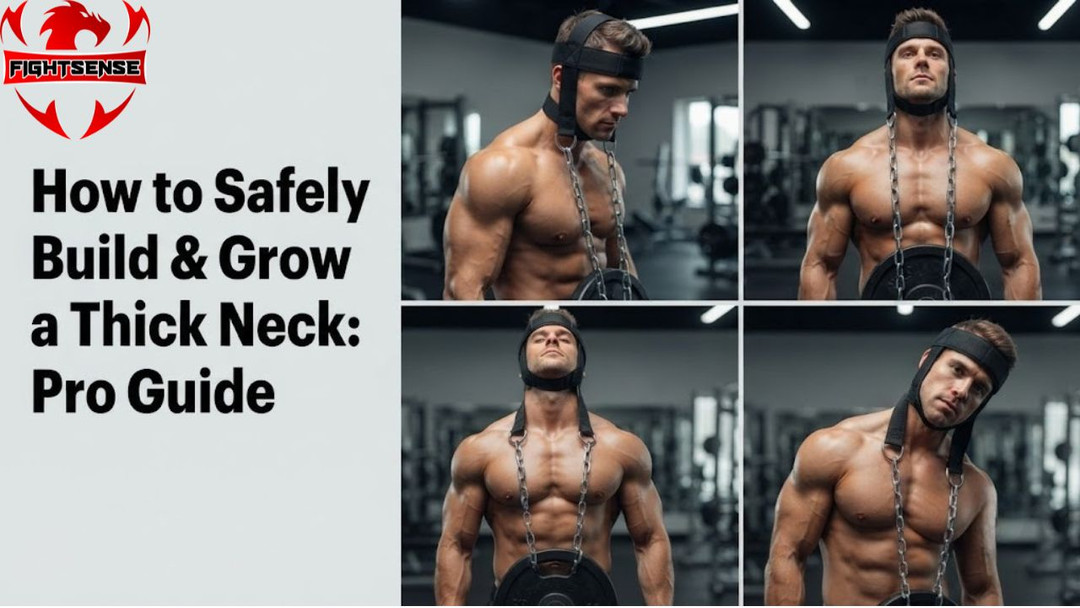
How to Safely Build & Grow a Thick Neck: Pro Guide
We often obsess over chest press numbers, back width, and arm size, but there is one muscle group that separates the casual gym-goer from the true athlete: the neck. A thick neck is more than just an aesthetic flex; it is a hallmark of combat sports mastery, elite bodybuilding, and overall functional stability.
However, many people hit a wall in their training because they rely on indirect work. If you truly want to build a Muscular Neck, you need to treat your cervical muscles with the same discipline you apply to your legs or chest.
Key Takeaways:
- Isolation Required: Compound lifts aren't enough; you must isolate neck muscles to build a thick neck.
- Safety Matters: Use a head harness for neck training to master controlled resistance and avoid injury.
- Posture Benefits: A strong neck eliminates "tech-neck" and upgrades your entire athletic posture.
- Recover to Grow: Avoid daily training; two focused, high-quality sessions per week drive faster growth.
- Quality Gear: Use Fightsense equipment to keep your focus on proper form instead of struggling with poor gear.
How to Safely Build a Thick Neck: A Step-by-Step Approach
Building a thick neck is a marathon, not a sprint. Because the neck is a complex area, safety must be your top priority.
- The Warm-Up: Never go straight to heavy weights. Spend 5 minutes performing dynamic head circles and gentle neck nods to increase blood flow.
- Using the Harness: When you attach your weight, start light. The goal of using a head harness for neck training is to find the perfect tension where you can feel the muscle fibers contracting without straining the cervical spine.
- The Tempo: Slow down. Perform 3 seconds on the eccentric (lowering) phase and 1 second on the concentric (lifting) phase. This creates the mechanical tension needed for growth.
- Consistency: Aim for 2 sessions a week. Treat it like any other muscle group; give it 48 hours to recover between sessions.
Why Your Current Routine Might Be Falling Short
If you have been training for months but your neck size remains stagnant, you are likely missing the "isolation factor." Compound movements like heavy shrugs or deadlifts are excellent for the trapezius, but they do not provide the direct, multi-directional resistance required for true neck hypertrophy.
To achieve that powerful look, you must isolate the deep muscles of the neck—specifically the sternocleidomastoid and the splenius capitis.
The Role of Essential Equipment
This is where many athletes go wrong. They try to perform manual resistance exercises using their own hands, which is not only inconsistent but also makes it impossible to track progressive overload. To build a muscular neck safely and effectively, you need a tool that allows for steady, controlled resistance.
This is where a head harness for neck training becomes indispensable. By using a harness, you can precisely control the weight, maintain proper form, and ensure you are working through the full range of motion.
The Anatomy of Neck Training: A Quick Reference
To understand how to train effectively, it helps to know what we are targeting.
|
Muscle Group |
Primary Function |
Exercise Focus |
|
Trapezius (Upper) |
Shrugging & Stability |
Shrugs, Upright Rows |
|
Sternocleidomastoid |
Neck Flexion & Rotation |
Harness Flexion |
|
Splenius Capitis |
Neck Extension |
Harness Extensions |
|
Levator Scapulae |
Shoulder Blade Elevation |
Controlled Lateral Tilts |
Why Fightsense is the Pro Choice
When it comes to neck training, the equipment you choose directly impacts your safety. Many budget harnesses slip, chafe, or don’t distribute weight evenly. The Fightsense head harness is designed with reinforced stitching and ergonomic padding, ensuring that the focus remains on your muscles, not on the discomfort of the gear. If you are serious about developing a thick neck, investing in high-quality gear is the most important decision you can make.
The "Mind-Muscle" Connection
Beyond the technical side, successful neck training is all about the 'mind-muscle connection.' When you are using your head harness for neck training, it is easy to accidentally let your shoulders or traps do the heavy lifting. To fix this, visualize your chin leading the movement. If you are doing flexion (tilting your head forward), imagine you are trying to touch your chin to your chest while keeping your jaw relaxed.
By focusing on the contraction of the neck muscles specifically, you avoid using momentum. Remember, this isn’t a powerlifting movement where you throw the weight around—it’s a precision exercise for a muscle group that rarely gets isolated.
Common "Neck Training" Myths
There is a lot of misinformation out there about neck training. Let's clear up the common myths that often hold people back from achieving a powerful neck.
|
Myth |
Reality |
|
"Neck training is dangerous" |
It is only dangerous if done with improper form or excessive weight. |
|
"I can target just the 'side' of my neck" |
Neck muscles work as a unit; focus on full range-of-motion for balanced growth. |
|
"I need to train my neck every day" |
Like any muscle, it needs recovery; 2-3 times a week is the sweet spot. |
|
"Only contact athletes need this" |
A stronger neck reduces 'tech-neck' strain and improves overall posture. |
Avoiding Common Mistakes
- Avoid Ego-Lifting: Don't mirror the heavy loads of pro fighters; stacking too much weight on your head harness is a direct recipe for injury.
- Prioritize Form: Focus on perfect control during every movement rather than the amount of weight on the plates.
- Master the Rep Range: Start with a weight that allows you to consistently hit 12–15 reps with flawless technique.
- Master the Range of Motion: Only increase the load once you can move through a full range of motion without experiencing any pain or discomfort.
- Listen to Your Neck: If you feel strain or discomfort, drop the weight immediately; consistency beats short-term heavy lifting.
Nutrition and Recovery for Hypertrophy
Remember, training breaks the muscle down, but nutrition builds it back up. To support the growth of a muscular neck, ensure you are getting adequate protein (1.6g to 2g per kg of body weight) and staying hydrated. Proper sleep is also crucial; your body releases growth hormones while you rest, which is essential for repairing the smaller muscles in your neck.
FAQs:
1. Can neck training reduce tension headaches?
Yes, strengthening neck stabilizers improves spinal alignment, which reduces the muscle tension often responsible for tension headaches.
2. How long does it take to see results?
With consistent training (2–3 times weekly), improved tone is usually noticeable in 4–6 weeks, with visible thickness gains after 3 months.
3. Should neck training be done before or after a workout?
Performing neck exercises after compound lifts is recommended to ensure spinal stability is maintained during heavy lifting.
4. Is a head harness more effective than manual resistance?
Yes, a harness provides consistent, linear resistance through the full range of motion, which is difficult to replicate with manual pressure.
5. Is neck training suitable for women?
Yes, it is highly beneficial for improving posture, reducing strain from desk work, and achieving a more toned, aesthetic neckline.
6. How can one determine if the weight is too heavy?
If the movement requires jerking or results in sharp pain rather than muscle fatigue, the weight is too heavy and should be reduced immediately.
7. Are shrugs sufficient for developing a Muscular Neck?
No. Shrugs primarily target the upper traps; a harness is necessary to isolate the deeper cervical muscles responsible for actual thickness.