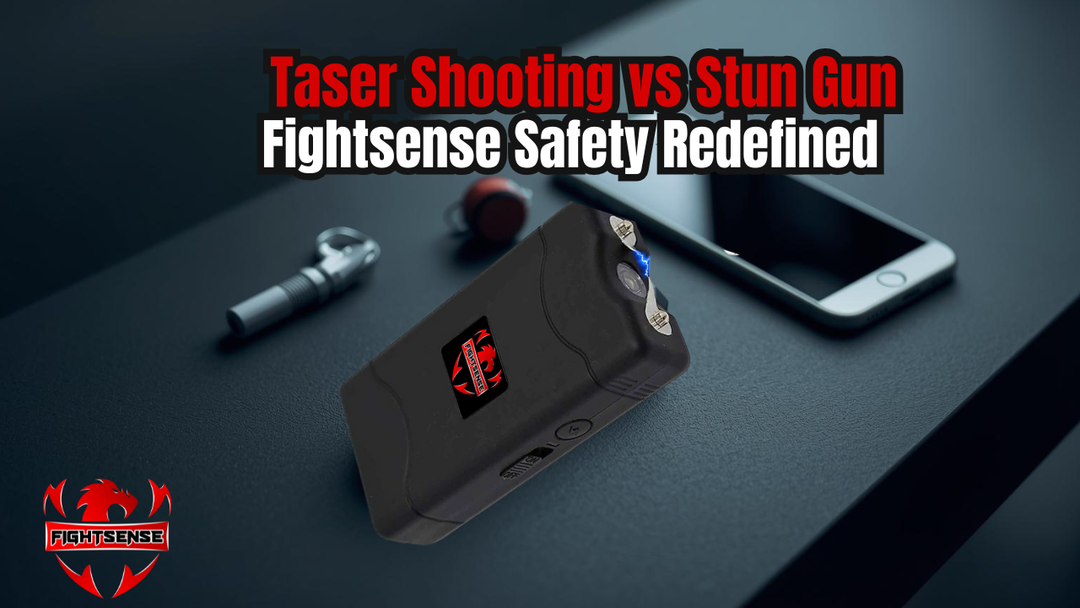
Taser Shooting vs Stun Gun: Fightsense Safety Redefined
In today’s unpredictable world, taser shooting has become one of the most discussed topics in law enforcement and civilian safety. At first, tasers were made so that cops could keep an eye on suspects without hurting them.
However, stun guns are becoming more popular as technology gets better and more people learn about them. This is especially true for newer models like the FightSense stun gun, which are just as strong, small, and easy to use.
Keynotes
- The FightSense stun gun is a powerful but non-lethal way to keep yourself safe.
- Because stun guns give off more electricity up close, you are safe right away.
- While FightSense devices follow most safety rules, they don't always follow the law.
- Flare tasers cost more and are harder to use than FightSense.
Understanding Taser Shooting: How It Works
Taser firing is when you aim and fire a taser with two barbed electrodes linked by electrical wires.
When the trigger is pulled, these electrodes stick to the target's skin or clothes and send electricity with a high voltage and low amperage.
Key Components of Taser Shooting:
- Cartridge: It contains nitrogen gas and electrode wires.
- Electrodes: Electrodes are things that send electricity through skin or clothes.
- Trigger Mechanism: This is what starts the shooting process.
- Battery: The battery powers the electric pulse.
You can fire a taser right away, but you have to be precise to do it right. Police officers are taught how to use taser guns in a way that is safe and follows departmental and neighborhood rules.
Voltage Comparison: Taser Versus Stun Gun
One major difference between a taser shooting device and a stun gun lies in their voltage output and method of contact.
|
Feature |
Taser Shooting Device |
FightSense Stun Gun |
|
Range |
Up to 15–25 feet |
Direct contact required |
|
Voltage |
50,000 volts (average output at target 1,200 volts) |
60–90 million volts (short-range impact) |
|
Usage |
Shoots electrodes via wires |
Touch-based discharge |
|
Purpose |
Long-distance control |
Close-range self-defense |
|
Rechargeable |
Cartridge-based |
Rechargeable battery |
|
Cost & Maintenance |
High and recurring |
Affordable and low maintenance |
For the FightSense stun gun to work, it doesn't need any parts. This is different from shooting taser gun.
The voltage is set up to be safe, it's strong enough to scare off attackers but not so strong that it hurts the person permanently.
Taser vs Cattle Prod: Understanding the Difference
Many people search taser vs cattle prod and cattle prod vs taser when comparing electrical devices. Although both use electricity, they are designed for very different purposes.
A TASER is intended as a self-defense or law-enforcement tool, while a cattle prod is primarily used for livestock management and animal handling.
Key Differences
Intended Purpose
Each device is designed for a specific application.
Electrical Design
The technology and use cases differ significantly.
- TASER devices are designed for personal security or law enforcement
- Cattle prods are intended for livestock control
- Laws and regulations vary by device type
Taser Versus Stun Gun: What Buyers Should Know
The debate around taser versus stun gun, stun gun vs. taser, and taser gun vs stun gun is common among people researching self-defense products.
A TASER typically deploys probes from a distance, while a stun gun generally requires direct contact with the target. Understanding these differences can help buyers choose the option that best matches their needs.
Comparing Self-Defense Tools
Distance Capability
TASER devices can usually work from farther away.
Contact Requirement
Most stun guns require close-range contact.
- Both are electronic self-defense tools
- Usage and operation differ by device
- Local laws may affect ownership
Taser Gun vs Taser and Common Terminology
Many online searches include taser gun vs taser and tazer vs taser because buyers are often confused by the terminology.
TASER is a brand name commonly associated with electronic control devices, while "tazer" is simply a common misspelling. Understanding the correct terms can make product research easier and more accurate.
Understanding the Terms
TASER Devices
Typically associated with projectile-based electronic defense tools.
Naming Differences
"Tazer" and "taser" usually refer to the same type of device.
- Brand names are often used generically
- Product features vary by model
- Research specifications before purchasing
How Far Does a Taser Shoot?
Questions such as how far can a taser shoot, how far does a taser shoot, what are stun guns, and stun gun shot are frequently searched by first-time buyers. TASER devices are designed to deploy probes from a distance, while stun guns generally operate through direct contact.
Modern self-defense users often compare range, portability, and ease of use before selecting a product for personal protection.
What Buyers Compare
Range and Reach
Distance capability varies depending on the device.
Everyday Protection
Many users prioritize reliability and ease of carry.
- TASER devices may offer stand-off distance
- Stun guns are typically compact and portable
- Features vary by manufacturer and model
Taser for Police vs FightSense Stun Gun: A Practical Comparison
Taser:
- Used for long-distance engagements.
- Designed to neutralize suspects without lethal force.
- Requires certified training and departmental authorization.
- Expensive and often restricted for civilian purchase.
FightSense Stun Gun:
- It was made to keep you safe and be easy to use.
- It doesn't shoot bullets; instead, it makes high-voltage contact.
- It's small, can be charged, and is easy to carry around with you every day.
- You don't need a gun permit most of the time.
- Legal, and most people agree that it's a good way to protect yourself.
The important point is that taser guns are only safe for trained police officers.
The FightSense stun gun, on the other hand, is safe for regular people who need a quick and reliable way to protect themselves, like parents, commuters, and night workers.
Legal Rights: Using Taser or Stun Gun Responsibly
Know your rights as a citizen before you buy any self-defense gear. Most U.S. states have laws about taser shooting equipment, but most states don't have any rules about how citizens can use stun guns.
Key Legal Points:
- Always check the rules in your state and city before carrying.
- You should only use stun guns to keep yourself safe.
- You shouldn't make threats or show off your use for no reason.
- You could be charged with a crime if you use a taser or stun gun in the wrong way.
For good reason, FightSense is one of the most trusted names in modern self-defense. Its products are both legal and trusted.
How FightSense Stun Gun Outperforms Tasers That Shoot
The FightSense stun gun is made to be easy to use. It works great, is compact, easy to use, and can be charged.
When you touch the FightSense model, it starts to work right away, while tasers need to be shot and depend on rounds and accuracy. What's good about FightSense:
FightSense Advantages:
- A replaceable battery lets you use it for a long time.
- There is a flashlight inside for safety at night.
- A safety switch keeps the gun from firing by accident.
- Small enough to fit in your pocket or bag.
- Voltage that stops you right away and doesn't kill you.
The FightSense stun gun changes how personal safety gear works by making it legal, easy to use, and strong.
Safety and Training: Understanding the Responsibility
No matter what kind of stun gun or taser pistol you use, safety and training are still very important. FightSense teaches people how to be careful and avoid problems by stressing responsible ownership.
Best Practices:
- Make sure your stun gun is always charged and ready to go.
- Learn the right way to turn on.
- Learn how to protect yourself and be aware of what's going on around you.
- Don't use a device when you're mad; only when you need to protect yourself.
- Don't let kids get to it. Keep it somewhere safe and dry.
When used right, stun guns and tasers can make you feel strong and safe.
Conclusion
More and more smart, non-lethal safety tools are needed, as shown by the rise of tasers and stun guns. People can still use tasers that shoot, but police need new tools like the FightSense stun gun to keep them safe.
FightSense is the next version of gear for making yourself safer. It's safe, small, and strong enough to keep you safe everywhere. It is also okay to use. When you have a FightSense stun gun, you have more than just electricity.
Disclaimer
This content is only meant to give you information; it does not give you legal help. People who own or use self-defense tools must follow the laws and rules in their area.
People who buy FightSense goods are told to do so in a legal and responsible way.
FAQs
Q1. What is the difference between taser shooting and a stun gun?
Taser gun shooting fires electrodes from a distance, while a stun gun requires physical contact to discharge electricity.
Q2. Is it legal to own a FightSense stun gun?
Yes, in most U.S. states. Always check your local laws before carrying it in public.
Q3. How powerful is a FightSense stun gun compared to tasers that shoot?
FightSense stun guns offer 60–90 million volts, providing close-range protection, whereas tasers average 50,000 volts.
Q4. Can civilians own a shooting a taser device?
In many regions, tasers are restricted to law enforcement, while stun guns like FightSense are civilian-approved.
Q5. Does FightSense provide training or user guidance?
Yes, every FightSense stun gun comes with clear instructions and safety guidelines to ensure responsible use.