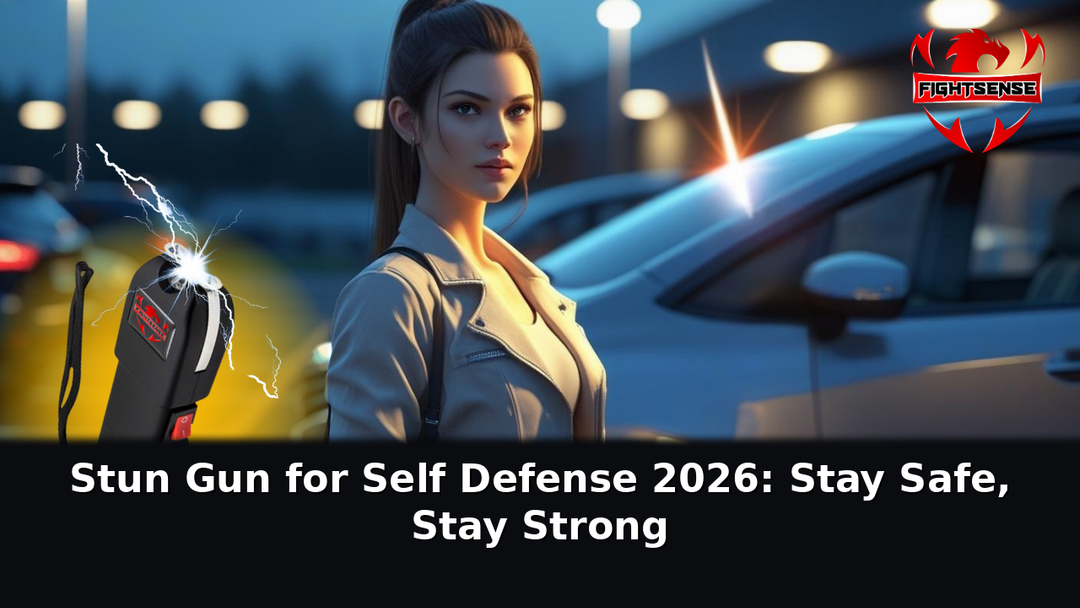
Stun Gun for Self Defense 2026: Stay Safe, Stay Strong
When you walk to your car after a late shift, or cut through a quiet parking lot on your way home, you want something simple in your hand — and the confidence to use it. A stun gun for self defense is a small contact device that delivers a short electric shock when it touches someone, giving you a moment to step back and get away.
This guide explains what a stun gun actually is, how it works, how to pick one that suits your day, and how to carry and practice with it. It also covers the rules you should check before you buy, because the law is not the same everywhere.
Keynotes
- A stun gun works only on direct contact — it does not fire darts or projectiles.
- The shock briefly disrupts muscle control, so you can break away and get to safety.
- Choose a size and style you will carry every day, not one that stays in a drawer.
- Learn the safety switch and practice switching it on before you ever need it.
- Check the rules where you live before you buy or carry one.
- Keep it charged, store it safely, and keep it away from children.
What a Stun Gun Is — and What It Is Not
People often picture a stun gun for self defense as a bulky gadget from a movie. In reality, modern versions are small enough to fit a pocket, a purse, or a keychain — and several look like everyday objects, such as a flashlight or a tube of lipstick.
Stun guns are contact electroshock devices: the shock comes from prongs that must touch the other person. That is the key difference from a TASER-style device, which fires probes over a distance.
It is also worth saying what a stun gun will not do. It will not keep someone down on its own, and it will not replace awareness, distance, or calling for help. Think of it as one layer of a plan: pay attention, keep space between you and a threat, and have a tool you can reach fast.
How a Stun Gun for Self Defense Works
Pressing the button sends an electric charge to the two metal prongs at the front. When those prongs touch someone, the current briefly disrupts the muscles in that spot — a sharp, uncomfortable jolt that makes it hard to keep holding on or moving toward you. That short burst is the whole point of a stun gun for self defense: it buys you a moment to leave, not a reason to stay and fight.
Many FightSense models combine the shock with a bright flashlight, so the same device helps you see a dark path and, if needed, light up a sudden threat. A safety switch keeps the device off in your bag, so it only fires when you mean it to. Modern models are rechargeable, so plug in the charging cable at home and top it up regularly, so it is ready when you need it.
If you want the full comparison, read this guide to stun gun vs taser — it explains which situations suit each tool.
How to Choose the Right Stun Gun
Start with your day, not the catalogue. A nurse finishing a night shift needs something different from a student crossing campus, and both need something they will actually carry. A stun gun for self defense should be one you reach for without thinking — light enough for a jacket pocket, simple enough to switch on in the dark, and comfortable in your hand.
Choosing a Stun Gun for Self Defense That Fits Your Life
Three questions will narrow the choice fast: how will you carry it, how does it feel in your hand, and how quickly can you turn it on? Try the grip when it arrives — a device that slips, rattles, or needs two hands to open is the wrong one for you.
If you carry keys everywhere, a keychain stun gun with a flashlight is hard to beat: it hangs where your hand already is, and the light is useful on every dark walk home, not just in an emergency.
Many women prefer a design that disappears into a bag and does not look like a weapon — this guide to stun guns for women walks through compact, discreet options and how to choose between them.
What to Look For Before You Buy
- Size and weight: small enough to carry daily, big enough to grip firmly.
- A built-in flashlight, so you can see where you are walking.
- Rechargeable power, so you can top it up at home.
- A safety switch you can work one-handed — and a design that will not fire by accident in your bag.
- Clear instructions from the maker. Read them before your first outing, not after.
Carrying, Practicing, and Staying Ready
A new stun gun belongs in your pocket or bag, not in a drawer. Put it where your hand lands naturally — the same pocket every time, or clipped to your keys — so reaching for it becomes a habit. Out of sight is fine; out of reach is not. Practice matters as much as the device: a stun gun for self defense only helps if you can switch it on quickly and without thinking, so practice the grip and the switch at home until it feels automatic.
Some people like a design that blends in completely. A lipstick stun gun looks like a normal item in a handbag, while a high-voltage stun baton gives you extra reach and a solid grip for long walks.
For a calm, step-by-step routine — charging, aiming, and the mistakes to avoid — read how to use a stun gun the right way before your first week of carrying.
Keep the device charged, wipe the prongs clean now and then, and store it in a cool, dry place, away from children. If it ever feels unreliable — a weak spark or a loose switch — stop using it and get it checked or replaced. A safety tool you cannot trust is worse than no tool at all.
Know the Law Where You Live
Before you buy a stun gun for self defense, check the rules where you live and where you travel. Some states and cities allow stun guns with few limits; others set age rules, ban them in places such as schools and courthouses, or restrict how you carry them. Rules also change over time, so what was true last year may not be true today.
California is a good example: the rules there depend on age and eligibility, and airports follow federal rules, not state ones — our guide to California stun gun rules explains the details, including flying with one.
Two habits keep you on the right side of the law: use the device only to defend yourself and get away, never to threaten or show off — and never carry it into places that ban weapons, such as secure buildings and airports. When in doubt, look up the current rules for your area.
Why a FightSense Stun Gun Fits Everyday Carry for Night Shifts, Late Classes, and Solo Walks
You do not need the biggest device on the shelf — you need the one that is with you when the street goes quiet. FightSense makes compact, rechargeable stun guns in everyday shapes, from flashlights and keychains to lipstick and baton styles, so night-shift workers, students coming home from late classes, and anyone walking alone can pick a tool that actually fits their pocket, their bag, and their routine. Choose the model you will carry every day, learn its switch, and walk with your head up.
Ready When You Need It: Keep a Stun Gun in Reach
A small, rechargeable stun gun fits in a pocket or a bag and is ready in a moment. Pick the one that suits your routine, learn its switch, and practice with it before you ever need it.
Shop the Small Stun Gun Flashlight — $9.99
Plus, orders above $100 ship free at FightSense.
Conclusion
A stun gun is a simple, practical layer of personal safety — small enough to carry, simple enough to learn, and useful in the moments that matter. Choose one that fits your life, practice with it, keep it charged, and know the rules where you live. The best safety tool is the one that is with you, and the safest habit is staying aware of the world around you.
This article is for general information only and is not legal advice. Always check the laws where you live before buying or carrying a stun gun, and follow the instructions that come with your device.
FAQs
Are stun guns legal where I live?
It depends on where you live. Some states and cities allow stun guns for personal defense, while others set age limits or ban them in certain places, such as schools and courthouses. Check the current rules for your state and city before you buy or carry one.
How does a stun gun work?
A stun gun delivers an electric shock through prongs that must touch the other person. The shock briefly disrupts muscle control, giving you a moment to step back and get away.
Is a stun gun the same as a taser?
No. A stun gun works only on direct contact, while a taser-style device fires two probes over a distance. They are both electroshock devices, but they work in different ways and suit different situations.
Do stun guns work through clothing?
They can work through light clothing when the prongs press firmly against the body, but thick or loose layers can weaken the effect. Press the device firmly and aim for a large muscle area.
Can a stun gun hurt me when I use it?
When you use it as directed, the shock goes to the person you touch, not to you. Keep your fingers away from the prongs, keep the safety on until you need it, and follow the instructions that came with your device.
How do I charge and store a stun gun?
Most modern stun guns are rechargeable. Charge your device fully before you first carry it, and top up the charge regularly so it is ready when you need it. Store it in a cool, dry place, out of reach of children.
What should I do if my stun gun does not fire?
First check that it is charged and that the safety switch is off. Clean the prongs, make sure nothing is blocking the switch, and try again in a safe place. If it still does not work, stop using it and ask the seller or maker for help.
What size stun gun should I choose for everyday carry?
Pick the smallest one you will actually carry every day. A keychain, lipstick, or small flashlight model fits a pocket or a bag without weighing you down, and a device you always have with you is worth far more than a bigger one left at home.