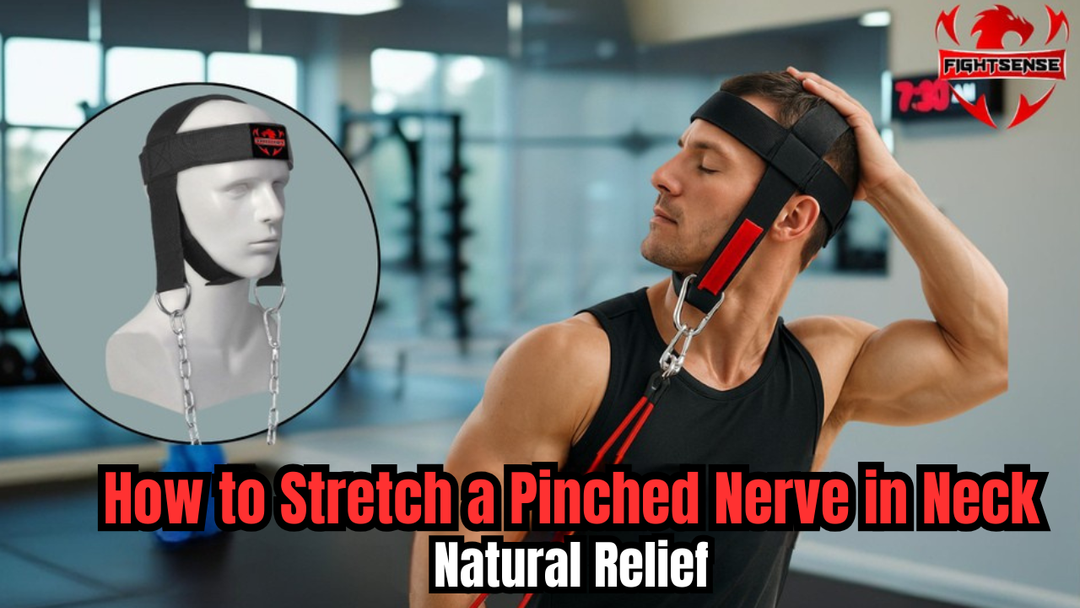
How to Stretch a Pinched Nerve in Neck: Natural Relief
A pinched nerve in the neck can cause pain, stiffness, tingling, numbness, or weakness that may extend into the shoulder, arm, or hand. Gentle neck movements may help maintain mobility and reduce stiffness for some people, but the right approach depends on the cause and severity of the symptoms.
In this guide, you’ll learn how to stretch a pinched nerve in the neck safely, which gentle movements may support neck mobility, what to avoid, and when professional medical advice is important. The FightSense neck harness can also be discussed as a training tool for controlled neck exercises, but it should not be used as a treatment for nerve compression without professional guidance.
Key Takeaways
-
Gentle neck movements may help reduce stiffness and support mobility.
-
Never force a stretch or continue an exercise that increases pain, tingling, or numbness.
-
Keep your breathing relaxed during neck exercises.
-
Good posture and regular movement breaks can support overall neck comfort.
-
A neck harness should be used only for suitable training exercises and with proper technique.
-
Persistent, severe, or worsening symptoms should be evaluated by a healthcare professional.
Can Stretching Help a Pinched Nerve in the Neck?
A pinched nerve in the neck can occur when surrounding tissues place pressure or irritation on a nerve. Depending on the cause, symptoms may include neck pain, stiffness, tingling, numbness, or weakness that travels into the shoulder or arm.
Gentle stretching and mobility exercises may help some people maintain comfortable movement and reduce muscle stiffness. However, stretching does not necessarily correct the underlying cause of nerve compression. If an exercise makes your symptoms worse, especially pain, numbness, or tingling that travels down your arm, stop and seek professional advice.
The FightSense neck harness is designed for controlled neck training and strengthening. It should not be presented as a treatment for a pinched nerve or used to apply traction without appropriate professional guidance.
Best Neck Stretches for a Pinched Nerve
If you have neck discomfort associated with nerve irritation, start with gentle movements and stay within a comfortable range. The goal is to maintain mobility without forcing the neck into painful positions. Try the following exercises only if they feel comfortable, and stop if symptoms become stronger or spread into the arm or hand.
1. Gentle Chin Tucks
Sit or stand upright with your shoulders relaxed. Look straight ahead and gently draw your chin backward, as if you are making a small double chin. Hold the position for a few seconds, then relax.
Keep the movement small and controlled. Do not force your head backward or downward. Repeat only within a comfortable range.
If you are using the FightSense neck harness for neck training, follow the product instructions and avoid using it specifically to treat nerve compression unless advised by a qualified professional.
2. Upper Trapezius Stretch
Your head should lean to one side, and your shoulder should dip down. Hold it for 20 seconds. Use the Fightsense neck harness to get aid and prevent stress.
It helps keep your neck straight and steady, so you can trust it as a piece of neck stretching equipment.
3. Scalene Stretch
Sit or stand tall with your shoulders relaxed. Slowly tilt your head slightly to one side while keeping your shoulders down. You may gently turn your face upward only if the movement remains comfortable.
Hold for 10–15 seconds while breathing normally, then return to a neutral position and repeat on the opposite side.
Keep the movement gentle. If you notice increased nerve symptoms, such as tingling, numbness, or pain traveling into the arm, stop the exercise.
4. Neck Extension with Equipment
Sit upright and keep your shoulders relaxed. Slowly turn your head to one side until you feel a comfortable range of motion. Return to the center and repeat on the other side.
Do not force the rotation or try to reach the maximum range. Keep your movements slow and controlled, and stop if symptoms increase.
5. Isometric Holds Using Fightsense Neck Harness
Press your head into your palm or a surface while holding your breath to move it forward, backward, or to the side.
This works better with the Fightsense neck harness since it puts even pressure on the neck. It's among the safest neck stretches for pinched nerve recovery.
How to Build a Gentle Neck Mobility Routine
Instead of following a fixed recovery schedule, start with a small amount of gentle movement and pay attention to how your neck responds.
-
Begin with one or two comfortable mobility exercises.
-
Perform slow, controlled movements rather than deep stretches.
-
Breathe normally throughout each exercise.
-
Take regular breaks from prolonged sitting or screen use.
-
Increase activity gradually only when your symptoms remain comfortable.
-
Stop if pain, tingling, numbness, or weakness becomes worse.
If your symptoms persist or interfere with daily activities, consult a qualified healthcare professional before continuing an exercise routine.
Benefits of Using Neck Stretching Equipment
The correct neck equipment helps you stay organized and get greater results.
The Fightsense neck harness is a useful tool for:
- Improving your exercise training
- Not letting your neck bend too much
- Helping you securely with advanced movements
- Over time, acquiring better balance
- Helping users recover from nerve strain using stretches for pinched nerve in neck
The Fightsense neck harness can help you stay healthy at home or at the gym. These tools make stretches for pinched nerve in neck more productive and less painful.
Common Mistakes to Avoid
Even with proper stretches for a pinched nerve in neck, mistakes can delay healing:
- Forcing the stretch: Don't ever push a stretch.
- Skipping warm-up: Do some short workouts instead of a warm-up before you do some deep stretches.
- Ignoring posture: Slouching makes you less productive.
- Using incorrect gear: Choose gear you can trust, like the Fightsense neck harness.
- Inconsistency: Regular practice leads to long-term changes. Never underestimate consistent stretches for pinched nerve in neck.
Conclusion
Learning how to stretch a pinched nerve in the neck starts with gentle movement, proper technique, and knowing when to stop. Simple mobility exercises may help support comfortable movement and reduce stiffness, but they should not be used to diagnose or treat the underlying cause of nerve compression.
Avoid forceful stretching, excessive resistance, and exercises that make symptoms worse. If pain, numbness, tingling, or weakness persists or increases, professional medical evaluation is important.
The FightSense neck harness can be considered for controlled neck-training exercises when appropriate, but it should be used according to its intended purpose and with proper technique.
FAQs
1. Can stretching help a pinched nerve in the neck?
Gentle stretching may help maintain neck mobility and reduce stiffness for some people, but it does not necessarily treat the underlying cause of nerve compression.
2. Can stretching make a pinched nerve worse?
Yes. Forceful or excessive neck movements may aggravate symptoms. Stop any exercise that increases pain, numbness, tingling, or weakness.
3. Should I stretch my neck if pain travels into my arm?
Use caution. Pain that travels from the neck into the shoulder, arm, or hand can be associated with nerve irritation. If stretching increases these symptoms, stop and seek professional advice.
4. How long should I hold a gentle neck stretch?
A gentle neck stretch can generally be held for about 10–20 seconds while breathing normally, provided the movement remains comfortable.
5. What should I avoid with a pinched nerve in the neck?
Avoid forceful stretching, sudden neck movements, heavy resistance, excessive neck extension, and any exercise that increases numbness, tingling, pain, or weakness.
6. Can poor posture contribute to neck discomfort?
Prolonged poor posture can place additional stress on the neck and surrounding muscles. Regular movement breaks and a comfortable sitting position may help support better neck comfort.
7. When should I see a doctor for a pinched nerve in the neck?
Seek professional medical advice if symptoms are severe, persistent, worsening, or associated with significant weakness, numbness, loss of coordination, or symptoms following an injury.
Disclaimer
This blog only has beneficial information. You should always consult a doctor or nurse before you start any neck stretches or exercises, especially if you are in a lot of discomfort or it lasts a long time.