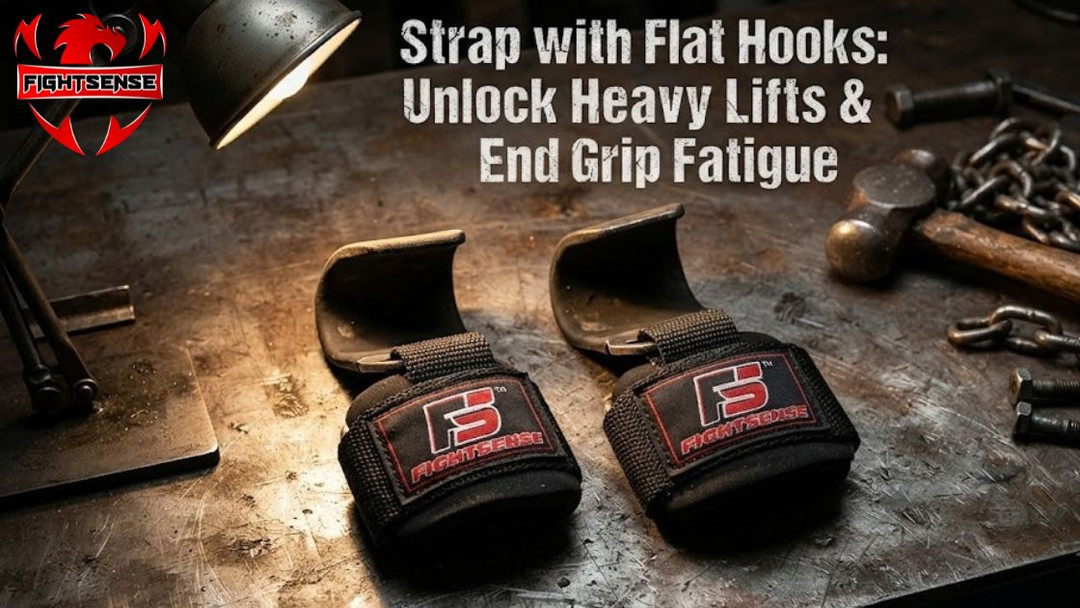
Strap with Flat Hooks: Unlock Heavy Lifts & End Grip Fatigue
Strap with Flat Hooks offer a strong hook for heavy lifters who are tired of their grip failing before their muscles do.
Ever been in the middle of a heavy deadlift set where your back and legs have plenty of power, but your fingers give up? The barbell slips, your forearms scream, and you have to drop the weight. It’s one of the most frustrating feelings in the gym.
If your grip holds back your gains, this gear changes the game. Whether you are chasing a new deadlift personal record or maxing out shrugs, it takes your hands out of the equation so your target muscles do the real work. Let’s break down everything you need to know.
Key Takeaways:
- Bypass Forearm Burnout: Let back and legs do the heavy lifting while eliminating finger failure.
- Instant Mechanical Lock: Skip tedious fabric wrapping and anchor securely in seconds.
- Engineered for Max Overload: Smash personal records on heavy deadlifts and shrugs.
- Strategic Gear Integration: Protect tired hands without losing unassisted warm-up strength.
- Built for Heavy Loads: Rely on durable steel and reinforced padding for extreme weights.
What Exactly Is a Strap with Flat Hooks?
Strap with Flat Hooks combine wrist-stabilizing security with instant metal hook assistance. Instead of awkwardly wrapping fabric before every set, you simply slip your wrist into the cuff, and the flat metal hook securely catches the bar for you.
Unlike clunky, old-school curved hooks that shift under heavy loads, a flat hook sits flush, distributing pressure smoothly across a wider surface area. It acts as an external anchor, bridging the gap between your pulling power and finger endurance so you can focus entirely on the weight.
Why Your Grip Fails (And How This Fixes It)
Our hands and forearms are amazing, but they are anatomically much smaller than our back muscles, hamstrings, and glutes. When you pull heavy, your nervous system forces your forearm flexors to work overtime just to keep your fingers clamped shut.
Naturally, your forearms fatigue way before your lats, traps, or lower back even break a sweat.
When you introduce a Strap with Flat Hooks into your routine, you instantly bypass that weak link. By transferring the load directly from your fingers to your wrists, you eliminate premature hand fatigue. Your back gets the heavy stimulus it needs to grow, your deadlifts skyrocket, and you stop leaving gains on the platform just because your forearms gave out early.
Quick Comparison: Lifting Gear at a Glance
Before we go further into the mechanics, let’s look at how different grip aids stack up against each other so you can see where this tool fits in your gym bag.
|
Gear Type |
Setup Speed |
Grip Security |
Wrist Mobility |
Best Used For |
|
Traditional Straps |
Slow / Moderate |
High (with proper wrap) |
High |
Volume work, Olympic lifts, general training |
|
Figure 8 Straps |
Fast |
Maximum |
Low |
|
|
Strap with Flat Hooks |
Instant |
Extremely High |
Moderate |
Max-effort pulls, shrugs, machine work |
|
Chalk Only |
Instant |
Low to Moderate |
High |
Clean pulls, building raw grip strength |
Real-World Gym Applications: Where to Use It
You wouldn't use a belt for every single exercise, and you shouldn't use metal hook straps blindly on every movement either. They shine brightest during specific, heavy pulling variations.
1. Heavy Deadlifts
This is where the magic happens. When you are pulling near your one-rep max or grinding out heavy working sets, grip failure is the number one enemy. Hooking in lets you stay locked to the bar securely, keeping your posture tight and your mind focused purely on driving your feet through the floor.
2. Trap Shrugs
To truly grow your traps, you need to lift heavy weights that your fingers simply cannot hold for long reps. Shrugging heavy dumbbells or barbells with proper assistance ensures your upper traps take 100% of the mechanical tension.
3. Bent-Over Rows and Cable Work
Ever notice your grip failing on heavy bent-over rows or heavy seated cable rows before your mid-back feels fatigued? Securing your hands to the bar or handle lets you grind out those last three or four crucial reps safely.
The Benefits That Make All the Difference
Lifters who switch to hook-supported lifting usually notice a few immediate changes in their workouts:
- Instant Setup: No more wasting energy trying to wind fabric strips around a knurled bar between heavy sets. You hook in, brace, and lift.
- Targeted Muscle Overload: Because your hands aren't slipping, your back and leg muscles experience a deeper, more effective training stimulus.
- Recovering Forearms: If you are dealing with mild forearm tendonitis or general hand fatigue from high-frequency training, this tool gives your fingers a much-needed break.
When looking for quality gear that holds up under heavy abuse, many athletes prefer trusted performance brands like Fightsense for durable wrist padding and solid steel construction that won't bend under extreme weight loads. Investing in reliable gear means you never have to worry about equipment failure mid-lift.
Understanding the Pros and Cons
Like any piece of fitness equipment, hook straps come with trade-offs. Being honest about both sides helps you use them like a smart, advanced lifter.
The Pros:
- Instantly solves grip slipping issues on heavy sets.
- Greatly reduces forearm pump and hand exhaustion.
- Speeds up your workout flow since you hook and unhook instantly.
- Excellent for overloading the back and legs safely.
The Cons:
- Over-relying on them can slow down the natural development of your raw grip strength.
- They offer less wrist mobility compared to soft fabric straps.
- They are completely unnecessary (and unsafe) for dynamic or explosive movements like cleans and snatches.
How to Program Hook Straps Smartly
The golden rule of using lifting hooks is simple: use them as a performance booster, not a crutch.
If every single warm-up set and light exercise you do involves mechanical assistance, your natural grip strength will weaken over time. Use your bare hands and chalk for your warm-ups and lighter working sets. Save your specialized gear specifically for your heaviest, most taxing working sets of the day.
Furthermore, always finish your back or leg days with a little dedicated grip training—like farmer's walks, plate pinches, or dead hangs—to ensure your natural grip stays strong and balanced alongside your heavy lifting.
Conclusion:
Lifting heavy iron is as much a mental game as it is a physical one. You shouldn't have to fight your own fingers just to give your back and legs the intense workout they deserve.
By strategically integrating a Strap with Flat Hooks into your heavy pulling days, you eliminate grip fatigue, protect your hands, and unlock new strength plateaus you didn't know you could reach. Train smart, listen to your body, and never let a weak grip hold you back from your ultimate fitness goals again.
FAQs:
1. How do flat hooks perform during heavy eccentric movements?
Flat hooks maintain a rigid anchor during heavy descents, whereas traditional fabric straps can stretch under fluctuating tension.
2. Are these straps compatible with thick or specialty bars?
They are designed for standard Olympic barbells; using them on oversized or fat bars can compromise the hook's flush contact.
3. How does the design prevent skin pinching?
The flat design distributes pressure evenly across the palm, eliminating the pinching friction caused when rounded hooks rotate under heavy loads.
4. Is it safe to use mechanical hooks during explosive lifts?
No, mechanical hooks are unsafe for explosive lifts because they lock your hand to the bar, preventing a quick emergency release.
5. What kind of maintenance is required to keep them secure?
Wipe down the metal with a dry cloth to remove sweat and chalk, and periodically inspect the cuff stitching for durability.
6. How do they influence your posture during heavy shrugs?
Eliminating grip anxiety lets lifters maintain an upright, neutral spine and proper shoulder positioning without hunching.
7. Can these straps be used on cable machines?
Yes, they work effectively on straight-bar cable attachments and Smith machines alongside standard free-weight barbells.
Disclaimer:
Flat hook straps assist with heavy pulls, but they mechanically lock your hands to the bar. Always prioritize proper form, use a spotter, and avoid using them for explosive Olympic lifts.