
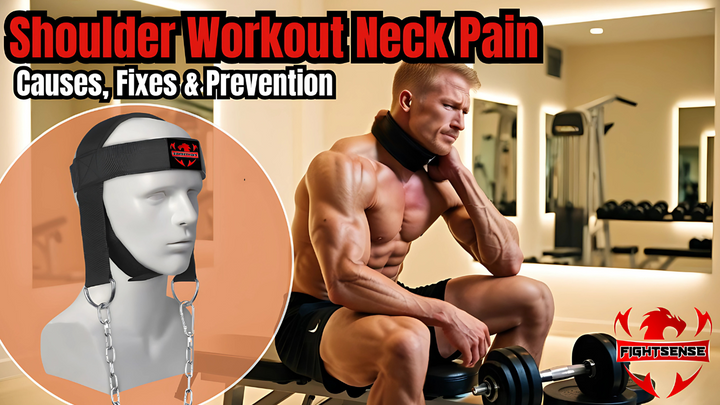
Shoulder Workout Neck Pain: Causes, Fixes & Prevention
8th May 2025
Many gym‑goers experience Shoulder workout neck pain after a session. It usually stems from things like form, posture, or how the load transfers through your upper body.
Understanding the reasons and applying smart techniques, can help you keep training strong while avoiding neck strain and discomfort.
Keynotes
- Shoulder workout neck pain typically stems from poor form and compensatory muscle use.
- Warm-up mobility and ergonomic posture resets can alleviate strain.
- Strengthening mid-back and neck muscles shields against neck-tension overload.
- Tools and posture training support long-term stability.
- Consistent attention to alignment and muscle balance ensures better performance and pain prevention
Why Shoulder Workouts Cause Neck Pain
Neck discomfort after shoulder exercises usually results from:
- Poor posture or alignment – Forward head, rounded shoulders, or slouching
- Weak stabilizer muscles – Neck and upper back muscles compensating for weak shoulders
- Overloading or sudden intensity – Lifting weights too heavy too quickly
- Skipping warm-ups – Unprepared muscles are more prone to strain
Understanding these factors helps you make simple changes that prevent discomfort.
Common Triggers of Shoulder Workout Neck Pain
Here are the most common causes behind shoulder workout neck pain:
- Poor posture during lifting.
- Shrugging and straying pressure on the shoulders
- Weak core muscles unable of maintaining the back in position
- Neck compensation resulting from restricted shoulder motion
- Excessive activity in levator scapulae and the upper traps
Knowing the reason for this discomfort may help you modify your exercise program to eliminate neck and shoulder discomfort.
Preventing Neck and Shoulder Pain After Working Out
If you want to avoid neck and shoulder pain following exercise, pay close attention to technique and instruments.
The Fightsense neck harness can help you strengthen the muscles in your neck and simplify upper body movement.
Other prevention strategies include:
- Always get your shoulders and neck warm to prevent this from happening.
- Use deliberate motions when working out your shoulders.
- Avoid explosive or abrupt lifts if you lack proper form.
- Stretch following a workout, paying especially attention to the trapezius and neck muscles.
- Part of regular neck strengthening workouts, use the Fightsense neck harness.
Many times, neck and shoulder discomfort following an exercise can be avoided by preparing for it.
How the Fightsense Neck Harness Supports Shoulder Stability
One of the best approaches to handle shoulder workout neck discomfort is using a Fightsense neck harness.
Designed for targeted neck training, it builds the deep neck flexors and stabilizers sometimes ignored in gym routines.
Using the Fightsense neck harness allows athletes to:
- Wearing the Fightsense neck harness helps players reduce cervical spine strain.
- Develop the strength of your neck to assist your shoulders in handling weight.
- Improved balance will reduce your chance of experiencing negative effects following exercise.
- As you work on your upper body, enhance the harmony of your muscles.
Regular users of the Fightsense neck harness can control and even prevent shoulder workout neck strain rather successfully.
Prevention Strategies
- Avoid Overloading Weights: Lifting weights that are too heavy can compromise form and increase the risk of neck pain.
- Take Regular Breaks: During workouts, take short breaks to rest and reset, preventing muscle fatigue.
- Stay Hydrated: Proper hydration supports muscle function and can help prevent cramps and spasms.
- Use Supportive Equipment: Utilizing equipment like a neck harness can provide additional support during exercises.
Recovery Tips for Shoulder Workout Neck Pain
If you're already experiencing shoulder workout neck pain, don't panic.
Here are some smart recovery steps:
- Use heat or ice to help to lessen swelling.
- On your neck and traps, use a massage gun or foam roller.
- Create daily light neck mobility drills.
- Work your upper body just once your symptoms improve.
- Gradually include Fightsense neck harness workouts into your recuperation.
Remember that excellent self-care and patience will help you overcome neck and shoulder discomfort following neck exercise.
Conclusion
Shoulder workout neck pain can be prevented with proper posture, warm-ups, gradual progression, and strong stabilizer muscles. Training smart ensures you stay strong, pain-free, and consistent in your workouts.
By understanding the causes and implementing the fixes and prevention strategies outlined above, you can enjoy a pain-free and effective shoulder workout routine.
Disclaimer
This content is educational only. For persistent or severe neck pain after working out shoulders following workouts, consult a healthcare professional before implementing new exercises or tools.
FAQs
1. Why does my neck hurts after shoulder workout?
Poor posture, overuse, or weak stabilizer muscles often cause strain.
2. Can warm-ups prevent neck pain?
Yes, warming up and mobilizing muscles prepares them for lifting.
3. Which exercises commonly cause neck pain?
Overhead presses, shrugs, and lifts with poor head alignment.
4. Does stretching help?
Absolutely, it reduces tension and supports recovery.
5. When should I see a doctor?
If pain persists, is sharp, or limits movement.