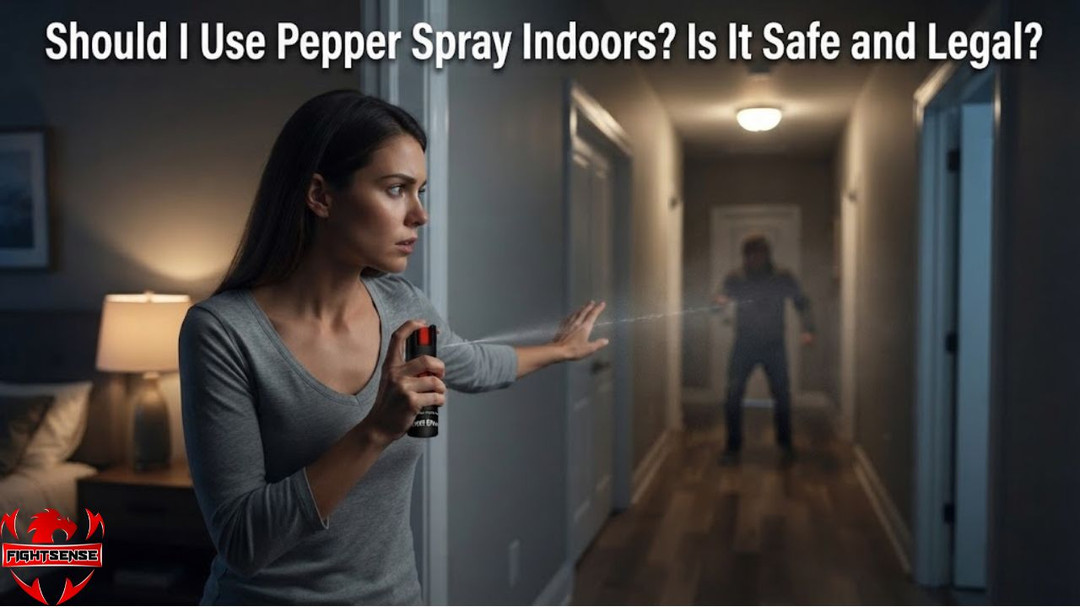
Should I Use Pepper Spray Indoors? Is It Safe and Legal?
When it comes to home security and personal safety, having the right tools is essential. Many people rely on self-defense products like pepper spray to protect themselves from intruders. However, a critical question often arises in high-stress moments: Should I use pepper spray indoors? While pepper spray is highly effective in outdoor environments, using it inside a home, apartment, or office comes with major risks. In this guide, FightSense breaks down everything you need to know about indoor pepper spray usage, its potential hazards, legal considerations, and better alternatives for indoor protection.
Should I Use Pepper Spray Indoors? The Short Answer
Short answer: No. In general, you don’t want to use regular aerosol pepper spray indoors unless it’s an absolute last choice. Conventional pepper sprays make a fine mist or fog. When released inside an enclosed environment, this aerosolized mist not only affects the attacker, but quickly spreads across the area via HVAC systems, hallways, and rooms, affecting everyone in the area, including you, your family pets, and loved ones.
Major Risks of Using Pepper Spray Indoors
1. Self-Contamination (Blowback)
The chemical agents (OC gas) will swiftly fill the room in a closed room. If there is no significant wind to blow the spray away, you may nearly count on getting secondary contamination. You will be coughing, temporarily blind, and your skin will be severely irritated. This will make it impossible to flee or secure the area.
2. Impact on Family Members and Pets
If you have roommates, family members, or pets, an indoor spray can put them at risk. Especially pets have significantly less tolerance to capsaicin, and can suffer severe respiratory distress and visual damage.
3. Ventilation and Lingering Residue
Pepper spray can leave a residue on surfaces, furniture, and fabrics. Even after the air has cleared, touching a contaminated carpet or doorknob can bring the burning feeling back hours later. Often a space needs a professional deep clean or a really good airing to get it fully clear.
Is It Legal to Use Pepper Spray Indoors?
The law of self-defense generally allows the use of reasonable force to defend against impending physical injury or unauthorized invasion. Context, however, matters greatly indoors:
- Proportional Force: Aerosol spraying that drifts into shared apartment halls or affects innocent neighbors might create civil liability or legal trouble.
- State and Local Regulations - Some local governments limit the size, formulation, or strength of self-defense sprays. Capsaicin levels and shipment may be prohibited by local laws. Please check.
Pepper Spray vs. Pepper Gel: Indoor Comparison Table
|
Feature |
Traditional Aerosol Spray |
Pepper Gel |
|
Dispersal Method |
Fine mist/cloud |
Heavy, sticky stream |
|
Indoor Suitability |
Low (high risk of blowback) |
High (targets individual directly) |
|
Wind Resistance |
Poor (blows back easily) |
Excellent (withstands indoor drafts) |
|
Residue Cleanup |
Difficult (settles on surfaces) |
Easy to clean from point of impact |
When Might an Indoor Spray Be Justified?
Many homeowners ask, “Should I Use Pepper Spray Indoors?” when planning for worst-case security scenarios. Unpredictable; not encouraged for self-defense. If you are in your bedroom with an intruder who presents an immediate, life-threatening threat and you have no other option:
- Aim with care: Get into the face of your opponent to reduce the spread of the cloud.
- You must leave now. Do not remain in the room. Get out and call emergency services immediately.
Better Alternatives for Indoor Self-Defense by FightSense
Old-school aerosol sprays create a mist of spray in the room. Try these safer indoor alternatives:
- FightSense Gel Formulations: Pepper gel is more suited for indoor application. Gel is heavier than sprays and adheres to the object on impact. It doesn’t atomize into the air, thus limiting the chance of blowback or affecting anyone else in the room.
- Home Security Stun Guns: Stun guns and contact tasers are great for inside use because they require direct physical contact and don’t discharge any airborne toxins.
- Tactical Flashlights & Alarms: High-lumen tactical flashlights will momentarily blind an intruder without the use of chemicals or endangering your own respiration.
Step-by-Step Guide: What to Do If You Must Use Self-Defense Indoors
- Identify the Threat: Confirm the intruder is unauthorized and poses a physical danger before deploying any defense tool.
- Select the Right Device: Reach for a non-aerosol option like pepper gel, a stun gun, or a tactical flashlight if accessible.
- Execute a Targeted Discharge: If using a spray or gel, aim directly for the eyes, nose, and mouth.
- Retreat and Isolate: Immediately exit the engagement zone, close doors behind you if possible, and move to a safe location.
- Call Authorities: Dial emergency services instantly to report the intrusion and medical needs.
Pros & Cons of Using Aerosol Sprays Indoors
Pros
- Stops hostile threats in their tracks.
- Portable and fast setup for emergencies.
Cons
- Great danger of self-contamination by airborne mist.
- Spreads through home ventilation systems, impacting family members.
- Leaves chemical residue on furniture in the home.
Common Mistakes to Avoid
- Not testing and checking accessibility: Defense sprays kept in hard-to-reach drawers cause delays in reaction time.
- Indoors with wide-fogger sprays: Foggers emit huge clouds meant for outside areas, which can be hazardous indoors.
- Pet safety ignored: Rooms exposed to chemical dispersion cause serious distress to pets.
Expert Tips for Indoor Home Defense
- Upgrade to Gel: Trade in your conventional canisters and use pepper gel to avoid the possibility of airborne spray indoors.
- Grip Drills: Get comfortable with the safety flip-top mechanism on your smartphone in low-light circumstances.
- Pair with Alarms: Combine high-decibel personal alarms to confuse intruders while keeping your hands free for safe evacuation.
FAQs:
Should I use pepper spray indoors?
Generally, no. Traditional sprays create airborne mists that can blind you and affect others in your home. Use gels or contact tools instead.
Does pepper spray produce permanent damage inside?
The burning is transient but can be powerful, and the respiratory discomfort can be severe, especially for people with asthma or other pre-existing breathing disorders.
Can pepper gel help with indoor safety?
Yes. Pepper gel is a thicker gel; it adheres to the target and helps avoid cross-contamination in enclosed spaces.
How do I wipe pepper spray off of indoor surfaces?
Clean and disinfect hard surfaces with dish soap and gloves, using specialized cleaning solutions. Wash clothes thoroughly.
Are stun guns better than sprays for home defense?
Stun guns do not emit any toxins in the atmosphere, which makes them a great option for confined indoor settings.
Is pepper spray going to harm my pets inside?
Yup. Pets have very sensitive respiratory systems and will be extremely uncomfortable if they are subjected to the aerosolized pepper spray.
What is the effective range of the indoor pepper gel?
Most indoor gels are 10 to 12 feet long, a distance sufficient to safely deal with a threat.
Do I need specific training to utilize FightSense products?
No official training is required, but practicing quick-draw grips ensures you are confident in high-stress circumstances.
Conclusion:
In answer to the question, “Should I Use Pepper Spray Indoors?”, the truth is that typical aerosol sprays can easily become a double-edged blade, incapacitating you along with the intruder. For your safest option, use dedicated interior-use products like FightSense pepper gel or non-aerosol protection tools. Be sensible, protect yourself and your house with FightSense, your trusted partner in personal protection.
Disclaimer:
This content is for informational purposes only and is not legal advice; always follow local laws when using pepper spray.