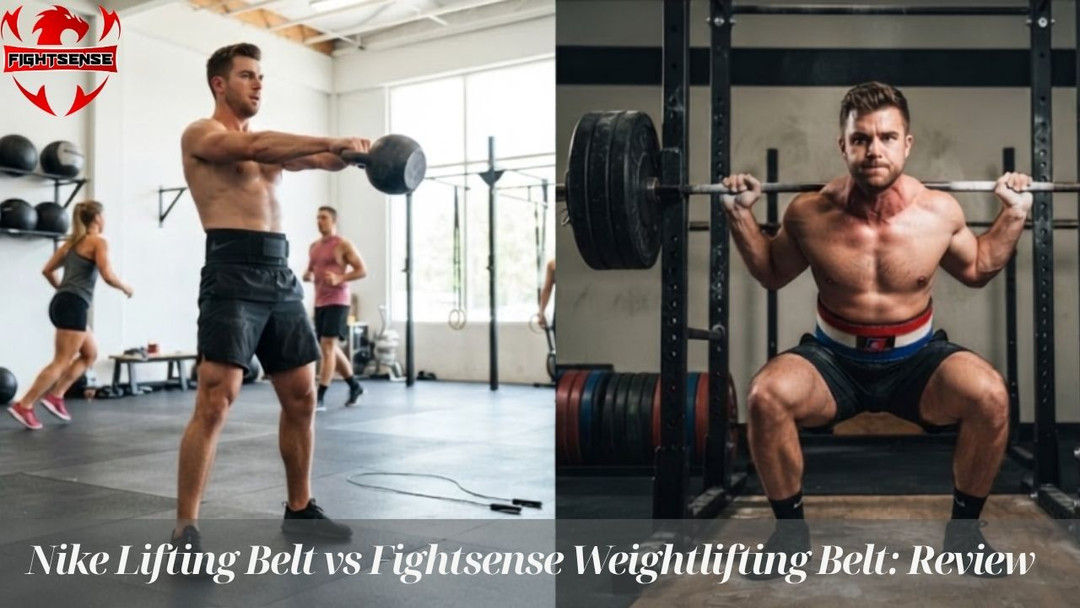
Choosing the right gear can make or break your heavy compound lifts. When you step up to a heavy squat or deadlift, your core needs reliable support to protect your spine and maximize intra-abdominal pressure. Two popular contenders in the strength training world are the Nike Lifting Belt and the Fightsense Weightlifting Belt. Both options promise to keep your midsection secure, but they cater to slightly different lifting styles, budgets, and preferences.
This comprehensive review breaks down how the Nike belt matches up against the Fightsense Weightlifting Belt across comfort, durability, performance, and value.
Understanding Weightlifting Belts: Nike vs. Fightsense
Before we get into the nitty-gritty, it’s good to know what constitutes a good training belt. There are two main types of weightlifting belts: those for functional fitness and all-around training (often nylon/velcro) and those for maximal powerlifting loads (typically leather or heavy-duty synthetic).
The Nike Lifting Belt is more flexible and ergonomically designed for cross-training, bodybuilding, and moderate-to-heavy weightlifting. In contrast, the Fightsense Weightlifting Belt is often made from durable leather or reinforced synthetic materials and is designed to provide stability during heavy powerlifting and weight training.
Nike Lifting Belt: Features and Performance
Nike is a household name in sportswear, and their move into strength accessories places a heavy emphasis on users’ comfort and mobility.
Design and Build Quality
Nike’s Lifting Belt is usually constructed from lightweight, durable materials including EVA foam, polyester, and nylon. The contoured shape follows the contour of your ribs and hips naturally, and reduces the unpleasant digging you sometimes experience with stiff leather belts when you move.
Closure System
Most variants include a heavy-duty hook-and-loop (velcro) strap with a metal tensioning buckle. It also allows for quick changes between sets, which is why it's a popular choice for circuit training, CrossFit workouts, and Olympic weightlifting where you might want a tight fit for cleans and a little looser fit for rowing motions.
Performance in Fitness Classes
If your workout includes a combination of squats, kettlebell swings, and burpees, the Nike weightlifting Belt is the star. It offers solid lower back support without interfering with your thoracic rotation or breathing pattern. But for extreme powerlifters pulling over 500 pounds, it may not have the solid, unyielding wall that a 10mm or 13mm leather powerlifting belt does.
Fightsense Weightlifting Belt: Features and Performance
Fightsense is a well-known brand that provides affordable combat sports and fitness gear without compromising on basic functions.
Design and Build Quality
The Fightsense Weightlifting Belt is usually made of real cowhide leather or strengthened synthetic leather. The pad has a broader, consistent shape (often 4 inches wide) meant to cover the most surface area across your lower back and abdomen.
Closure System and Heavy-Duty Support
Most fightsense devices are equipped with either a beefy steel prong buckle or a sturdy lever system. This old-school method gives total security under big loads, so no chance of any Velcro slipping when you hit max intra-abdominal pressure.
Performance in Powerlifting
This belt is built for pure power. The stiff Fightsense lever belt offers a sturdy brace when you jam your stomach against it for a heavy deadlift or low-bar squat, so you can move maximum weight. The downside is a break-in period; stiff leather needs time to fit comfortably to your body.
Head-to-Head Comparison Table
|
Feature
|
Nike Lifting Belt
|
Fightsense Weightlifting Belt
|
|
Primary Material
|
Nylon, Polyester, EVA Foam
|
Genuine Leather / Reinforced Synthetic
|
|
Best Suited For
|
CrossFit, Bodybuilding, Functional Fitness
|
Powerlifting, Heavy Squats, Deadlifts
|
|
Closure Type
|
Velcro Strap & Metal Roller Buckle
|
Steel Prong Buckle / Lever
|
|
Width Profile
|
Contoured (narrower at sides)
|
Uniform (typically 4 inches wide)
|
|
Adjustability
|
Fast, micro-adjustable via Velcro
|
Fixed increments via buckle holes
|
|
Price Point
|
Mid-range (Brand premium)
|
Budget-friendly / High value
|
Pros and Cons Breakdown
Nike weightlifting Belt Pros and Cons
- Pros:
- Super comfy, no break-in period needed.
- Packable and lightweight for your gym bag.
- Quick Velcro adjustments for different exercises.
- Great for dynamic mobility and functional fitness.
- Cons:
- Velcro can be worn out by years of heavy and severe use.
- It lacks the strong spine support needed for elite-level powerlifting.
Fightsense Weightlifting Belt Pros and Cons
- Pros:
- Maximum core support with rigid construction.
- It is made from real leather and is quite durable.
- Solid metal buckle that will not slip under heavy loads.
- Good value for money compared to expensive lifting brands.
- Cons:
- Stiff material needs to be broken in.
- Less versatile for fast-paced dynamic circuits or gymnastics.
Expert Tips for Choosing and Using Your Belt
- Choose a belt according to your workout style: If your workouts include different conditioning and Olympic lifts, go with a flexible nylon belt such as the Nike Lifting Belt. If your main goal is to increase your squat and deadlift max, go with a tough leather choice like Fightsense.
- Correctly measure your waist: Don't count on your normal pant size. Take your measurement around your navel; this is where the belt will sit.
- Breathe into the belt: The belt does not miraculously protect your back. It provides your core something to press against. Breathe deep into your stomach, pushing your entire mid-region out against the belt before you begin the lift.
Common Mistakes to Avoid
- Belt too high: If you wear the belt over your ribs, it will restrict your breathing, and it won't work as well. Keep it low, right above your hip bones.
- Belt as crutch. If you do all exercises with a belt, warm-ups, light upper body activity, etc., you can make your core stabilizers lethargic over time. Use it when working sets over 75% of your one-rep max.
- Buying the wrong size: If the belt is too small, you can’t do it up after taking a deep breath; if it’s too big, there’s too much overlap and not enough tension.
Elevate your training with the best in support and performance Shop Now!
FAQs:
Q: Which belt is best for beginners?
The Nike Lifting Belt is a great choice for beginners as it is easy to adjust and pleasant and forgiving. However, for the aspiring powerlifter, a good leather belt from Fightsense is a good investment and will last a lifetime.
Q: Can I wear the Nike belt for heavy weightlifting?
Yes, you can use the Nike Belt for deadlifts, and many lifters do. But for powerlifters at the higher end of the sport, hoisting big weight, the inflexible stiffness of a leather belt is generally the choice.
Q: Do you need to break in the Fightsense belt?
Yes. Fightsense belts are usually made from real leather and firm from the start. Work them in during lighter sessions or roll/flex the leather to immediately soften it.
Q: How do I clean my lifting belt?
Nike nylon belt – Wash with a moist cloth and mild soap, air dry. Leather Fightsense belts can be cleaned with a clean towel to remove sweat and, from time to time, treated with a leather conditioner to avoid cracking.
Q: Is a broader belt necessarily a better belt?
Not necessarily. A contoured belt may give you a better space for your ribs and hips if you are a shorter lifter or have a shorter torso; however, 4 inches of uniform width is standard for powerlifting.
Q: How tight should your lifting belt be?
Your belt should be snug enough to give you solid feedback when you brace your core, but not so snug that you can’t breathe fully and deeply into your stomach.
Q: A lifting belt won’t damage your core.
Scientific research has shown that wearing a belt actually enhances the level of muscle activation in the core and lower back during heavy lifts, as long as you are not wearing it all the time for non-lifting activities.
Q: Which brand is more durable?
Fightsense leather belts often withstand years of hard misuse and outlast nylon-and-velcro options; however, high-end nylon like the Nike Belt holds up astonishingly well for ordinary gym use.
Final Verdict:
Ultimately, the Nike choice vs. Fightsense Weightlifting Belt is a matter of training style. If you’re doing a mix of functional exercises or bodybuilding and moderate weight training, the Nike Lifting Belt gives you the comfort and versatility you need. If your gym sessions revolve around heavy powerlifting, low-bar squats, and maximal deadlifts, the solid support and durability of the Fightsense Weightlifting Belt make it the superior choice for your strength goals.
Disclaimer:
This comparison is based on publicly available product information and general strength training practices. Individual preferences and training needs may vary.