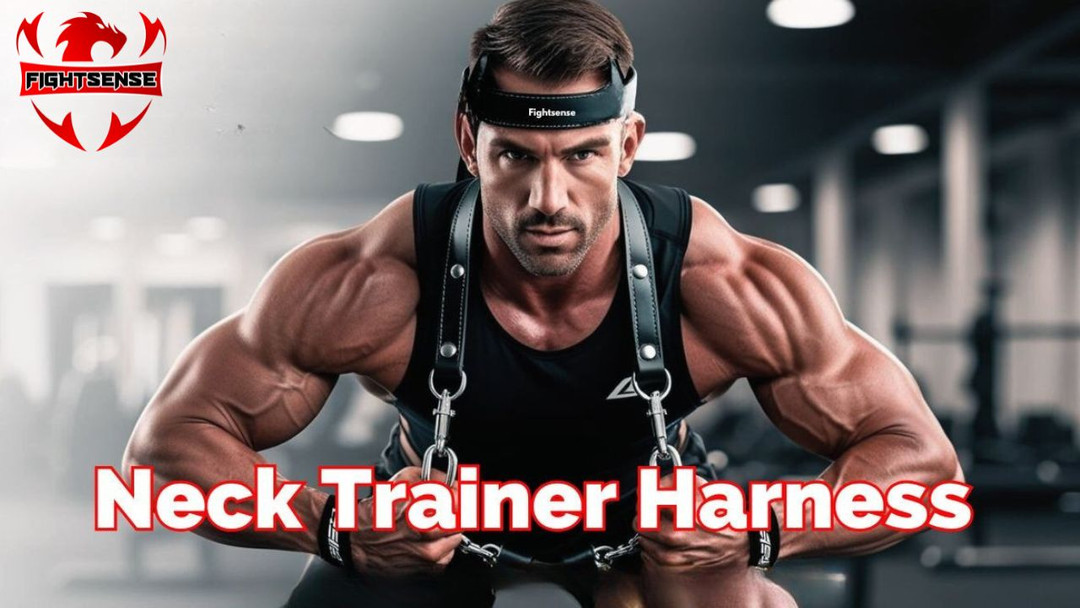
Best Neck Trainer Harness: 2026 Expert Training Guide
A Neck Trainer Harness is the secret weapon you’ve been ignoring for a pain-free, powerful upper body. If you spend your days hunched over a desk or dealing with constant trap stiffness, you’re missing the most critical piece of your physical health. While most people obsess over chest and leg days, they completely neglect the foundation of their posture—the neck.
Whether you want to eliminate chronic tension, improve your spinal alignment, or build a physique that actually looks and feels bulletproof, this is the missing link. In this guide, we are going to show you exactly how to safely use this tool to transform your posture and cervical strength from the ground up.
Key Takeaways:
- The "Biological Helmet" Effect: Consistent neck training isn’t just for looks; it acts as a shock-absorbing safety system for your cervical spine and brain.
- Neutralize Tech-Neck: Stop the forward-head drift caused by desk work by strengthening the deep cervical flexors that keep your spine perfectly aligned.
- Master the Progressive Load: Just like your quads or chest, your neck requires small, systematic weight increases—not ego-lifting—to trigger real muscle endurance.
- Isolation is Key: A specialized harness allows you to target the SCM and trapezius muscles with precision, which basic bodyweight movements simply cannot reach.
- Longevity Over Intensity: Prioritize slow, controlled range-of-motion to bulletproof your upper body against the chronic wear and tear of modern daily life.
Why Should You Train Your Neck?
Most of us don’t realize how much work our neck muscles do until they start complaining. Whether you’re an athlete absorbing impact in contact sports or a professional glued to a computer screen, your neck muscles—specifically the sternocleidomastoid (SCM) and trapezius—are constantly under tension.
When these muscles become weak or imbalanced, it leads to "tech neck," poor spinal alignment, and increased injury risk. By utilizing a Neck Trainer Harness, you provide your cervical muscles with controlled, progressive resistance that you simply cannot replicate with basic bodyweight movements. It’s not just about aesthetics; it’s about stability, breathing efficiency, and reducing the daily strain that leads to tension headaches.
Anatomical Focus: What Are You Actually Training?
To train effectively, you have to understand what you’re working on. Your neck is a complex network of deep stabilizers and larger muscles.
- Sternocleidomastoid (SCM): This diagonal muscle at the front of your neck is vital for turning, tilting, and bending your head.
- Trapezius: A large, kite-shaped muscle that connects your neck to your shoulders, providing the structural base for your head.
- Deep Cervical Flexors: These are the unsung heroes of posture, working to stabilize the cervical spine and keep your head in a neutral, healthy position.
Using a Neck Trainer Harness allows you to isolate these groups, moving through flexion, extension, and lateral movements with precision and safety.
The Progressive Overload Principle for Neck Training
Many people think that neck training is only for high-intensity athletes, but it follows the same fundamental principles as any other muscle group. Progressive overload—the process of gradually increasing the stress placed upon the body—is essential. Without it, your muscles will stop adapting. Here is how to apply it:
1. Why Overload Matters
Without increasing the stimulus, your neck muscles will quickly plateau. Your body is designed to adapt; once a weight becomes "easy," your progress stops. To keep evolving, you must challenge your cervical muscles systematically.
2. Track Your Progress
You cannot improve what you do not measure. Keep a simple training log to note your resistance, sets, and reps. This log is your roadmap, helping you identify exactly when you are ready to push yourself a little harder.
3. Know When to Advance
Don't rush to add weight. Focus on the "rep threshold." Once you can comfortably perform 15–20 reps with perfect form, add just 1–2 pounds. Because neck muscles are small, these marginal increases lead to major long-term gains.
4. Build Lasting Resilience
This systematic approach is how a Neck Harness helps you build a resilient, injury-resistant neck. By focusing on steady growth rather than ego-lifting, you ensure your cervical spine stays protected and strong for the long haul.
Integrating Neck Training into Your Weekly Split
A common question is where to fit this training into an already busy schedule. You don't need a dedicated "neck day." In fact, because the neck is involved in so many compound lifts like deadlifts and overhead presses, it is better to treat it as a supplemental exercise at the end of your session.
We recommend starting with two sessions per week. A simple, effective split could look like this:
- Day 1: Post-workout neck flexion and extension (3 sets of 12-15 reps).
- Day 4: Post-workout lateral flexion and isometric holds (3 sets of 30-second holds per side).
By keeping it separate from your heavy compound lifts, you ensure that your central nervous system isn't too fatigued, allowing you to focus on the mind-muscle connection needed to target the cervical stabilizers correctly.
Choosing the Right Gear
Not all equipment is created equal. When you are looking for the right tool to carry the load, you need to prioritize durability, comfort, and material quality. A flimsy strap can ruin your focus, but a high-quality piece of gear makes all the difference.
Comparison of Key Features
|
Feature |
Why It Matters |
What to Look For |
|
Material |
Longevity and safety |
High-grade reinforced nylon |
|
Padding |
Prevents skin irritation |
Thick, breathable neoprene lining |
|
Adjustability |
Secure fit ensures form |
Fully adjustable straps |
|
Versatility |
Allows for multi-plane movement |
Heavy-duty steel D-rings |
When you’re looking for a reliable setup, the Fightsense harness has become a go-to for many because of its focus on heavy-duty construction and ergonomic design. Investing in a tool like the Fightsense harness ensures that your equipment can handle the progressive overload needed for real strength gains without compromising on safety.
Common Mistakes to Avoid During Training
- Avoid Momentum: Neck training is about controlled tension, not swinging the weight. Jerky movements reduce effectiveness and increase strain.
- Don't Overextend: Never force your neck into a range of motion that causes pain. Respect your current mobility limits.
- Maintain a Neutral Spine: Avoid tilting your head at awkward angles; keep your gaze forward and your spine aligned to prevent injury.
- Don't Hold Your Breath: Always maintain controlled breathing throughout each repetition to stabilize your core and protect your spine.
- Stop if You Feel Pain: If a movement feels wrong or causes sharp discomfort, stop immediately and reset your position.
The Role of Neck Strength in Preventing Long-Term Injury
Beyond the gym, a strong neck acts as a biological helmet. In sports like MMA, boxing, or rugby, the ability of the neck muscles to rapidly stiffen and brace against sudden forces is the primary defense against concussions and whiplash-related injuries. By training these muscles, you are creating a secondary support structure for your cervical vertebrae.
This is why combat athletes frequently use a Neck Trainer Harness as part of their pre-fight conditioning. It isn't just about looking powerful; it is about ensuring that if a force is applied to the head, the neck muscles can absorb and dissipate that energy before it reaches the brain. For the non-athlete, this same principle applies to managing the daily wear and tear of life, ensuring that your cervical spine remains protected well into your later years.
FAQs:
1. Should neck training be performed before or after a workout?
Always save neck training for the end of a session. This ensures the cervical spine remains fatigue-free for heavy compound lifts where overall spinal stability is critical.
2. Will neck training lead to an overly "thick" neck?
Not necessarily. The primary focus of this training is structural integrity and posture. Significant neck circumference growth is only a result of long-term, high-volume hypertrophy training.
3. How is "too much weight" identified during training?
If a movement requires compensatory shaking, jerky motions, or manual assistance, the load is too high. Maintain strict form; if the movement deviates, decrease the weight immediately.
4. Why is a dedicated harness superior to manual resistance?
Improvised methods lack ergonomic security. A Neck Harness provides the essential balance and consistent, isolated tension that manual training simply cannot replicate.
5. What is the optimal training frequency for the neck?
Two to three sessions per week is the ideal frequency. This range provides the necessary stimulus for strength gains while allowing adequate recovery for smaller muscle groups.
6. Does neck training improve breathing efficiency?
Yes. A stable cervical foundation supports better overall posture. Improved alignment optimizes airway function, which can enhance breathing mechanics during intense physical activity.
7. Is neck training safe for individuals with existing shoulder issues?
Exercise caution. Because the trapezius connects the neck and shoulders, ensure that any underlying shoulder discomfort is addressed before adding external load to the neck.
8. Why is maintaining a "neutral spine" mandatory?
A neutral spine ensures even weight distribution across the cervical vertebrae. This prevents the unnatural shearing forces that are often responsible for long-term disc degradation.
Final Thoughts:
Building a stronger neck is one of the most practical investments you can make in your physical longevity. It’s not just about looking bigger or stronger; it’s about reclaiming your movement patterns and protecting your body from the wear and tear of modern life. If you’re ready to take your training to the next level, grab a durable Neck Trainer Harness, focus on your form, and let the results speak for themselves.
Disclaimer:
Always consult with a healthcare professional before starting any new exercise program, especially if you have a history of neck pain or prior injuries.