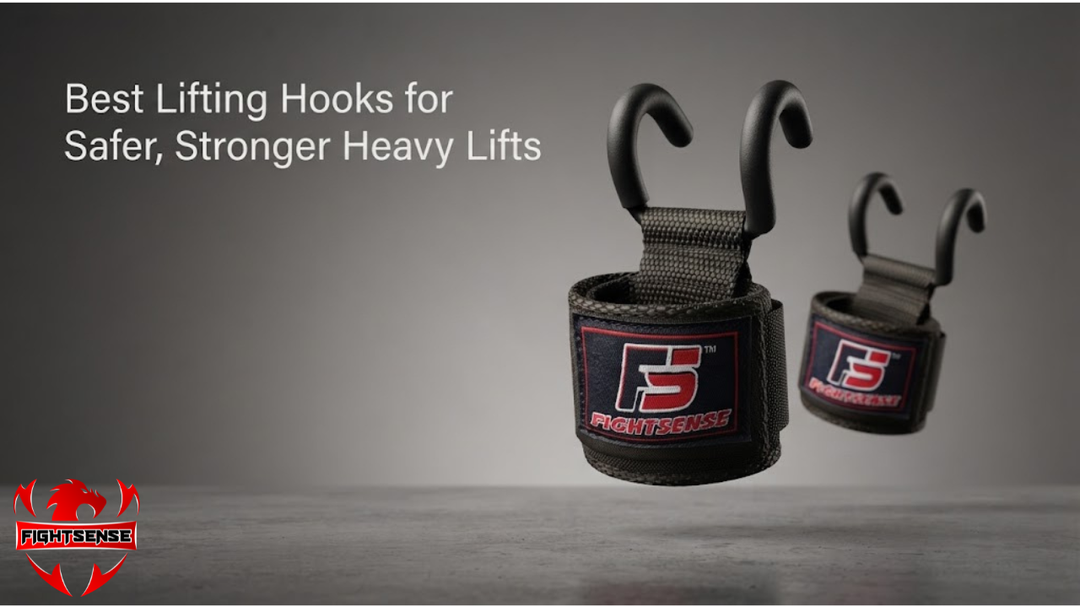
Best Lifting Hooks for Safer, Stronger Heavy Lifts
Lifting hooks are the ultimate game-changer when your grip gives out on heavy lifts long before your muscles actually tire. If slipping fingers and weak holds are holding you back, these smart accessories lock your hands securely to the bar so you can focus 100% on moving heavier iron. Drop them into your gym bag to shatter old personal records and take your training straight to the next level.
What Are Lifting Hooks and How Do They Work?
These reliable accessories feature sturdy wrist wraps combined with a metal closure that fastens directly onto the barbell. By shifting the physical load away from your palms, lifting hooks let you focus entirely on your target muscles during heavy pulls like deadlifts, rows, and shrugs. Beyond preventing slips and calluses, they ensure your hand endurance never stops you from crushing your strength goals.
Why Add These Accessories to Your Training?
-
Enhanced Grip and Control: A weak hold can instantly stall your progress. These accessories lock your hands firmly to the bar, giving you complete stability during max-effort sets.
-
Reduced Hand Fatigue: By distributing the load more evenly across your wrists, the gear prevents your fingers and palms from burning out prematurely.
-
Lift Heavier Loads: The added security lets you push past previous boundaries, helping you focus entirely on building raw muscle size and power.
-
Improved Safety: Minimizing the risk of slips ensures cleaner execution and better form, significantly lowering the chances of accidental injuries.
What to Look For When Buying Gym Hooks
-
Material Durability: Look for rugged elements like solid steel and heavy-duty fabric built to withstand extreme training stress.
-
Comfort and Fit: Prioritize thick padding to protect your wrists, alongside fully adjustable straps for a secure, custom feel.
-
Weight Capacity: Ensure the gear can comfortably support your heaviest max-effort lifts without bending or slipping.
-
Ease of Use: Choose a design that allows you to strap in and release quickly, keeping your transitions smooth between sets.
Comparison of Grip Assistance Gear Options:
| Equipment Type | Best Used For | Primary Advantage | Key Consideration |
| Lifting Straps | Olympic lifts & high-rep pulls | Secure canvas wrap | Requires manual setup |
| Lifting Hooks | Deadlifts & heavy rows | Rapid attachment | Needs precise placement |
| Grip Pads | Dumbbell & cable work | Protects palms from calluses | No wrist locking support |
| Fat Grips | Forearm building | Increases bar thickness | Reduces max load capacity |
Essential Pulling Movements to Maximize Your Workout
Essential Pulling Movements to Maximize Your Workout: When you incorporate these tools into your training routine, they truly shine during specific compound lifts. Deadlifts prevent your fingers from giving out prematurely, letting you maintain flawless form and target your posterior chain to the max without grip failure. Shrugs lock in a secure hold so your traps stay fully engaged without your palms burning out early in the set.
Finally, rowing movements power through heavy barbell rows and lat pull-downs with total confidence, allowing you to complete more efficient reps safely and push past your previous strength plateaus.
Explore the Various Designs for Your Training Needs
When exploring the market for your training needs, you will find several distinct designs engineered to cater to different comfort levels and lifting styles:
-
Standard options with wrist straps: These are the classic, versatile models built for general heavy lifting, providing a reliable metal anchor point secured by a sturdy wrist band.
-
Ergonomic designs: These feature a specialized curved shape meticulously engineered to match the natural contours of your hand, ensuring superior comfort and significantly reduced wrist strain during max-effort sets.
-
Padded models: Designed with extra cushioning layers around the wrist and palm area, these prevent skin irritation, chafing, and bruising during long, grueling training sessions.
Elevate Your Strength with Fightsense Equipment:
When looking for reliable gear to elevate your training performance, Fightsense has established itself as a trusted name among strength athletes and weightlifters. Their fitness accessories are engineered with durability and user comfort in mind, ensuring you can tackle heavy deadlifts, intense shrugs, and demanding rowing sessions without worrying about gear failure.
By combining sturdy metal construction with reinforced wrist support, Fightsense equipment helps you bridge the gap between your back strength and grip limitations, allowing you to train harder and safer.
How to Properly Position and Secure Your Gear?
Mastering the correct placement of your weightlifting equipments on the barbell is crucial for maintaining both safety and efficiency during your heavy sets. When stepping up to the bar, ensure the metal fastener is aligned precisely with your palm and wrapped securely so that the weight pulls directly against your wrist support rather than straining your fingers.
Taking an extra moment to check your alignment before initiating the lift prevents awkward shifting mid-movement, giving you a locked-in feel that lets you focus entirely on driving through your heels and executing powerful pulls.
Balancing Support with Natural Grip Development
Knowing when and how to weave these tools into your weekly routine ensures you build balanced strength without developing long-term imbalances. It is best to reserve them strictly for your heaviest working sets—such as peak deadlift days or intense back hypertrophy sessions—while allowing your warm-up sets and lighter isolation movements to rely entirely on your bare hands.
This strategic approach lets you harness the benefits of extra support for maximal loads while still dedicating specific time at the end of your workouts to traditional grip-strengthening exercises like farmer carries or plate pinches.
Common Mistakes to Avoid During Your Heavy Lifts:
-
Over-reliance: Relying entirely on hooks can stall your natural grip strength progress.
-
Bad adjustment: Wearing straps too loose or tight causes slipping or circulation issues.
-
Wrong usage: Using them on light warm-ups instead of saving them for heavy sets.
-
Ignoring maintenance: Failing to inspect worn-out straps or bent metal parts before a heavy lift.
-
Poor bar placement: Positioning the steel piece incorrectly on the bar, which can cause awkward slips.
Conclusion:
Lifting hooks are a powerful addition to any strength routine, helping you tackle heavy pulls without grip fatigue holding you back. By choosing reliable Fightsense gear, mastering proper placement, and balancing support with natural grip work, you can maximize your performance safely. Incorporating these tools correctly will help you shatter plateaus and build serious muscle.
FAQs:
Q: Can Grip Assist Straps replace gym chalk?
No, chalk is used for hand moisture control across various exercises, whereas hooks are specialized mechanical tools meant strictly to relieve grip fatigue during heavy pulls.
Q: How do hooks affect forearm activation?
By locking your hands to the bar, they reduce isometric forearm strain and shift more of the mechanical load directly to your back and traps.
Q: What is the maximum weight capacity of Deadlift Hooks?
Standard heavy-duty steel variants are engineered to securely support well over 300 to 400 pounds per hand, easily covering advanced lifting requirements.
Q: Can people with carpal tunnel use wrist support hooks?
Lifters with pre-existing wrist or nerve conditions should consult a professional, as rigid pressure points and tight straps can sometimes aggravate compression.
Q: Why use rubber-coated steel hooks?
Rubber coatings provide extra friction against the barbell surface, which prevents the hook from slipping, spinning, or sliding during heavy lifts.
Q: How often should you inspect your straps and Velcro?
You should inspect your gear's stitching and Velcro before every heavy session, replacing the equipment immediately if you notice any fraying.
Disclaimer:
This content is for informational purposes only and does not replace professional medical or fitness advice. Always consult a qualified professional before starting a new exercise routine or using specialized training equipment.