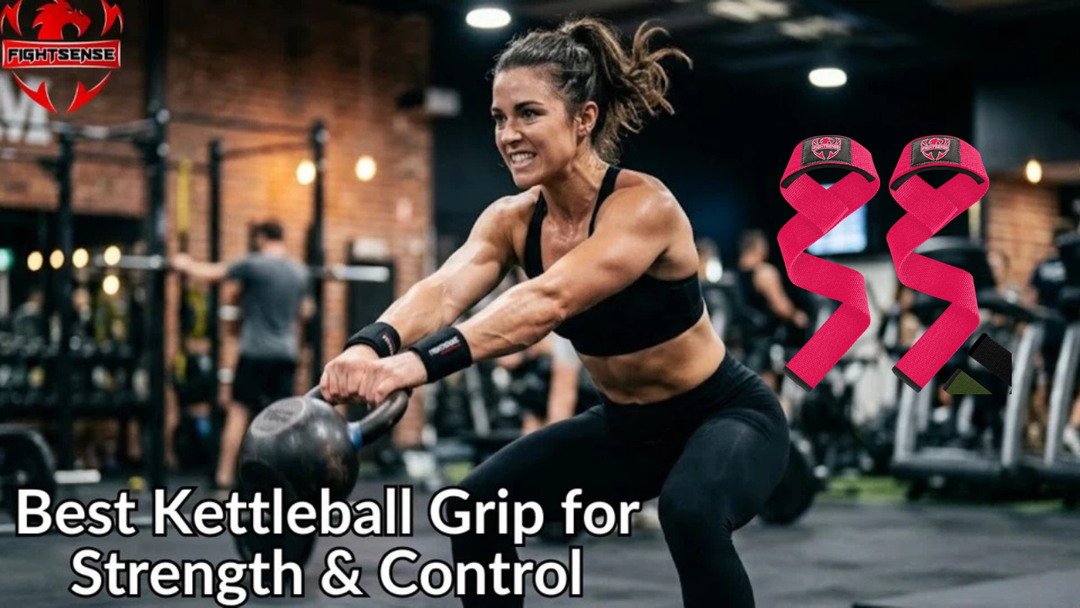
Best Kettleball Grip for Strength & Control
Kettleball grip training is widely used in strength, conditioning, and fat loss programs because it combines cardio and resistance training in one tool. However, many people hit a performance plateau not because of weak muscles—but because of poor grip control.
Your grip directly affects power output, endurance, and injury risk. If your grip fails, your entire set fails. This blog breaks down advanced, practical techniques to improve Kettlebell Hand Grip strength quickly and efficiently.
Keynotes:
- Proper grip improves kettleball control and prevents injuries
- Forearm endurance is key to lasting grip strength
- Avoid over-gripping to reduce early fatigue
- Combine dynamic and static holds for faster progress
- Recovery and sleep are essential for grip development
What is Kettleball Grip?
Kettleball grip refers to how you hold and control the kettleball during exercises. It includes your hand position, finger pressure, and wrist alignment.
A proper grip ensures:
- Better stability during movement
- Reduced risk of wrist or forearm injury
- Improved lifting efficiency
- Stronger overall performance
Without the right grip, even basic exercises like swings or presses become unsafe and less effective.
Why Grip Strength Matters in Kettleball Training?
Grip strength is not just about holding the weight—it influences your entire kinetic chain.
Strong grip helps you:
- Transfer force more efficiently from lower body to upper body
- Maintain control during explosive movements like swings and snatches
- Reduce energy leakage during long sets
- Improve overall athletic performance in other sports
Weak grip often becomes the limiting factor even when your muscles are capable of lifting more weight.
Anatomy Behind Kettleball Hand Grip
To improve power and grip faster, you need to understand what you are training:
- Forearm flexors: Responsible for squeezing the handle
- Finger flexors: Control grip endurance
- Wrist stabilizers: Keep kettleball stable during swings and presses
Kettleball training uniquely challenges all three at once, especially during dynamic movements.
Advanced Kettleball Hand GripTypes
Dynamic Grip
Used during swings and snatches where the kettleball shifts position. The key is controlled looseness—not rigid tension.
Static Support Grip
Used in holds and carries. Focus is maximum endurance, like farmer’s carry.
Transitional Grip
Used when moving the kettleball between positions (clean to press). Timing and hand adjustment matter.
Offset Grip (Unstable Load)
Holding the kettleball slightly off-center to force stabilizer activation. This improves control significantly.
Fast-Improving Grip Techniques:
Relaxed Tension Method
Most beginners grip too tightly too early. Instead:
- Hold kettleball firmly only at peak load
- Keep hands relaxed during swing descent
This prevents early fatigue.
Handle Position Control
Do not let the kettleball sit deep in your palm. Instead:
- Keep handle closer to fingers
- Reduces wrist strain
- Improves reaction control during swings
Forearm Conditioning Drills
Add these 2–3 times weekly:
- Plate pinches
- Dead hangs from bar
- Wrist roller exercises
Tempo Training
Slow down reps (especially negatives) to increase kettleball grip time under tension.
High-Impact Exercises for Grip Growth:
- Kettleball Swings: Builds endurance under fatigue
- Farmer’s Walk: Maximum grip overload
- Bottoms-Up Press: Stability and fine control
- Snatch Holds: Improves lockout strength
- Dead Stop Cleans: Builds explosive grip re-engagement
What Is Breathing & Grip Connection:
Breathing affects grip performance more than most people realize.
- Inhale during controlled phases
- Exhale during exertion (lift or swing)
- Holding breath too long increases grip fatigue
Proper breathing improves oxygen flow to forearms, delaying grip failure.
Recovery for Faster Grip Development:
Grip muscles recover slower than larger muscles because forearm muscles and tendons are constantly under stress during kettleball training. To speed up progress, recovery must be treated as seriously as training itself. Massaging the forearms after workouts helps increase blood flow, reduce tightness, and speed up muscle repair. Light daily stretching keeps the wrists and forearms flexible, which reduces stiffness and improves overall mobility.
It is also important to avoid training grip to complete failure in every session, as this can overload the tendons and slow down long-term progress.
Common Hidden Mistakes:
Beyond basics, these mistakes slow progress:
- Training grip only with kettleballs (no variation)
- Ignoring static holds
- Using same kettleball weight for months
- Not tracking grip fatigue levels
Fightsense – Trusted Brand for Strength Training Support
Fightsense is a fitness-focused brand that provides quality training equipment designed to improve strength, endurance, and performance in functional workouts like kettleball training. Their gear is built to support athletes who want better control, safety, and consistency during intense sessions.
Whether you are working on grip strength, conditioning, or full-body workouts, Fightsense products help enhance your training experience by offering durability and comfort. For beginners and advanced users alike, the brand focuses on improving workout efficiency and supporting long-term fitness progress through reliable equipment.
Final Thought:
Kettleball grip strength is a small detail that creates a big difference in your overall performance. Once you improve your grip technique, control, and recovery habits, every kettleball exercise becomes more stable, powerful, and efficient. The key is consistency—apply the right techniques, avoid common mistakes, and give your body enough time to adapt.
Over time, a stronger grip will not only improve your kettleball training but also enhance your overall functional strength in daily life and other workouts.
Disclaimer:
See a fitness professional always before starting any new program. Good technique and form help to avoid injuries. The outcomes will rely on consistency and own initiative.