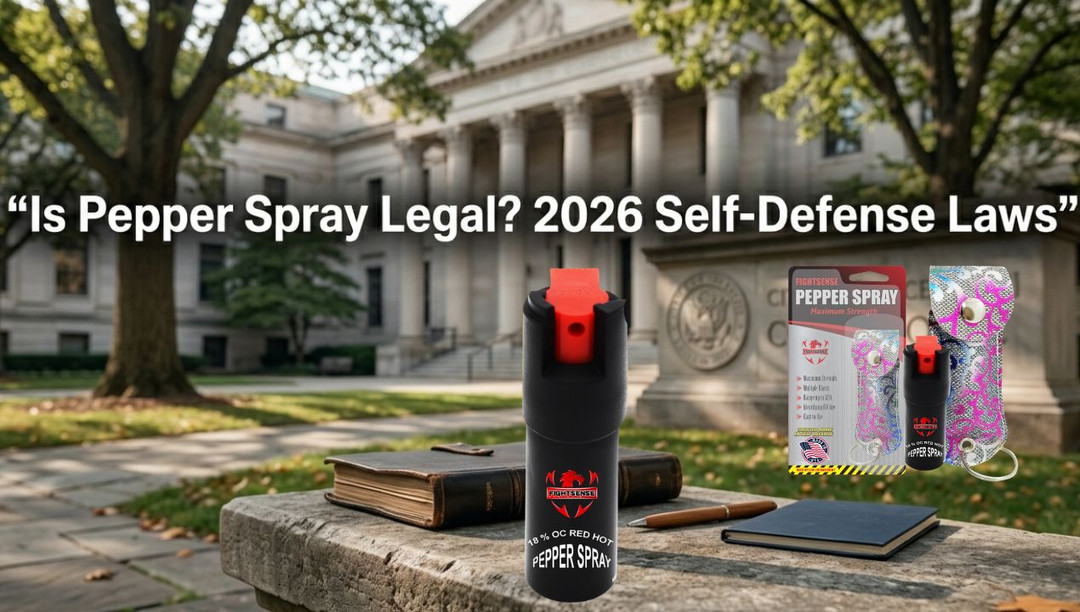
Is Pepper Spray Legal? 2026 Self-Defense Laws
Pepper spray has become one of the most popular non-lethal self-defense tools for personal protection. From college students and travelers to late-night workers and outdoor runners, many people carry pepper spray for added security.
But one important question continues to appear online:
Is pepper spray legal?
The answer is not always simple.
Pepper spray laws vary depending on:
- Country
- State or province
- Age restrictions
- Intended use
- Product strength
- Criminal background rules
- Carry location restrictions
Some places allow small personal-defense sprays without restrictions, while other regions heavily regulate or completely ban civilian use.
This guide explains everything in detail, including:
- Whether pepper spray is legal in 2026
- States where restrictions apply
- Places where carrying pepper spray is prohibited
- Travel and airline rules
- Self-defense laws you should understand
- Common legal mistakes people make
- How to buy pepper spray legally
- Safe and responsible ownership practices
What Is Pepper Spray?
Pepper spray is a self-defense product designed to temporarily disable an attacker using an inflammatory compound called oleoresin capsicum (OC).
When sprayed toward the face, it may cause:
- Temporary eye closure
- Intense burning sensation
- Breathing discomfort
- Disorientation
- Coughing
- Temporary loss of vision clarity
Pepper spray is considered a non-lethal defensive tool and is commonly used by civilians, security professionals, and law enforcement.
Unlike firearms, pepper spray is generally designed to create an opportunity to escape dangerous situations rather than cause permanent harm.
Is Pepper Spray Legal in 2026?
In many countries and U.S. states, pepper spray is legal for self-defense purposes.
However, legality depends on local laws and regulations.
Some governments classify pepper spray as:
- A self-defense device
- A controlled defensive weapon
- A restricted chemical irritant
- A prohibited weapon
Because laws differ significantly between regions, there is no single universal answer.
In most areas where pepper spray is legal, these conditions commonly apply:
- It must be used only for self-defense
- Buyers may need to meet age requirements
- Certain spray strengths may be restricted
- Criminal misuse can result in serious charges
- Carrying pepper spray in secure facilities may be prohibited
The key factor is lawful defensive intent.
Is Defensive Spray Legal in the United States?
Pepper spray is legal in most U.S. states.
However, several states have specific regulations involving:
- Container size
- Concentration limits
- Minimum age
- Felony restrictions
- Licensing requirements
- Purchase conditions
Some states allow unrestricted civilian ownership, while others impose tighter controls.
Common U.S. Pepper Spray Rules
Although laws vary, these are common requirements across many states:
Age Restrictions
Many states require users to be:
- At least 18 years old
- Or accompanied by parental consent in limited cases
Criminal Record Restrictions
Some jurisdictions restrict possession for individuals with:
- Felony convictions
- Assault-related criminal history
- Domestic violence offenses
Size Restrictions
Certain states limit:
- Maximum container volume
- Concentration percentages
- Chemical composition
Use Restrictions
Pepper spray generally cannot legally be used for:
- Intimidation
- Arguments
- Pranks
- Aggressive confrontation
- Offensive attacks
Using pepper spray outside lawful self-defense situations may lead to criminal penalties.
States With Additional Pepper Spray Restrictions
Some U.S. states impose stricter regulations than others.
Depending on the location, laws may involve:
- Registration requirements
- Licensed dealers only
- Reduced spray size limits
- Specific labeling requirements
- Shipping limitations
Because laws can change frequently, users should always review current local statutes before purchasing or carrying pepper spray.
Is Carrying Pepper Spray Legal in Schools and Colleges?
This is one of the most misunderstood areas of self-defense law.
Even in states where pepper spray is legal, many schools, universities, and campuses prohibit carrying defensive sprays on their property.
Restrictions may apply to:
- Dormitories
- Stadiums
- Government-funded schools
- Private campuses
- Sporting events
- Administrative buildings
Violating institutional policies may result in:
- Suspension
- Fines
- Removal from campus
- Criminal consequences in some regions
Always review campus safety regulations before carrying any defensive product.
Can You Carry Pepper Spray on a Plane
Airline and airport rules are usually stricter than public carry laws.
In many countries:
- Pepper spray is prohibited in carry-on luggage
- Checked baggage rules may vary
- International flights often prohibit transport entirely
Airports, aircraft cabins, and secure transportation areas typically operate under federal or aviation authority regulations.
Travelers should always verify airline and airport policies before flying.
Is Pepper Spray Legal Internationally?
Pepper spray laws differ dramatically around the world.
Countries Where Pepper Spray May Be Legal
Some countries allow civilians to carry pepper spray under specific regulations and self-defense laws.
Examples may include:
- United States
- Germany
- Poland
- Czech Republic
- Switzerland
These laws may include:
- Licensing
- Registration
- Purchase permits
- Approved formulations
- Restricted carry locations
Laws can still vary by city, state, or local authority, so users should always verify current regulations before carrying pepper spray.
Countries Where Pepper Spray May Be Restricted or Illegal
In some countries, pepper spray is treated as a prohibited weapon, controlled chemical device, or offensive weapon.
These include:
- United Kingdom
- Japan
- China
- Hong Kong
- United Arab Emirates
- Singapore
- South Korea
- Australia (varies by state)
- India (restricted in many areas)
- Canada (restricted for use against humans)
In these countries, possession may result in:
- Fines
- Arrest
- Confiscation
- Criminal charges
International travelers should always check local laws, as pepper spray regulations are not the same worldwide.
Can Minors Legally Carry Pepper Spray?
This depends entirely on local law.
In some regions:
- Minors cannot legally purchase pepper spray
- Possession may require parental permission
- School carry restrictions may still apply
Even where possession is technically allowed, misuse by minors can result in severe legal consequences.
Parents should understand both state law and school policies before allowing teenagers to carry defensive sprays.
Is Using Pepper Spray in Self-Defense Legal?
In many jurisdictions, using pepper spray in genuine self-defense situations may be legal.
However, the law usually requires:
- Reasonable fear of harm
- Proportional defensive action
- Defensive intent rather than aggression
The legality of use often depends on circumstances such as:
- Threat level
- Whether escape was possible
- Witness testimony
- Surveillance footage
- Excessive force considerations
Using pepper spray after a threat ends may create legal problems.
Situations Where Pepper Spray Use May Become Illegal
Pepper spray can become illegal when used irresponsibly.
Examples may include:
Using It During Arguments
Using defensive spray during verbal disputes without physical threat may result in assault charges.
Using It as a Joke
Pranks involving chemical sprays can cause injury and criminal liability.
Spraying Someone Without Immediate Threat
Offensive or retaliatory use may be prosecuted.
Carrying It Into Restricted Areas
Certain facilities prohibit all defensive weapons regardless of state legality.
Examples may include:
- Court buildings
- Airports
- Federal facilities
- Some schools
- Correctional institutions
Self-Defense Laws and “Reasonable Force”
Many self-defense laws revolve around the principle of reasonable force.
This means defensive action should generally match the seriousness of the threat.
Courts may evaluate:
- Whether the person genuinely feared harm
- Whether force was necessary
- Whether the response was excessive
- Whether the threat had already ended
Pepper spray is often viewed as a lower-force defensive option compared to lethal weapons.
However, misuse can still lead to criminal or civil liability.
Is Pepper Spray Better Than Other Self-Defense Tools?
Many people choose pepper spray because it is:
- Compact
- Easy to carry
- Non-lethal
- Widely available in many regions
- Designed for civilian defense
Compared with some other defensive tools, pepper spray may offer:
- Distance-based defense
- Reduced physical confrontation
- Faster escape opportunities
- Lower risk than lethal weapons
However, effectiveness depends heavily on:
- User awareness
- Proper handling
- Environmental conditions
- Wind direction
- Distance
- Legal compliance
Common Mistakes People Make With Pepper Spray
Ignoring Local Laws
Many buyers incorrectly assume pepper spray is legal everywhere.
Carrying Expired Products
`Expired sprays may malfunction or lose effectiveness.
Storing It Improperly
Extreme heat can damage pressurized containers.
Treating It Like a Toy
Careless handling can cause accidental exposure.
Not Understanding Defensive Limits
Pepper spray is intended for emergency defense situations — not intimidation or conflict escalation.
How to Buy Pepper Spray Legally
If pepper spray is legal in your area, responsible buyers should:
- Verify local laws first
- Purchase from reputable sellers
- Review concentration and size regulations
- Follow storage guidelines
- Understand carry restrictions
- Learn safe handling practices
Avoid products that:
- Make unrealistic claims
- Lack labeling information
- Ignore legal compliance standards
- Provide misleading “extreme voltage” or exaggerated marketing language
Quality and legal compliance matter more than aggressive advertising.
Safe Pepper Spray Ownership Tips
Keep It Accessible
A defensive tool is only useful if it can be reached quickly during emergencies.
Avoid Accidental Exposure
Store safely away from children and direct heat.
Learn Local Laws
Regulations may change over time.
Replace Expired Units
Most defensive sprays have expiration dates.
Use Only When Necessary
Pepper spray should never be used recklessly.
How FightSense Supports Responsible Self-Defense Awareness
At FightSense, self-defense is approached with a focus on responsibility, safety education, and practical awareness.
Modern consumers are no longer looking only for aggressive marketing claims. They want:
- Reliable information
- Legally compliant products
- Real-world practicality
- Safer everyday carry options
- Clear educational guidance
Understanding self-defense laws is just as important as choosing defensive equipment.
Responsible ownership always starts with legal awareness.
Quick Recap
- Pepper spray is legal in many places but laws vary
- Self-defense intent is usually required
- Some states and countries impose restrictions
- Airports, schools, and government buildings may prohibit carry
- Misuse can lead to serious legal consequences
- Responsible ownership includes understanding local regulations
Conclusion
So, is pepper spray legal?
In many regions, yes — but legality depends entirely on local laws, responsible use, and self-defense regulations.
Pepper spray is widely viewed as a practical non-lethal defensive tool, yet ownership comes with legal responsibility.
Understanding where you can carry it, when you can legally use it, and how local laws apply is essential before purchasing any defensive spray.
The safest approach is always:
- Learn your local laws
- Carry responsibly
- Use only in legitimate emergencies
- Prioritize personal safety and legal compliance
In 2026, responsible self-defense is no longer only about carrying protection — it is about understanding the law behind it.
Frequently Asked Questions
Is pepper spray legal everywhere?
No. Laws vary depending on the country, state, or local jurisdiction.
Who can carry pepper spray for self-defense?
Eligibility depends on local laws, age limits, and regional restrictions.
Why is pepper spray considered a self-defense tool?
It is designed to help people escape dangerous situations using non-lethal force.
Where is pepper spray usually prohibited?
Airports, schools, government buildings, and secure facilities often ban it.
Are minors allowed to buy pepper spray?
Some regions allow it, while others restrict sales to adults only.
Does misuse of pepper spray lead to criminal charges?
Yes. Illegal or reckless use may result in legal penalties.
How is pepper spray regulated in Europe?
Some European countries allow it, while others restrict or ban civilian use.
What are the pepper spray laws in Malta?
Malta has strict regulations, and authorization may be required.
Why is pepper spray restricted in Canada?
Canadian laws generally restrict sprays intended for use against humans.
When is carrying pepper spray in public allowed?
It is permitted in many areas if local laws allow civilian possession.
What happens if pepper spray expires?
Expired sprays may lose effectiveness or fail during emergencies.
Could pepper spray permanently harm someone?
Temporary effects are most common, but misuse can cause serious injury.
Which training is recommended before using pepper spray?
Basic safety and handling training is strongly recommended.
How does pepper spray work against multiple attackers?
Some sprays are designed with wider defensive coverage for emergencies.