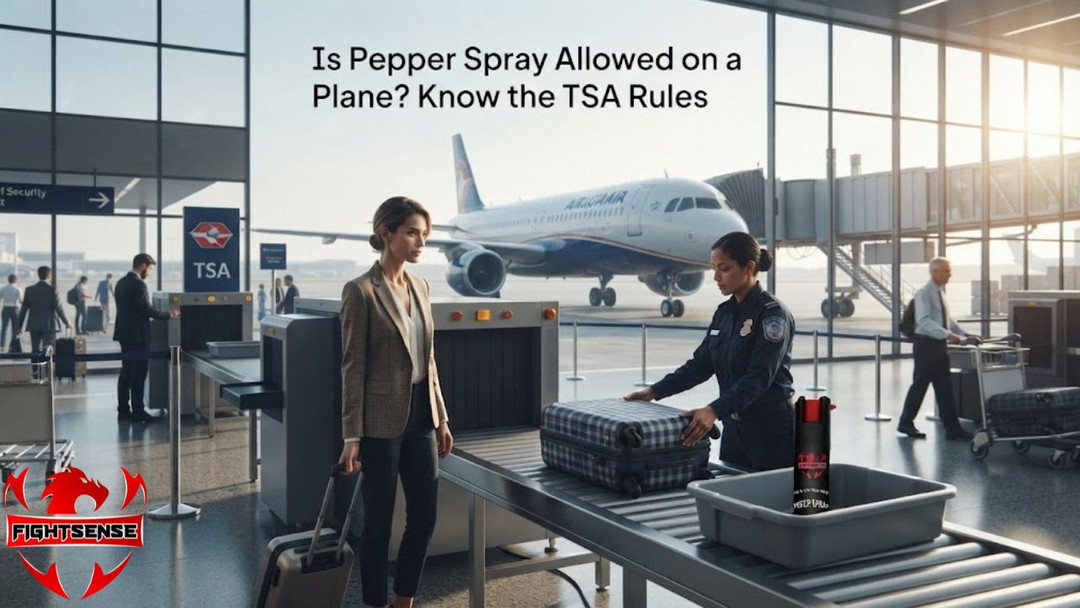
Is Pepper Spray Allowed on a Plane? Know the TSA Rules
Planning a trip brings up countless packing questions, but ensuring your personal safety items comply with aviation laws is critical. Is pepper spray allowed on a plane? The short answer is yes, but only under strict conditions and exclusively in your checked baggage.
When preparing for a trip, safety-conscious travelers often look to trusted brands like FightSense, known for producing reliable self-defense tools, including compact pepper sprays designed for everyday carry. However, attempting to bring any self-defense spray through a security checkpoint in your carry-on luggage will result in immediate confiscation and potential fines. Understanding how transportation authorities regulate these pressurized irritants prevents security delays and protects everyone onboard.
What is Pepper Spray?
Pepper spray is a legally defined oleoresin capsicum (OC) spray, a potent non-lethal self-defense product that is produced from naturally occurring capsaicinoids in spicy chili peppers. Upon release, the aerosolized inflammatory substance attacks an attacker's mucous membranes — causing the eyelids to slam shut immediately, inflicting acute searing pain and creating momentary confusion or obstruction of respiration.
Personal safety is one of the most important considerations when you go to new places. Taking a reliable self-defense item such as the small FightSense pocket canister can provide a vital piece of mind. But conversion of the daily street use to air travel demands rigid compliance with federal hazardous material laws.
Is Pepper Spray Allowed on a Plane?
Airport security wearing personal protective gear often causes misunderstanding; a direct answer is a must. Yes, you can take pepper spray on a commercial trip but with restrictions. Pepper spray is not allowed in the airplane cabin and may only be packed in checked luggage.
Aviation regulators regard self-defense sprays as hazardous goods because they are in pressurized aerosol cylinders and contain chemicals. You are allowed to bring your choice of personal safety equipment with you, but if you do not store it in the correct compartment, it will be taken away from you at the security checkpoint immediately.
TSA Regulations for Carry-On vs. Checked Baggage
The Transportation Security Administration (TSA) is hard-line on self-defense and non-lethal firearms. It is important to know where these products can legally be for a successful transit of the airport.
Carry-On Luggage: Strictly Prohibited
Pepper spray, mace, and animal repellents are not allowed in the aircraft cabin. This ban applies to backpacks, handbags, fanny packs and keychains. Even if your favorite FightSense self-defense item falls inside the 3.4-ounce limit for liquids, self-defense aerosols are classified as hazardous materials and are never permitted past security checks.
Baggage: Checked baggage is allowed with conditions
Travelers can bring self-defense sprays in checked luggage, but only if the items fit certain regulatory standards. Security officers scrutinize container volume, chemical composition, and the existence of safety devices before approving screened objects.
Size and Concentration Limits
General packaging approval is contingent upon meeting certain physical and chemical criteria set forth by aircraft safety bodies.
- Volume Cap: The canister must be no larger than 4 fluid ounces (118 ml). Larger, tactical or home-defense sizes will be seized at the gate.
- Tear Gas Restrictions: Tear gas formulations that are greater than 2% by mass of tear gas (CS or CN) are not permitted, even in checked luggage.
- Safety Lock Requirement: The nozzle must incorporate a working flip-top, twist-lock, or protective housing—features common to conventional FightSense pepper spray canisters—designed to avoid inadvertent discharge as baggage goes through automated transit systems.
Carry-On vs. Checked Baggage Comparison
|
Feature |
Carry-On Luggage |
Checked Baggage |
|
Allowed? |
No |
Yes (with limits) |
|
Maximum Size |
Not applicable |
4 fl. oz. / 118 ml max |
|
Safety Mechanism |
Not applicable |
Required |
|
Tear Gas Limits |
Prohibited |
Under 2% CS/CN |
|
Consequence of Violation |
Confiscation & Fines |
Confiscation at Baggage Screening |
Step-by-Step Guide to Packing Pepper Spray
- Check Your Canister: Make sure the volume of your self-defense product is 4 fluid ounces or less and that the concentration limitations of the chemicals are not exceeded by reading the label on your self-defense product.
- Check the safety lock. Make sure that the trigger mechanism has a tight cap, switch, or twist lock that cannot easily be bumped loose.
- Cushion the Item: Place the canister in a hard-sided container or inside your clothes in your suitcase to absorb changes in pressure.
- Check airline rules: Check with your individual commercial carrier to make sure they do not have internal limits that trump baseline TSA allowances.
- Prompt if Needed: Normal checked bags are scanned automatically. If a security agent flags your bag, cooperating fully will have the issue resolved quickly.
Pros and Cons of Flying With Self-Defense Sprays
Pros:
- Have your favorite personal safety tool at the ready when you get to your destination.
- Saves you the effort and expense of finding specialized retail establishments after arriving.
Cons:
- Risk of accidental discharge in luggage if not secured adequately.
- Possible seizure if screening agents read specs differently.
- Having one is generally illegal under international regulations, and you risk getting into legal trouble in foreign countries.
Expert Tips for Safe Travel
- Research Destination Laws: International rules vary widely. When asking if is pepper spray allowed on a plane internationally, keep in mind that in the UK and most European countries, self-defense sprays are classified as forbidden weapons, and carrying one can bring criminal penalties, no matter what brand you have.
- Consider Alternatives: If you want to avoid the bother of packing, leave your spray at home and buy a new, legal canister when you arrive at your ultimate destination. Or, pack a TSA-approved personal safety alert or high-lumen flashlight.
- Domestic Connections Double Check: If traveling on regional or partner airlines, check to see that secondary carriers follow standard hazardous material guidelines for checked goods.
Common Mistakes to Avoid
- Leaving Keychains Attached: One common checkpoint confiscation reason is forgetting to remove small defensive sprays from ordinary keys tossed in a carry-on backpack.
- Assume the Liquid Rule Applies: Believing that a container under 3.4 ounces qualifies for the carry-on exemption—especially when passengers wonder if is pepper spray allowed on a plane under general cosmetic rules—is to invite immediate security breaches.
- Neglecting Local Regulations: Failing to verify transit country requirements during international layovers may lead to luggage detention or legal penalties.
FAQs:
Can I bring pepper spray on my carry-on?
Nah. Self-defense sprays are never allowed in the aircraft cabin under any circumstances.
What is the maximum size of checked luggage?
The container must not exceed 4 fluid ounces (118 ml).
TSA 3-1-1 liquids restriction applies to pepper spray.
Nah. Remember that pepper spray is not permitted in carry-on bags at all and does not fall under the regular liquid rules.
Do pepper gels get treated differently than sprays?
No. Gels fall under the same category as sprays and are only allowed in checked baggage.
I have a concealed carry permit, may I carry pepper spray?
No. Travelers are not excluded from Federal Aviation Administration laws involving hazardous materials.
What happens if they find my pepper spray in a carry-on bag?
TSA officers will take the item away from you on the spot, and you may be subject to formal questioning or civil fines.
Can I bring pepper spray on international planes leaving the US?
The TSA lets them in checked baggage, but destination countries often ban them outright. Always check local laws.
Is pepper spray required to be in checked bag for all airlines?
Most of it meets TSA requirements, but individual commercial airlines reserve the ability to have more stringent internal rules.
Conclusion:
To travel securely, you need to balance personal protection with strict compliance with aviation regulations. Whether you are wondering is pepper spray allowed on a plane and using a compact FightSense self-defense gadget for your daily security, or another brand of personal protection equipment, it is important to prep your goods properly. Leaving your defensive spray at home or buying a replacement when you arrive can often save additional airport friction. If you do carefully pack a compliant container properly in your checked luggage, that is still an option.
Disclaimer:
This article is for informational purposes only and does not constitute legal or aviation security advice. Always verify current TSA regulations and airline policies before traveling.