
How to Wear a Lifting Belt for Maximum Support
14th Mar 2025
How to Wear a Lifting Belt is essential for protecting your lower back and improving lifting performance. Whether you’re doing squats, deadlifts, or overhead presses, a properly worn belt stabilizes your core and reduces injury risk. This guide will show you step-by-step how to use it for maximum support, so you can lift safely and effectively.
Key Highlights:
-
Ensure the belt fits snugly around your waist for optimal support.
-
Engage your core for added pressure and protection.
-
Position the belt over your lower back and abdomen.
-
Tighten the belt for pressure, leaving room for breathing.
-
Use the belt to assist with proper lifting technique, not as a replacement.
Why Use a Lifting Belt: Guide for Safe Lifting:
A lifting belt is a supportive piece of equipment worn around your waist to stabilize your core and lower back during heavy lifts. It helps increase intra-abdominal pressure, which strengthens your core and keeps your spine properly aligned while lifting.
Whether you’re doing squats, deadlifts, or overhead presses, using a belt can reduce the risk of injury, improve lifting form, and give you the confidence to handle heavier weights safely. Remember, a lifting belt is a tool to enhance your technique, not replace it, making it an essential accessory for serious lifters.
How to Wear a Lifting Belt Correctly:
1: Choose the Right Size:
-
Measure your waist around the navel area.
-
Consult the manufacturer’s sizing chart.
-
The belt should be snug but not restrictive, allowing deep breaths.
2: Position the Belt Correctly:
-
Place the belt just above your hips, covering your lower back and abdomen.
-
Ensure it spans from lower ribs to above hip bones.
-
Fasten the buckle centered or slightly off-center in front.
3: Tighten the Belt Properly:
-
Tighten until you feel firm pressure around your core.
-
Ensure you can still breathe deeply and move naturally.
-
Avoid over-tightening; it should support, not restrict motion.
4: Engage Your Core:
-
Brace your core and take a deep breath.
-
This increases intra-abdominal pressure, stabilizing your spine.
-
Proper core engagement ensures the belt provides maximum effectiveness.
Benefits of Using a Lifting Belt Correctly:
-
Stronger Spinal Support: Wearing a belt properly helps keep your spine aligned during heavy lifts, reducing stress on your lower back and minimizing the risk of strain or injury.
-
Improved Core Strength: By increasing intra-abdominal pressure, a lifting belt encourages better core engagement, which enhances overall stability and control during each lift.
-
Safer Lifting: Proper belt use allows you to lift heavier weights with confidence, as it provides added support to your lower back and reduces the likelihood of form breakdown.
-
Injury Prevention: A correctly worn belt protects your muscles, joints, and ligaments from excessive strain during high-intensity exercises, lowering the risk of common weightlifting injuries.
How to Perform Various Exercises Using a Lifting Belt:
Using a lifting belt when squatting:
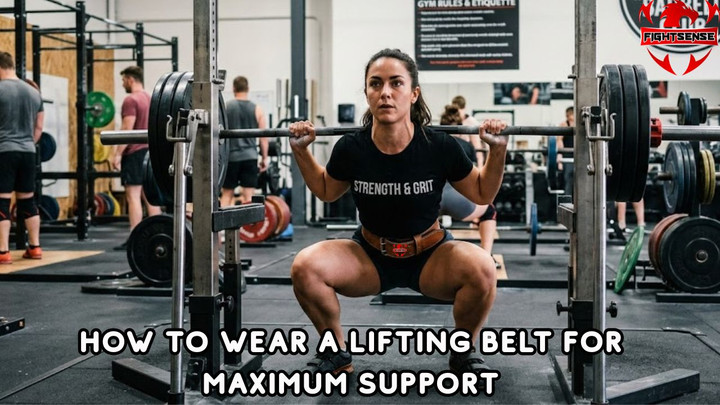
Tightly wrap the belt around your waist to ensure it supports your core during squats. Deeply inhale, strengthen your core, and then squat down with correct technique. The belt will give you added support as you climb, especially in the heavier parts of the lift.
Using a lifting belt in deadlifts:
The lifting belt is quite helpful in deadlifts since it supports your lower back more precisely. Before raising the barbell, position the belt somewhat above your hips and tighten it. As you raise the weight, engage your core and rely on the belt to help you stabilize your body.
Tips for Maximum Belt Support:
-
Always use proper technique; the belt is a support tool.
-
Practice breathing and core bracing with the belt before heavy lifts.
-
Use the belt only for high-stress exercises, not for light warm-ups.
-
Make sure the belt fits snugly but allows for comfortable movement and deep breaths.
-
Gradually get used to the belt during moderate lifts before attempting your heaviest weights.
Choosing the Right Lifting Belt for Maximum Support:
Selecting the right lifting belt can make a huge difference in both safety and performance during heavy lifts. A belt that fits well and is made of high-quality materials provides optimal support for your core and lower back.
For athletes and weightlifters looking for reliable gear, Fightense offers a range of lifting belts designed for maximum stability, comfort, and durability. Using a premium belt maintain proper form, reduce injury risk, and get the most out of your workouts.
How I Felt Using a Lifting Belt for the First Time:
When I first tried a lifting belt, I wasn’t sure if it would make a noticeable difference in my lifts. But the moment I tightened it around my waist, I immediately felt my core and lower back become more stable.
During squats and deadlifts, the belt helped me brace properly, maintain correct form, and lift with greater confidence. Using a high-quality belt like Fightense enhanced my performance and reduced the usual strain on my lower back, showing how important proper belt placement and fit really are.
Shop Now !
Conclusion:
To sum up, anyone engaged in heavy weightlifting should know how to wear a lifting belt properly. Following the tips in this guide will help you maximize its performance and protect your lower back, allowing you to lift safely and maintain optimal technique.
Remember, the belt is meant to enhance your form and provide extra support—not replace proper technique. When used correctly, a lifting belt is an excellent tool in your weightlifting routine, helping you lift safely and powerfully.
Disclaimer
This blog is for information only. For personalized advice on how to wear a lifting belt and lifting techniques, consult a fitness professional.
FAQS:
1: How tight should I fasten a lifting belt?
Fasten your belt so it presses gently against your core while still allowing comfortable breathing. Avoid over-tightening, as it can restrict movement and reduce effectiveness.
2: At what point should I wear a lifting belt?
Lifting belts are most useful for heavy or challenging lifts such as squats, deadlifts, and overhead presses, particularly when pushing close to your maximum weight.
3: Will a belt prevent back injuries entirely?
No belt can replace good technique, but wearing one correctly supports your spine and core, lowering the chance of strains or injuries.
4: Should I use a belt for every exercise?
Not necessary. For lighter workouts or warm-ups, it’s better to rely on natural core strength rather than a belt.
5: How can I pick the best lifting belt?
Look for a belt that fits securely, covers your lower back and abdomen, and is made from durable, high-quality material. Comfort and support are key.
Q6: Can using a belt help me lift heavier weights?
Yes, a properly worn belt enhances core stability, which allows you to safely lift heavier while maintaining proper posture and form.